Sometimes, the most spontaneous decisions lead to the most memorable adventures. When my best friend Kamila told me she was taking a two-week English course in Malta, I knew I had to seize the opportunity. Without a second thought, I booked a plane ticket to visit her for a weekend in mid-November. What unfolded over those 48 hours was a whirlwind of exploration, culture, and unforgettable experiences in the heart of the Mediterranean.
Friday Evening: Arrival and St Julians
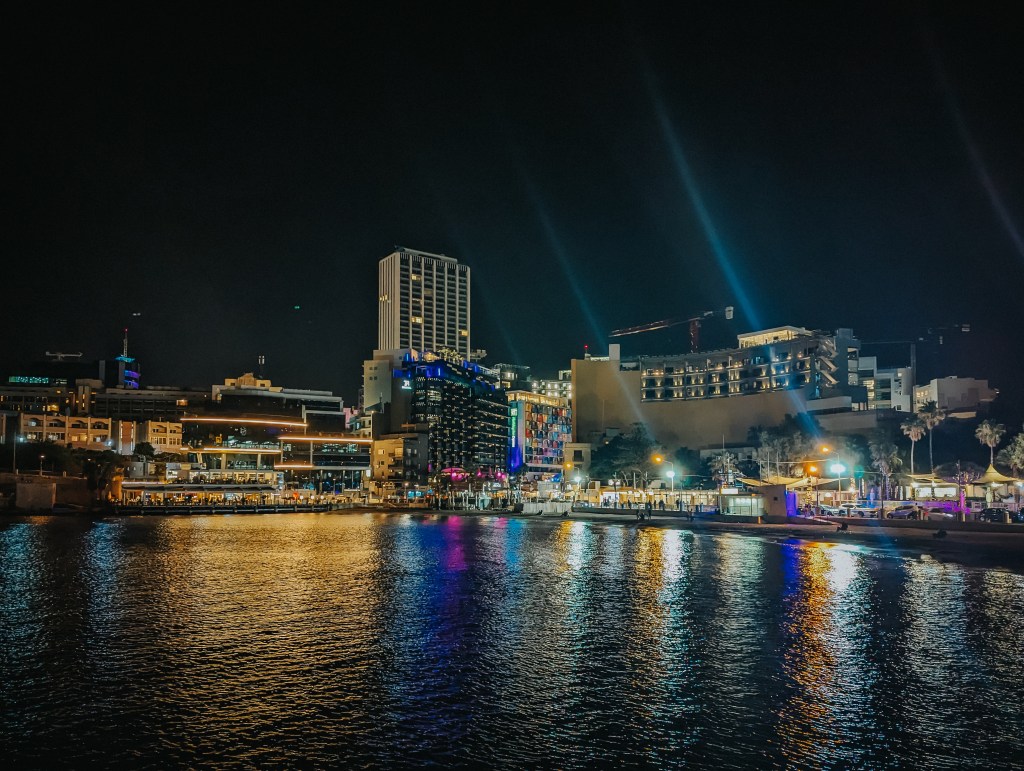
My journey began on a Friday evening. I arrived in Malta after 8 pm, buzzing with excitement. The first order of business was picking up a rental car, a decision that would prove invaluable for our weekend explorations. I drove to St Julians, a bustling town known for its vibrant nightlife and beautiful bays. Here, I met up with my friend, eager to begin our adventure.
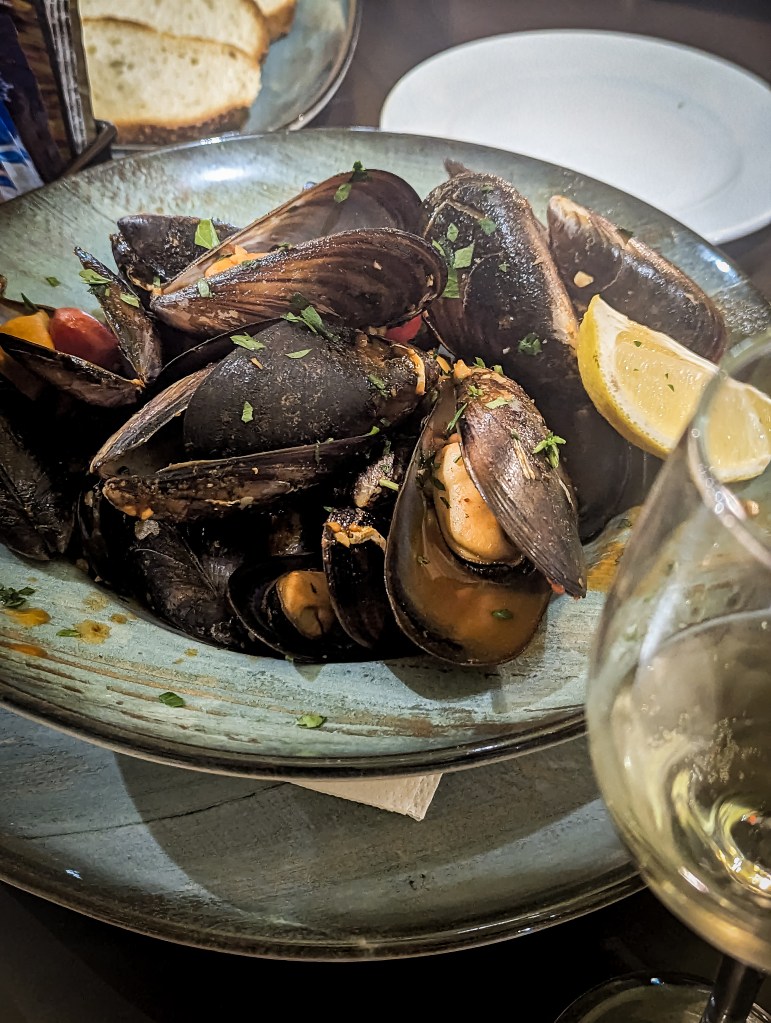
The evening air was mild, typical of Maltese winters, and perfect for a night out. After dropping off my luggage, we headed straight for food. My friend introduced me to a local gem, Andrew’s Bar, a cozy establishment just a stone’s throw from her apartment. The meal was a delightful introduction to Maltese cuisine, with fresh ingredients and rich flavors that set the bar high for the rest of our trip.
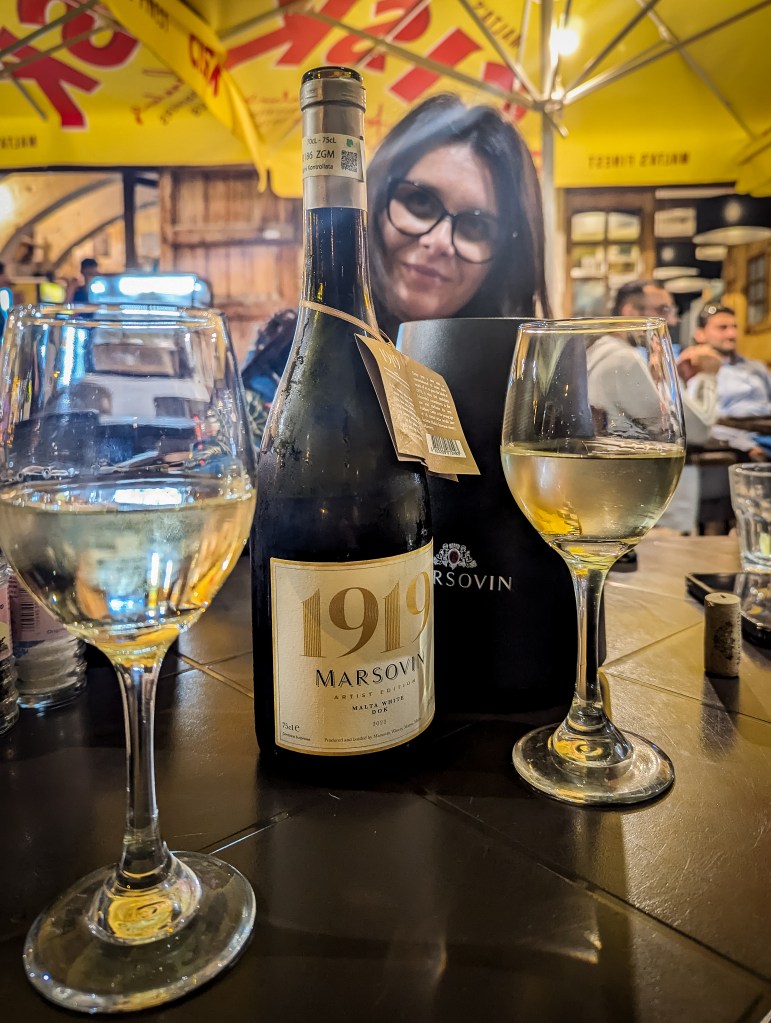
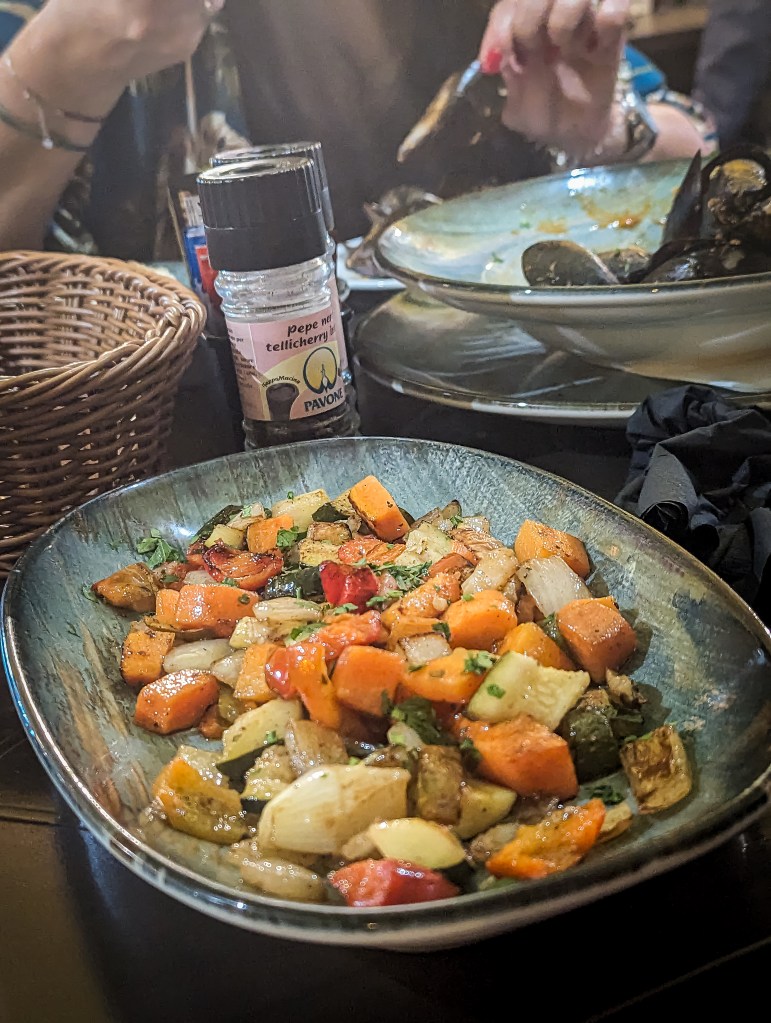
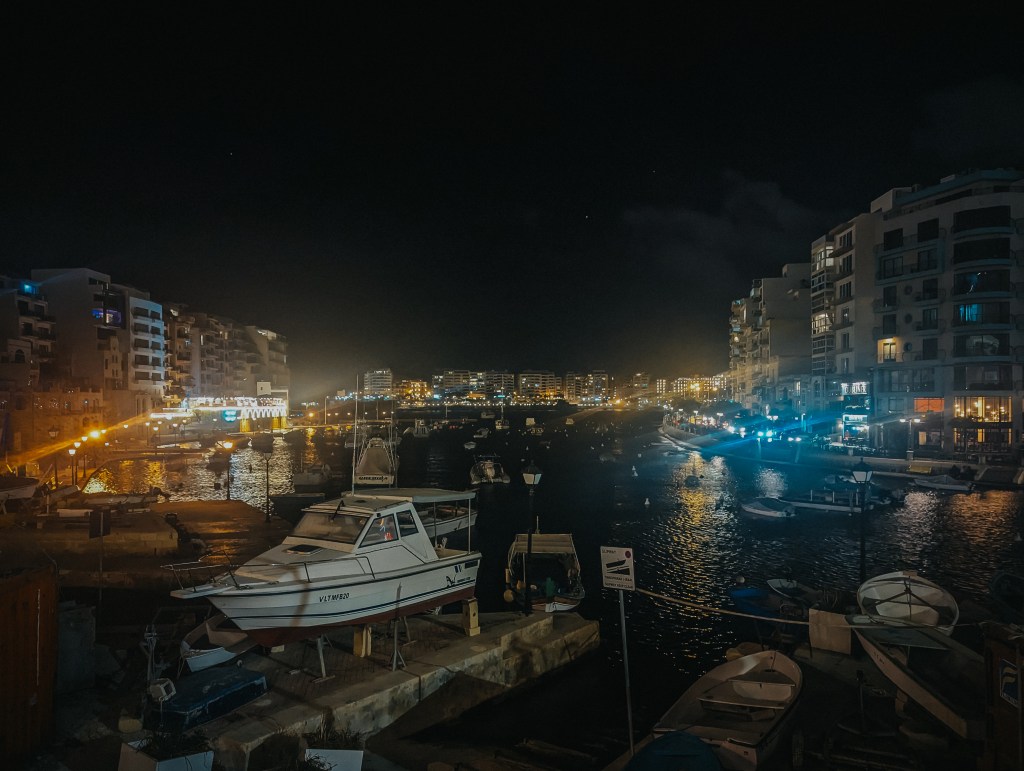
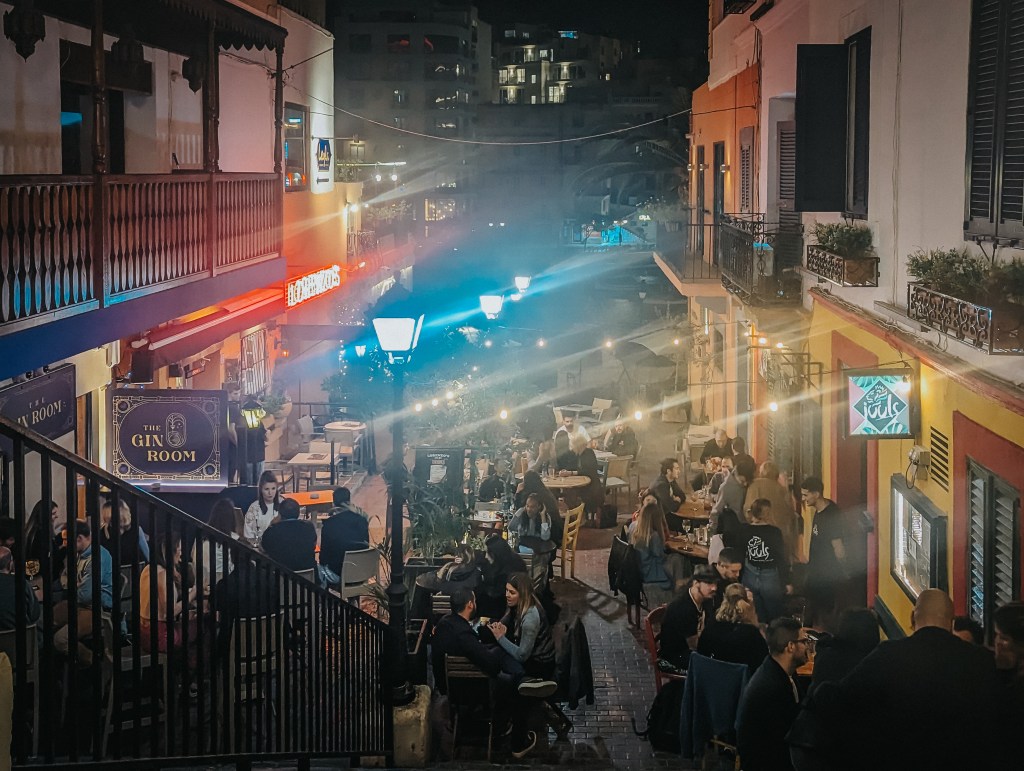
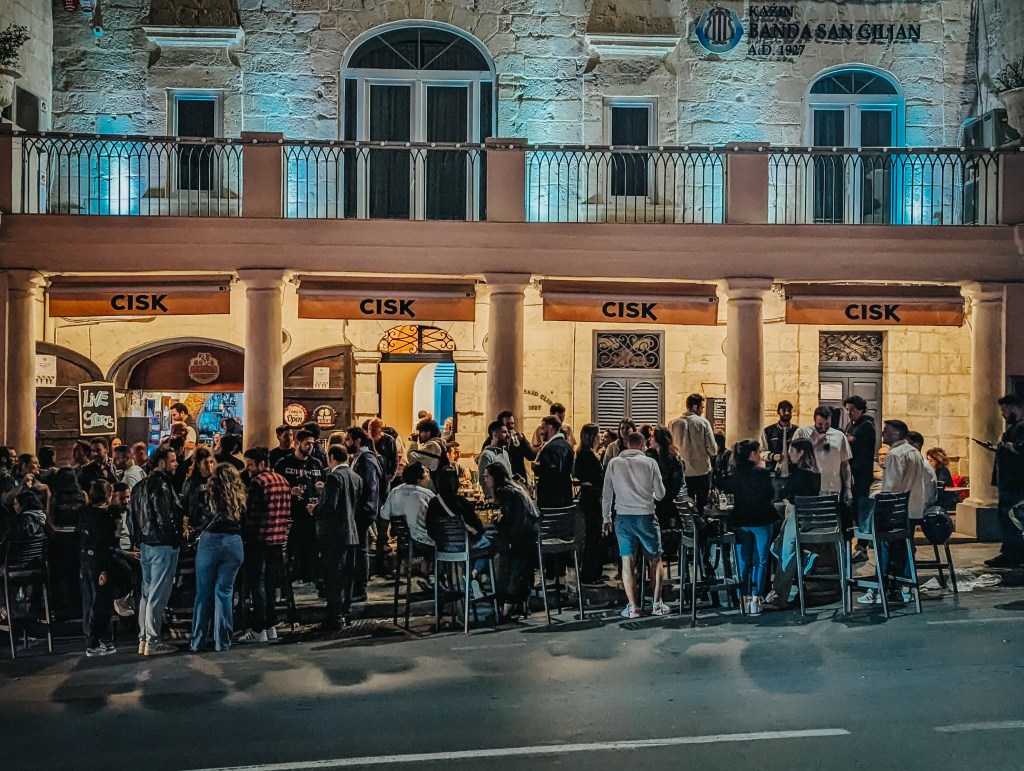
Following our meal, we ventured out into the lively streets of St Julians. The area was abuzz with energy, filled with locals and tourists alike enjoying the nightlife. Despite the crowds, there was an underlying sense of safety and friendliness that made us feel right at home. Our stroll took us to St George’s Bay beach. Surprisingly, the water was warmer than the air, a pleasant anomaly even with the 21°C temperature. The night concluded with us walking back to our room around 2 am, tired but exhilarated.
Saturday: A Day in Gozo
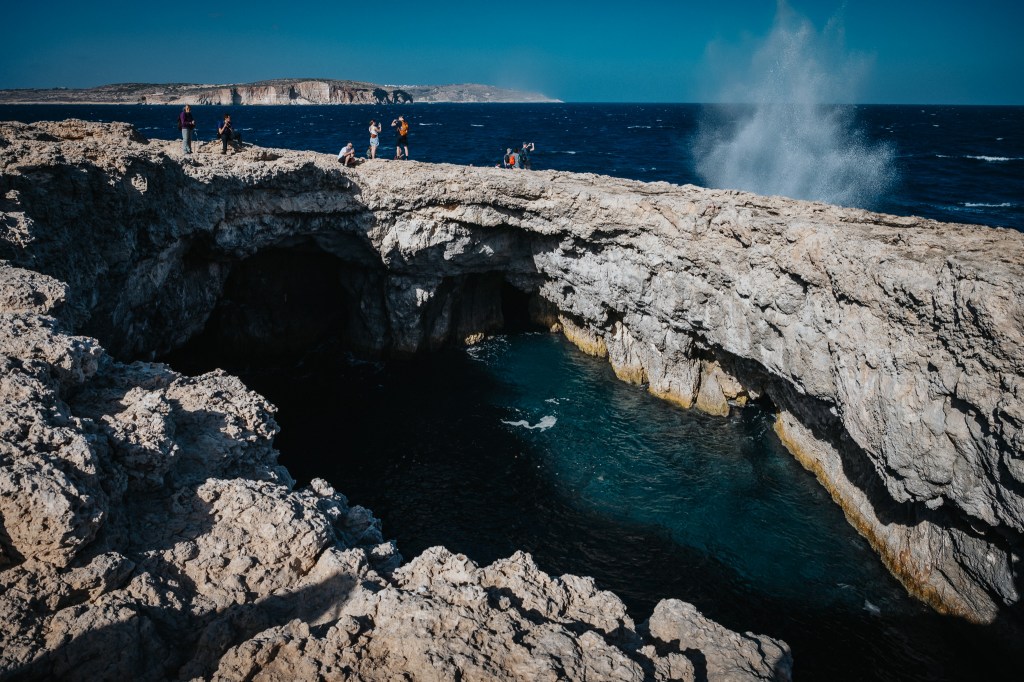
We rose early on Saturday, our spirits high and ready for a day of exploration. Our first stop was the enchanting Coral Lagoon, a hidden gem offering stunning views and a peaceful escape from the more touristy spots. The lagoon’s natural beauty was a testament to Malta’s diverse landscape, ranging from rocky cliffs to serene waters.

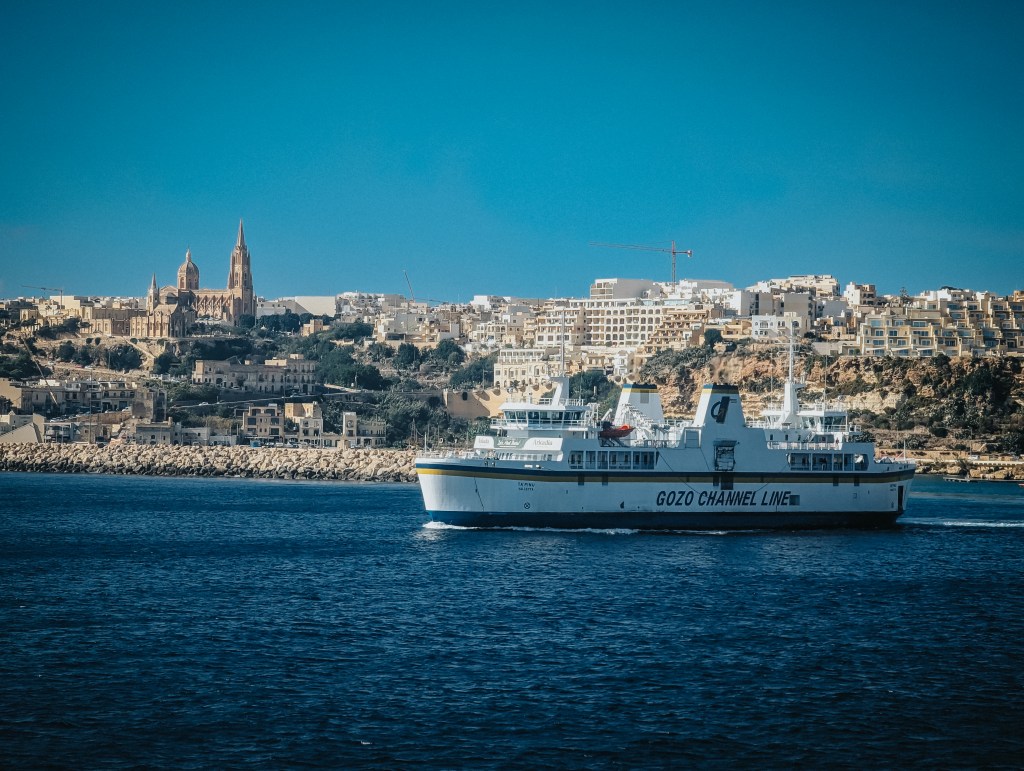
Next, we made our way to the Cirkewwa Passenger Terminal to catch a ferry to Gozo Island. The ferry ride was an experience in itself, offering panoramic views of the sea and surrounding islands. We especially enjoyed the sight of Comino Island, a small but picturesque island between Malta and Gozo.
Upon arriving in Gozo, we quickly realized that a single day wouldn’t be enough to explore all its wonders. We decided to focus on five key locations that promised a mix of history, culture, and natural beauty. Our first stop was Victoria, Gozo’s capital. The hunger pangs hit us hard, as I had skipped breakfast. Thankfully, we found Cafe Jubilee, a quaint spot with a warm, inviting atmosphere. The food was a revelation – I savored the Kusksu bil-ful, a traditional Maltese soup, while Kamila enjoyed some exquisite raviolis.
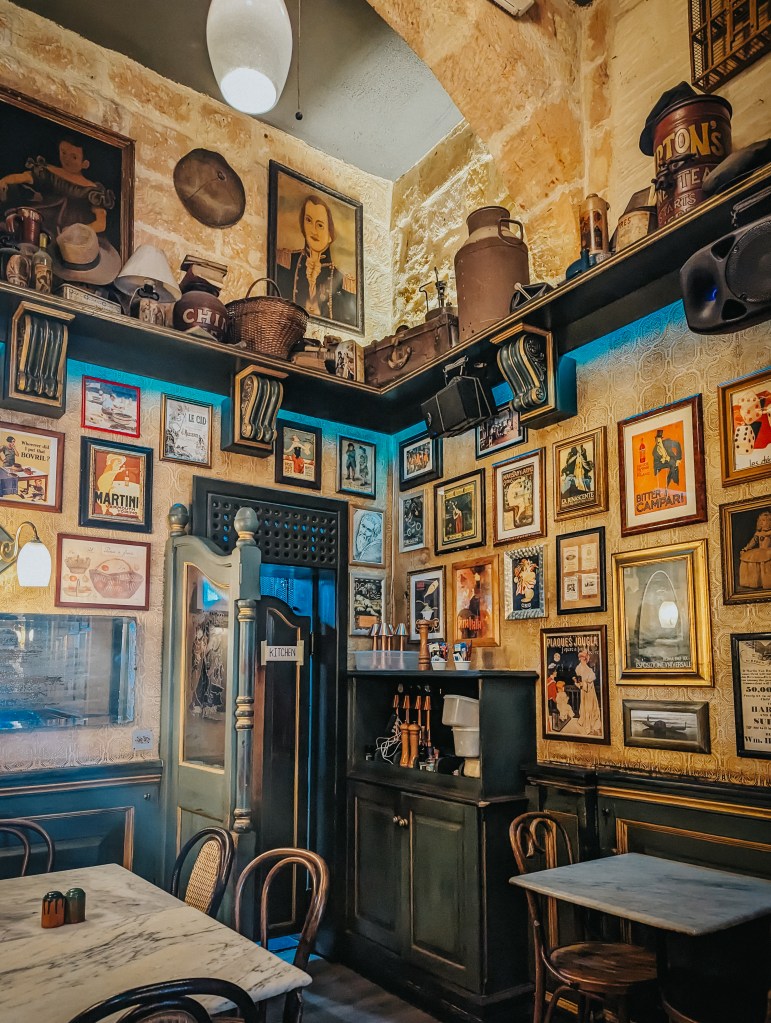
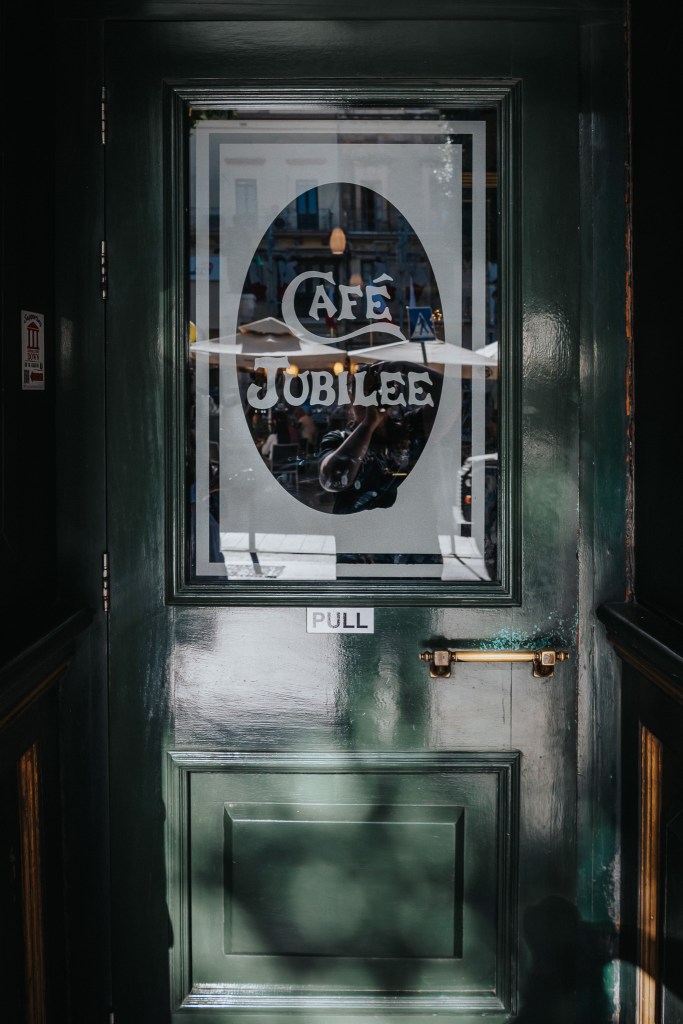
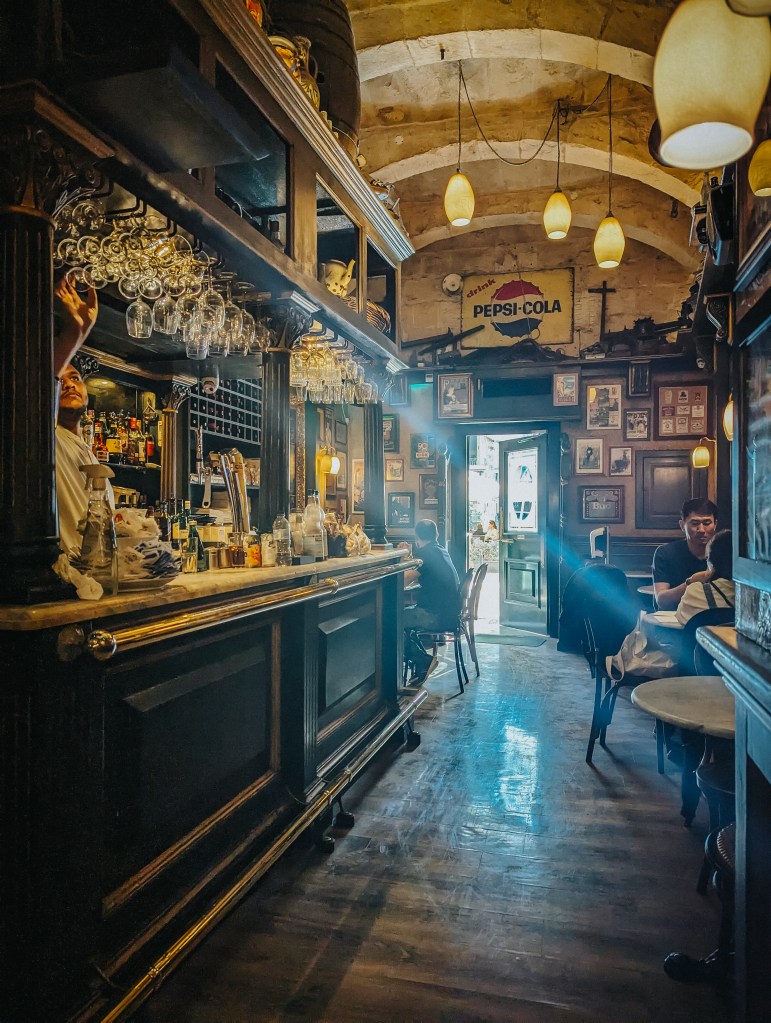
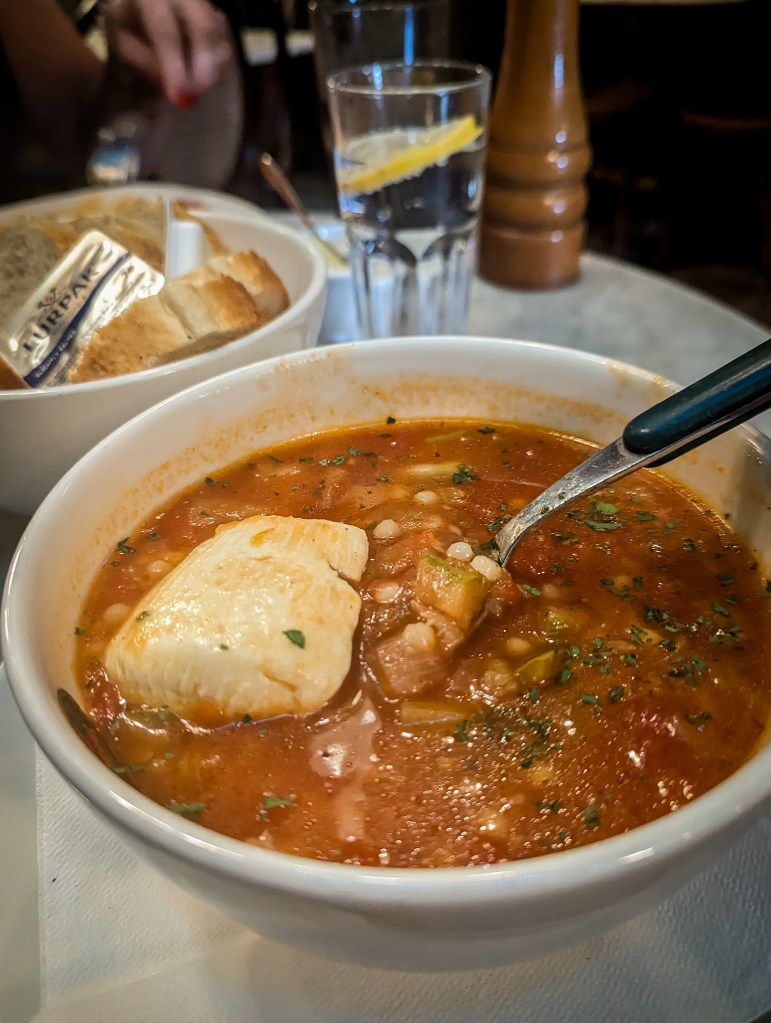
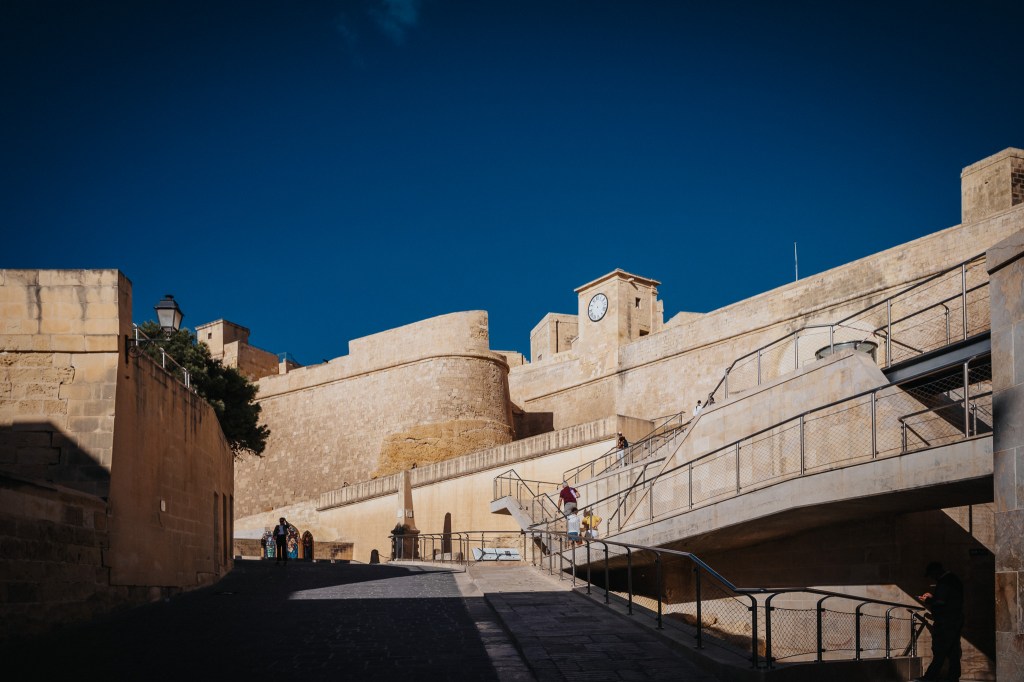
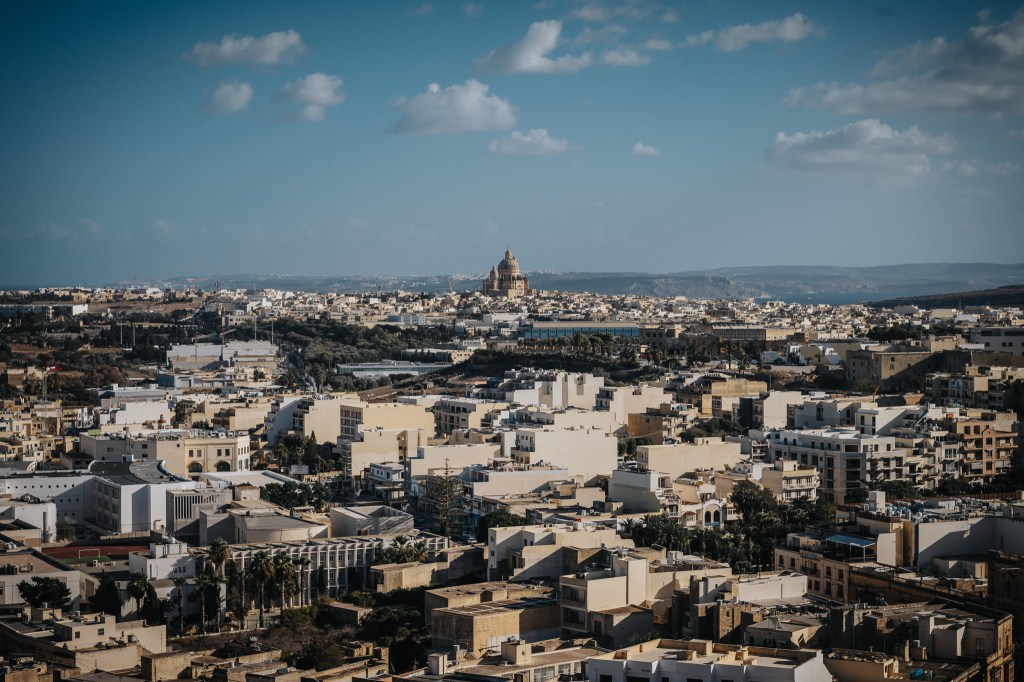
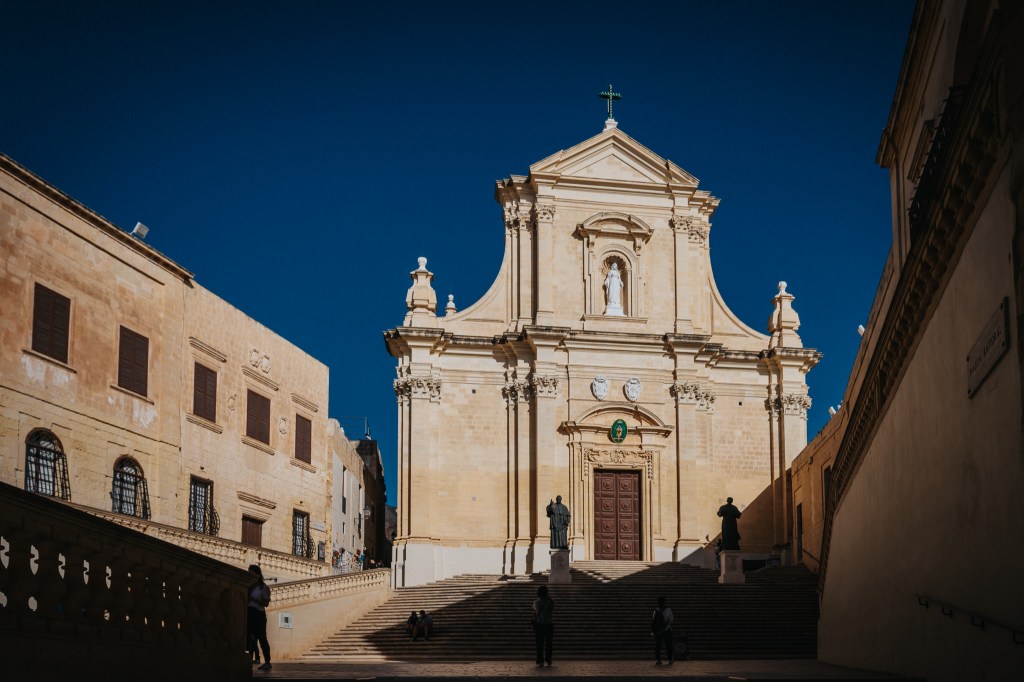
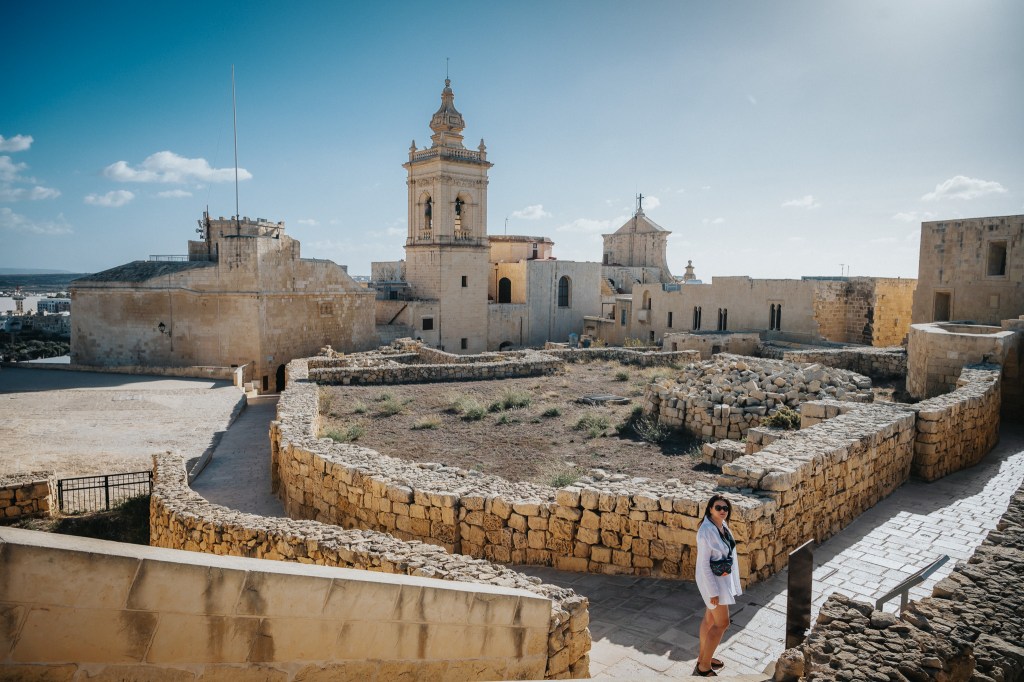
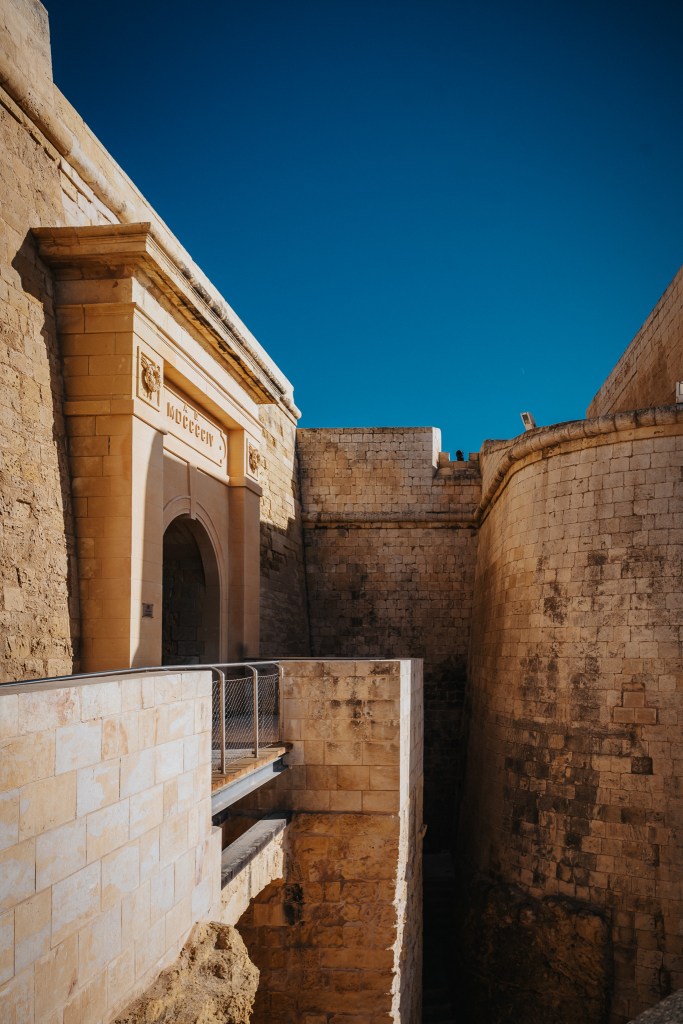
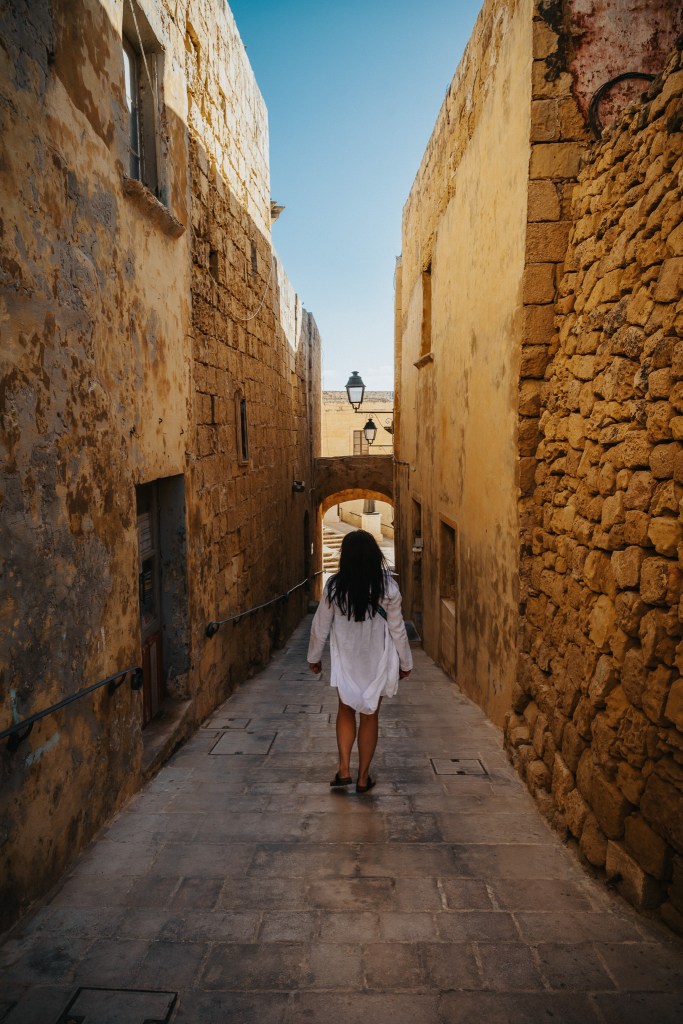
Refueled, we headed to The Citadel, a historic fortress at the heart of Victoria. The Citadel’s imposing walls and ancient structures provided a window into Malta’s storied past, with breathtaking views of the surrounding countryside.
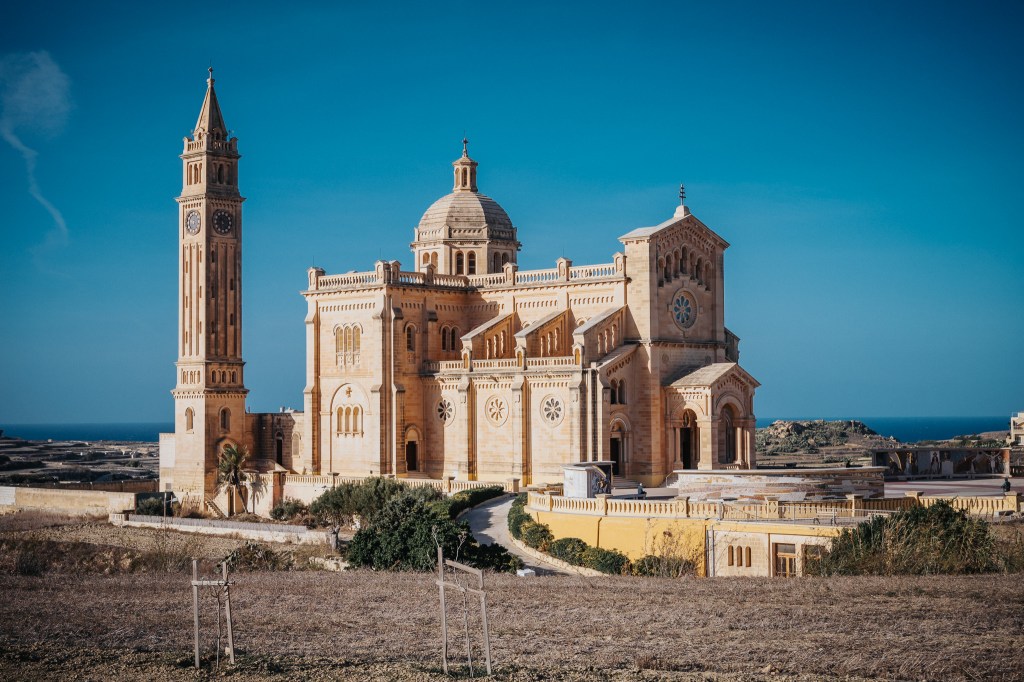
Our journey continued to the Ta’ Pinu Basilica, a stunning example of Maltese architecture and spirituality. The basilica’s serene ambiance and intricate designs were awe-inspiring.
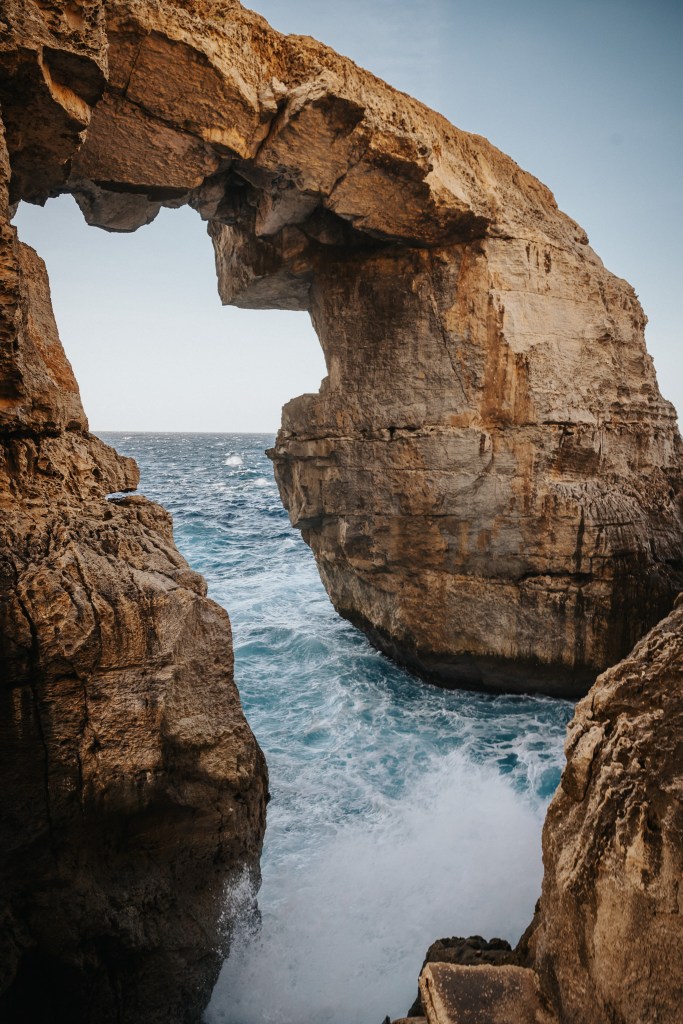
We then visited the Wied Il-Mielah Sea Arch and Wied Il-Ghasri Beach, both showcasing Gozo’s natural splendor. The beach, with its secluded location and crystal-clear waters, was perfect for a peaceful respite.
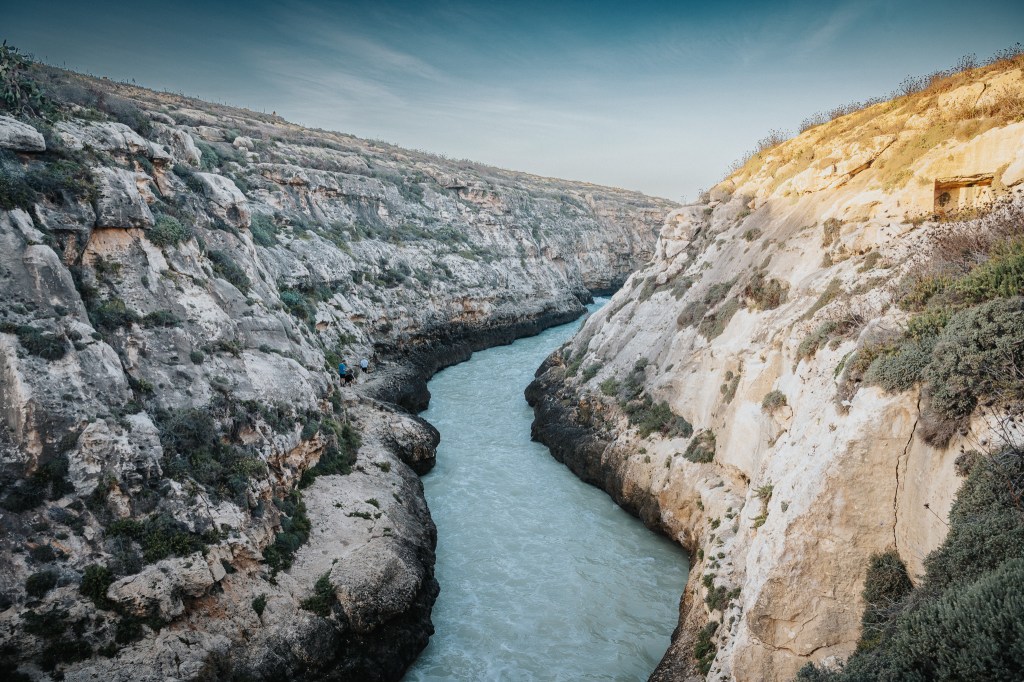
As the sun began to set, we found ourselves at the Marsalforn Salt Pans, an area rich in history and tradition. The salt pans, still in use today, painted a picture of Malta’s age-old practices.
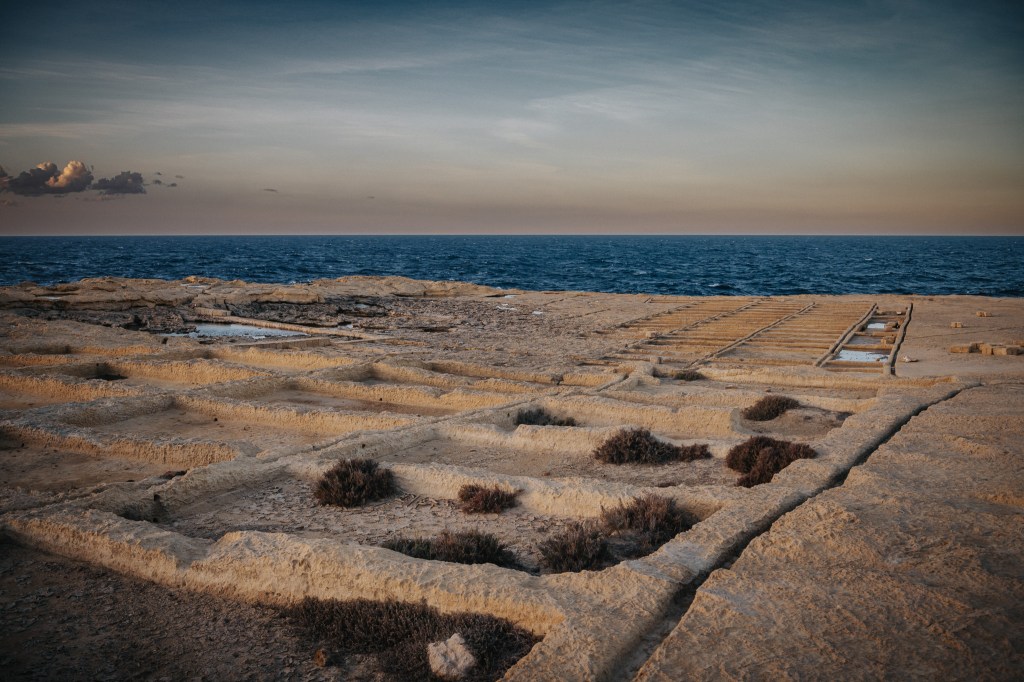
The sunset here was nothing short of magical, casting a golden glow over the landscape.
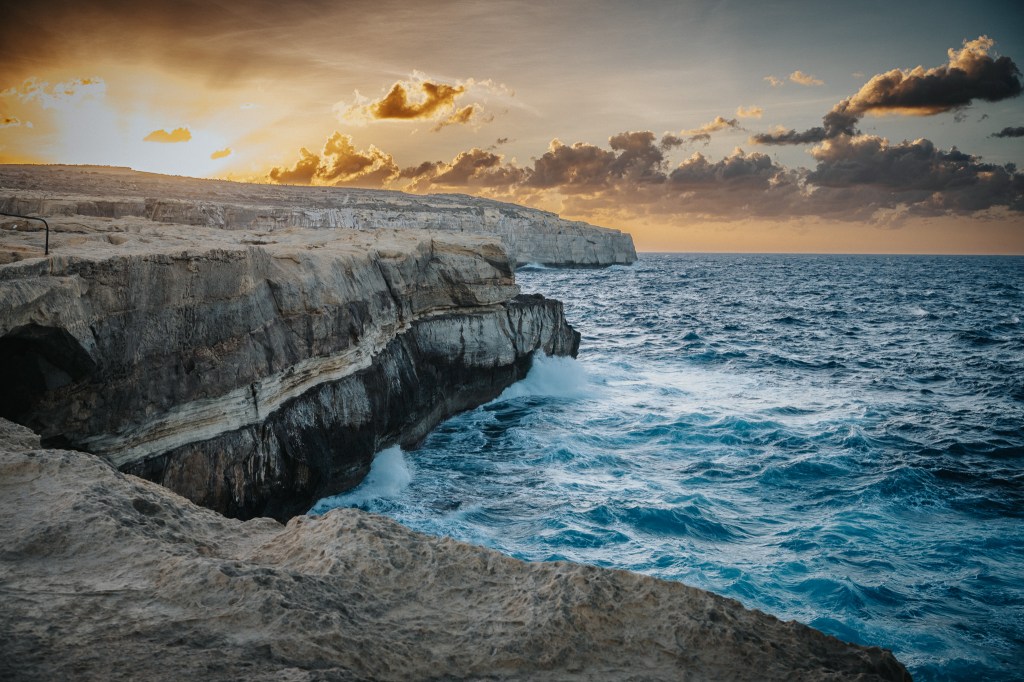
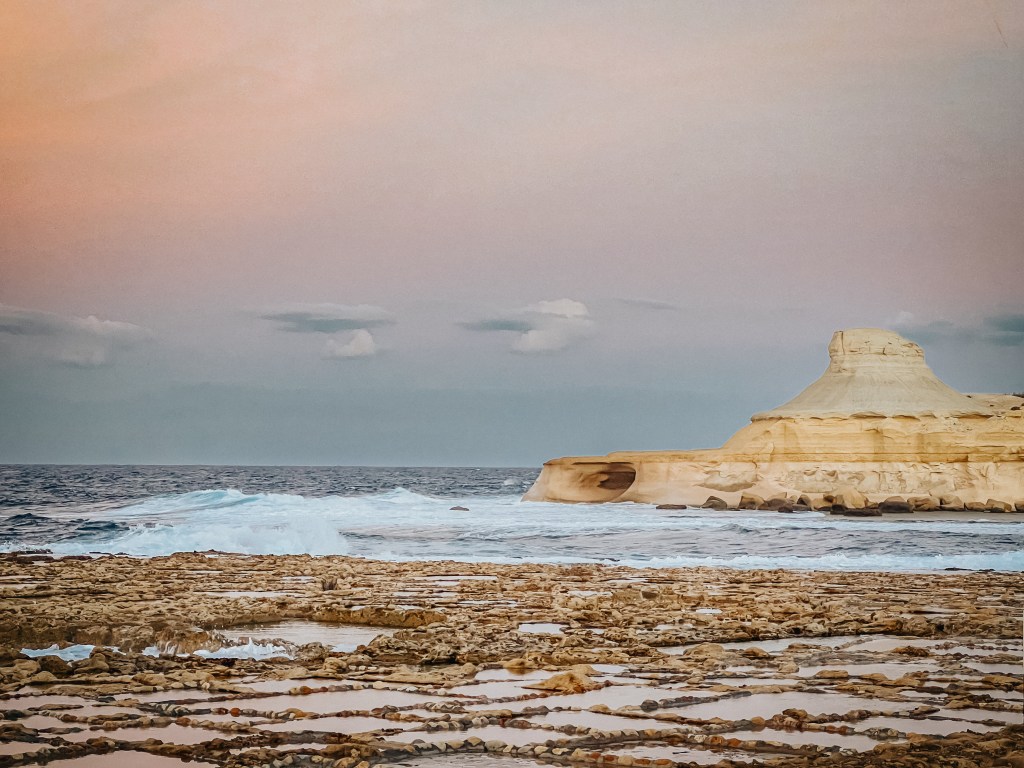
Our final stop in Gozo was near The World Record Rock, a less-known but equally fascinating sight. Surrounded by more salt pans, the area was a testament to the island’s unique geology and history (photo Kamila Z.).
Returning to Malta: Mdina by Night
With nightfall approaching, we made our way back to Malta. Our destination was Mdina, the old capital, often referred to as “The Silent City.” This part of our journey deserves its own chapter, as Mdina is not just a place but an experience, a journey back in time.
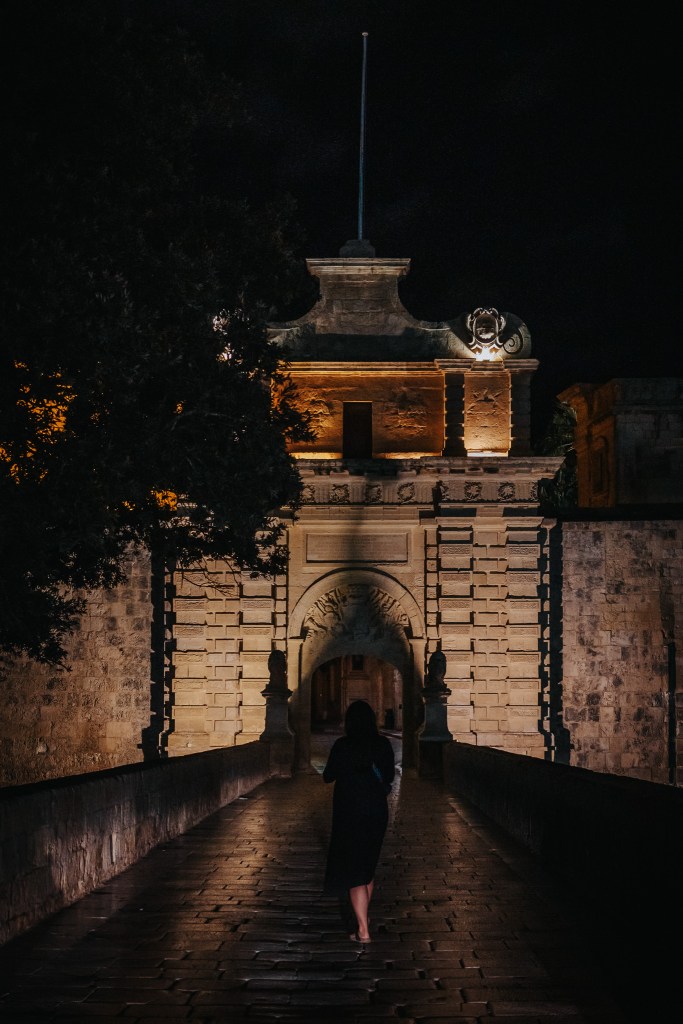
The History and Architecture of Mdina
Mdina’s history is as rich as it is long, dating back more than 4,000 years. This ancient city has seen various rulers, from the Romans to the Knights of St. John, each leaving their mark on its architecture and culture. The city’s current design primarily reflects its Arab and medieval past, with narrow, winding streets and baroque architecture that transport you to a different era.
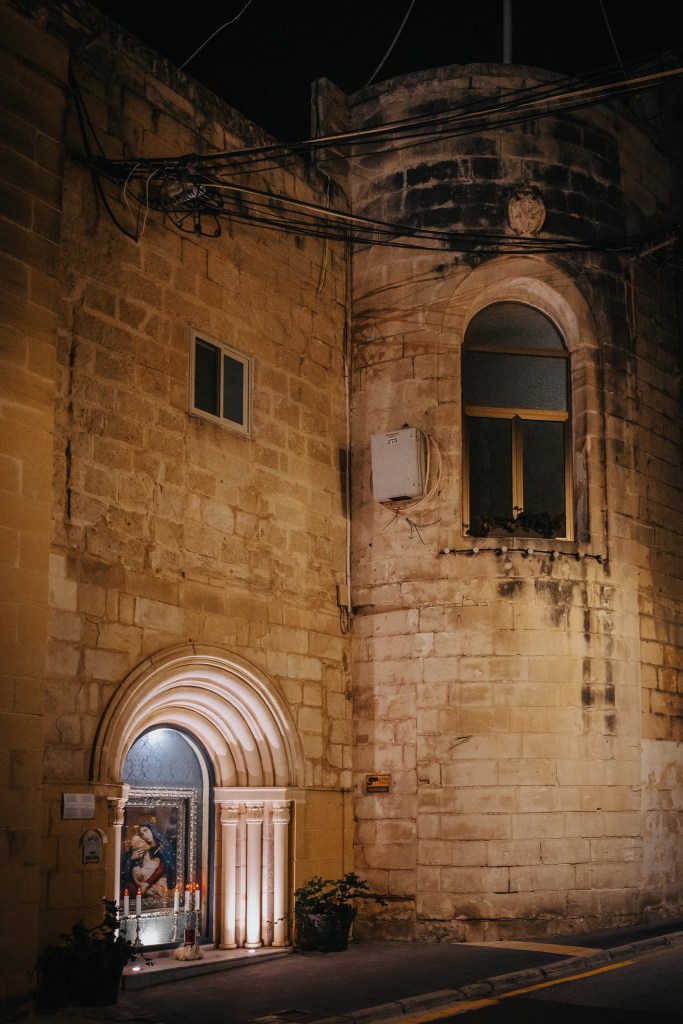
The city’s walls and bastions are particularly noteworthy, offering a stunning view of the Maltese landscape. These fortifications have protected Mdina for centuries, contributing to its nickname, the “Silent City,” as they also serve to keep the hustle and bustle of the outside world at bay.
Walking Through Mdina
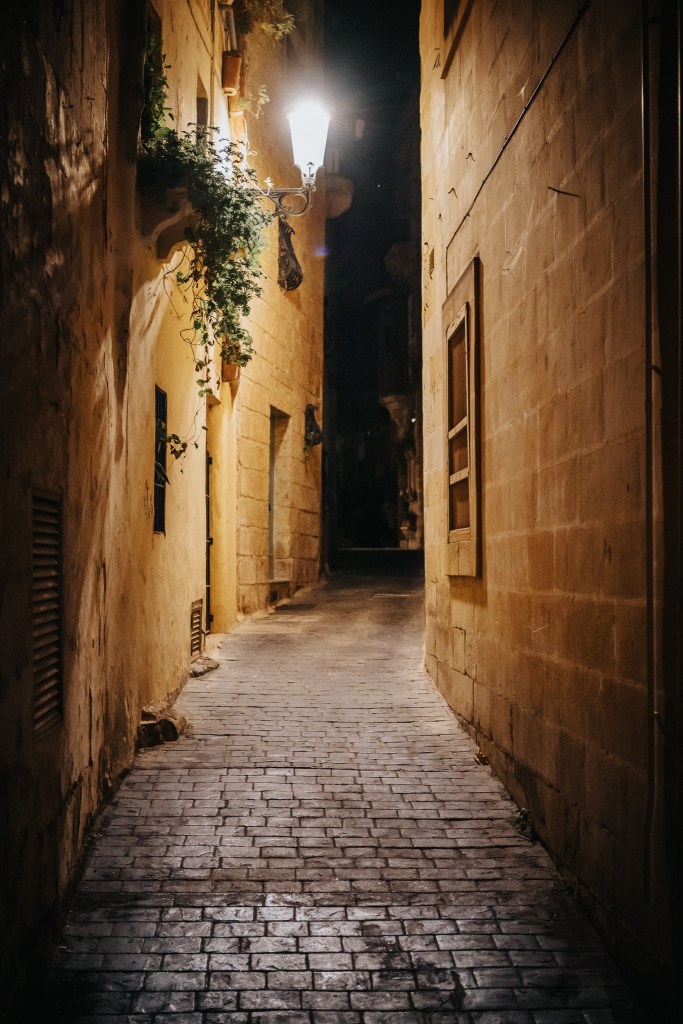
Strolling through the lamp-lit streets of Mdina at night is like walking through a living museum. The silence is almost palpable, a stark contrast to the lively streets of other Maltese towns. The limestone buildings, illuminated by the soft glow of streetlights, create a warm, inviting atmosphere.
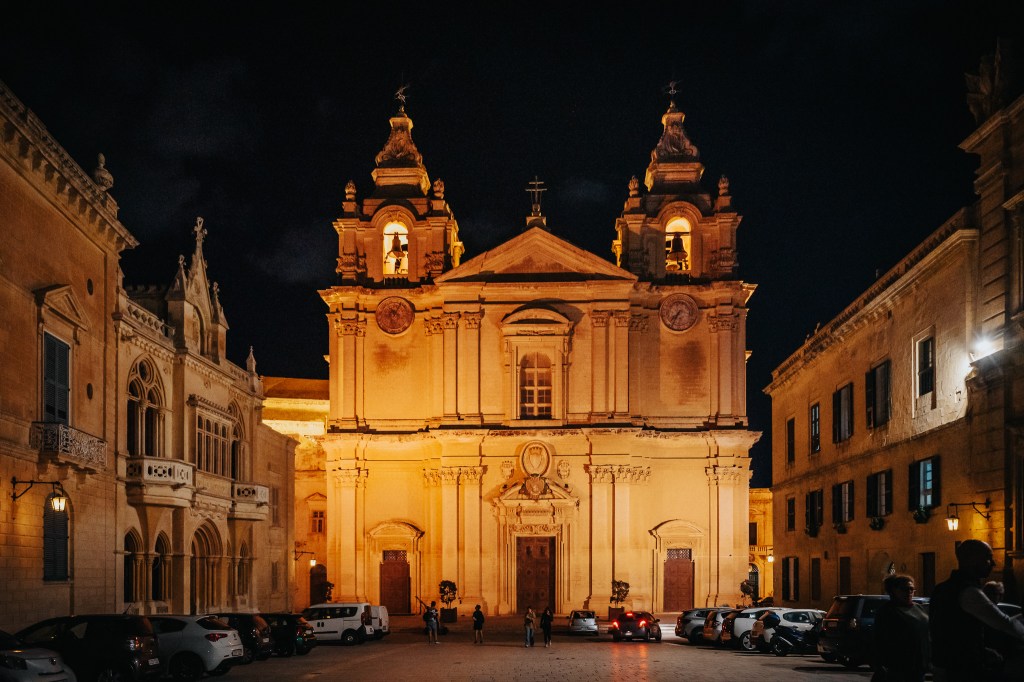
One of the most striking features of Mdina is its mix of Norman and Baroque architecture. This is best exemplified by the Mdina Cathedral, officially known as St. Paul’s Cathedral. Its imposing facade and beautifully adorned interior are a testament to Malta’s rich religious and cultural history.
Hidden Gems and Atmospheric Evenings
Every corner of Mdina has a story to tell, but the most magical part of Mdina is simply wandering its streets. The city’s layout is a labyrinthine wonder, with each turn revealing hidden courtyards, quaint shops, and stunning views. At night, the city transforms into an atmospheric wonderland, its silence and beauty offering a serene escape from the modern world.
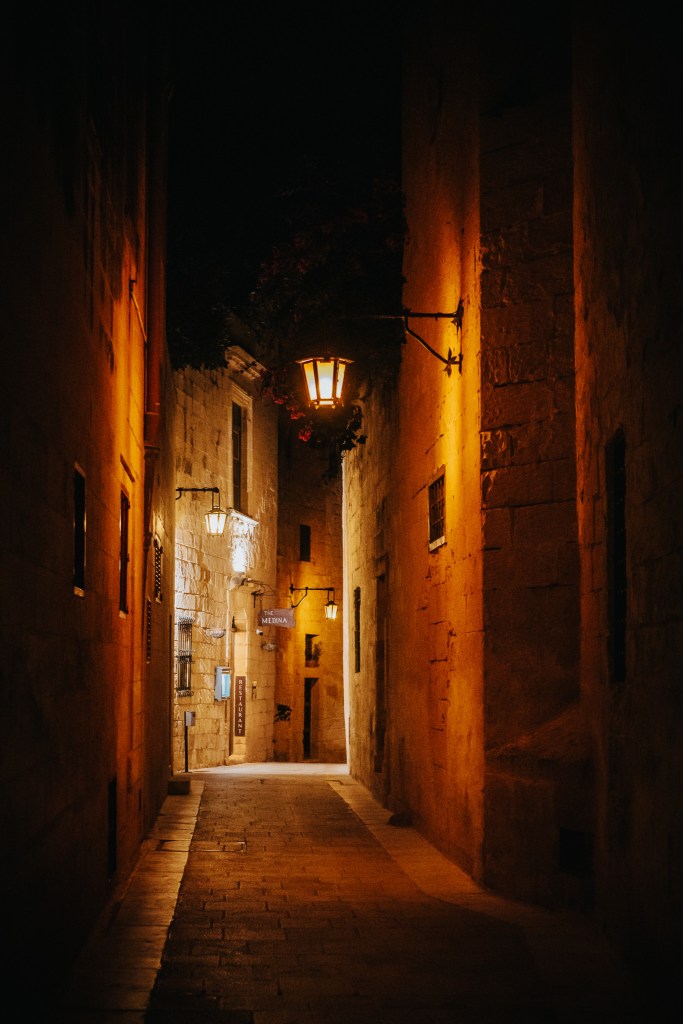
As we left Mdina, the city’s enchanting aura stayed with us. Its quiet streets, rich history, and stunning architecture make it a must-see for anyone visiting Malta. Mdina is not just a destination; it’s a journey into the heart and soul of Maltese history and culture. It’s a place that, once visited, stays with you long after you’ve left its ancient walls.
Sunday: Marsaxlokk and Valletta
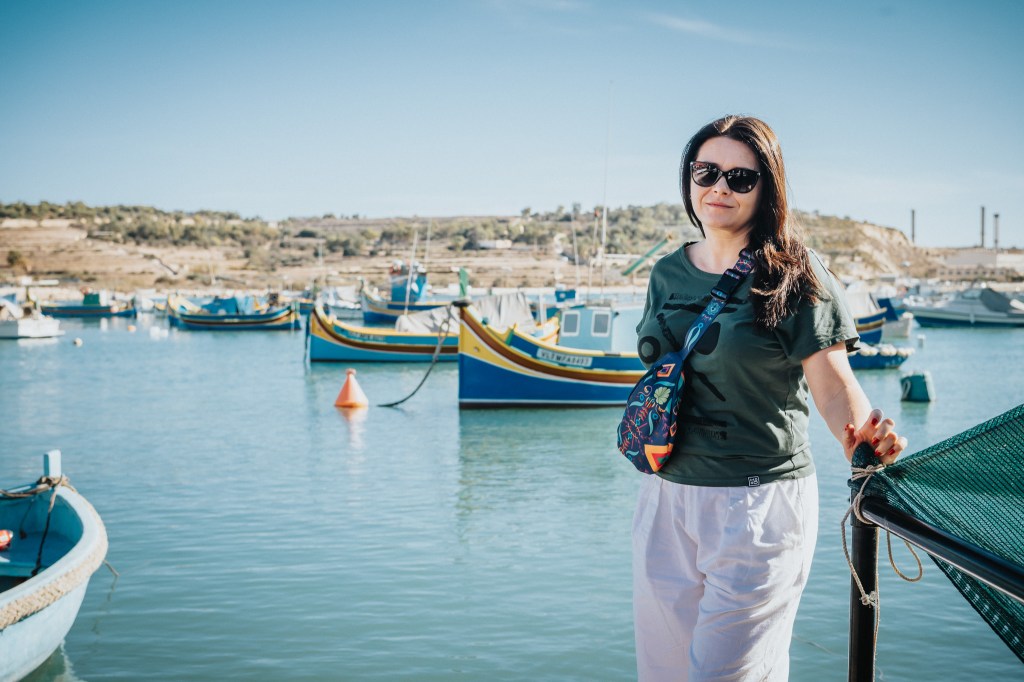
Our final day in Malta started in Marsaxlokk, a traditional fishing village famous for its colorful boats and Sunday market. The market was a flurry of activity, with vendors selling everything from fresh seafood to local crafts.
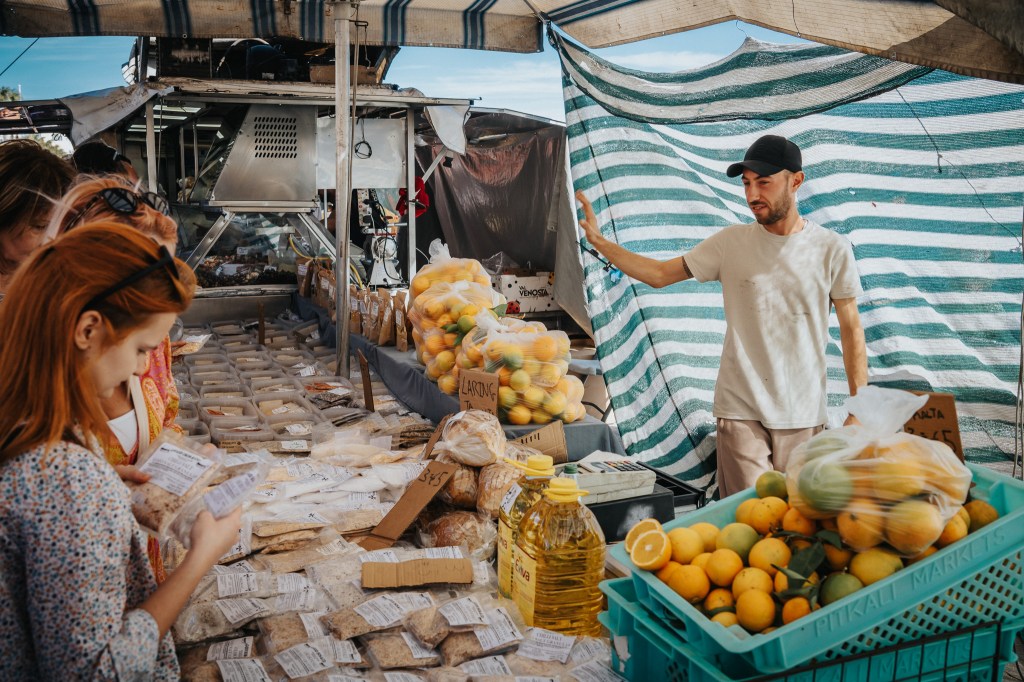
Strolling through the market, one is greeted by the enticing aroma of fresh fish and seafood, a hallmark of Marsaxlokk’s culinary scene. The market is a paradise for food lovers, offering the freshest catch of the day, straight from the fishermen’s boats to the market stalls. It’s an opportunity to witness the local culinary traditions firsthand and to savor dishes like Lampuki Pie (fish pie), a seasonal specialty.
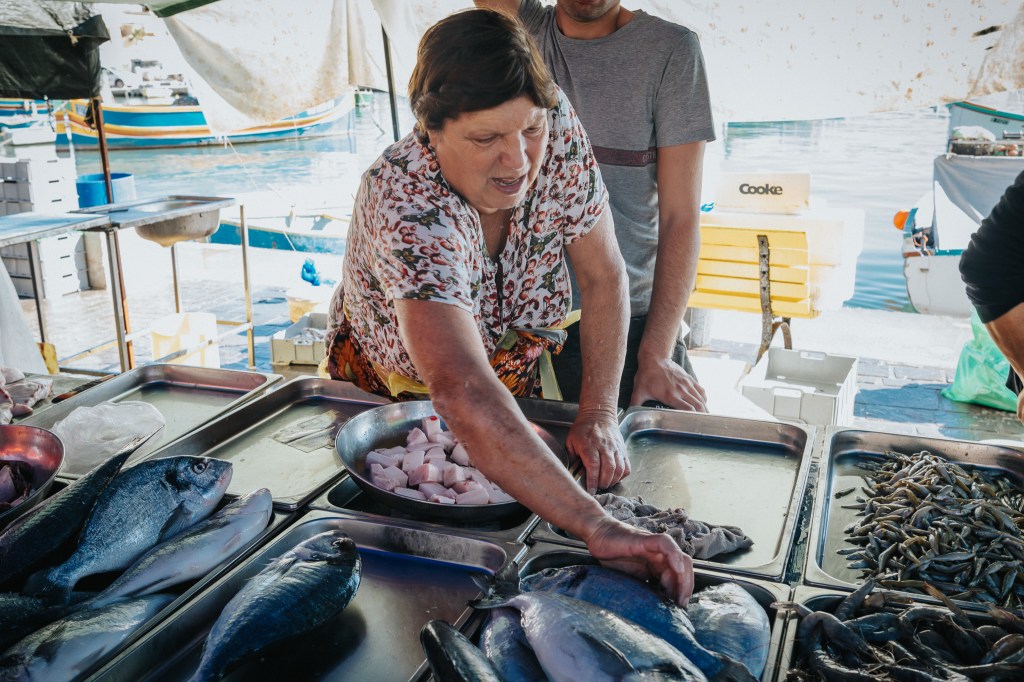
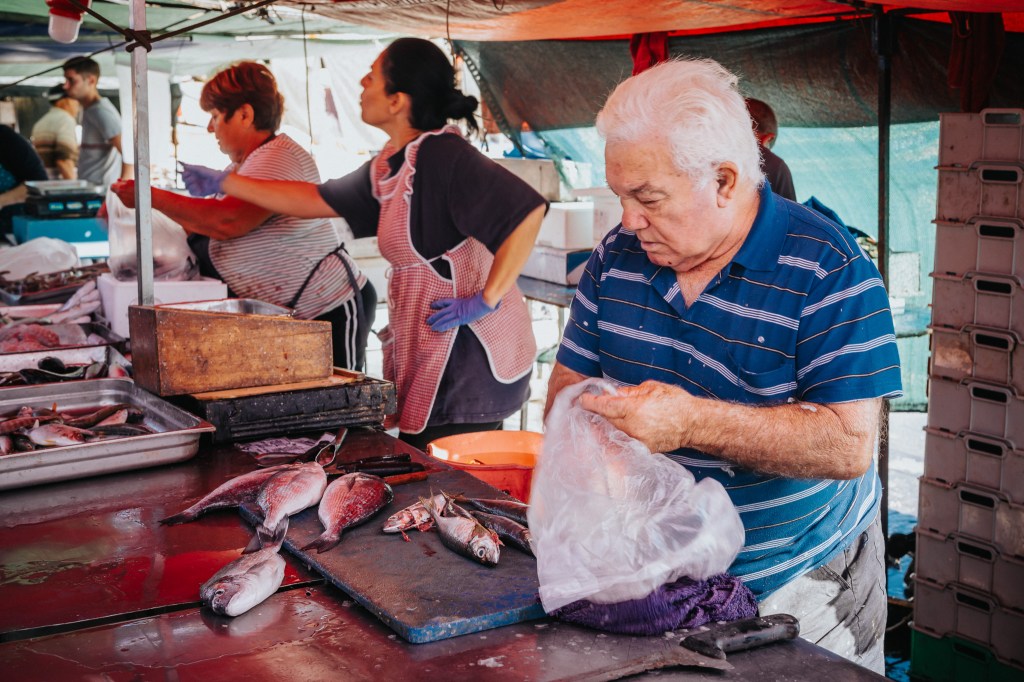
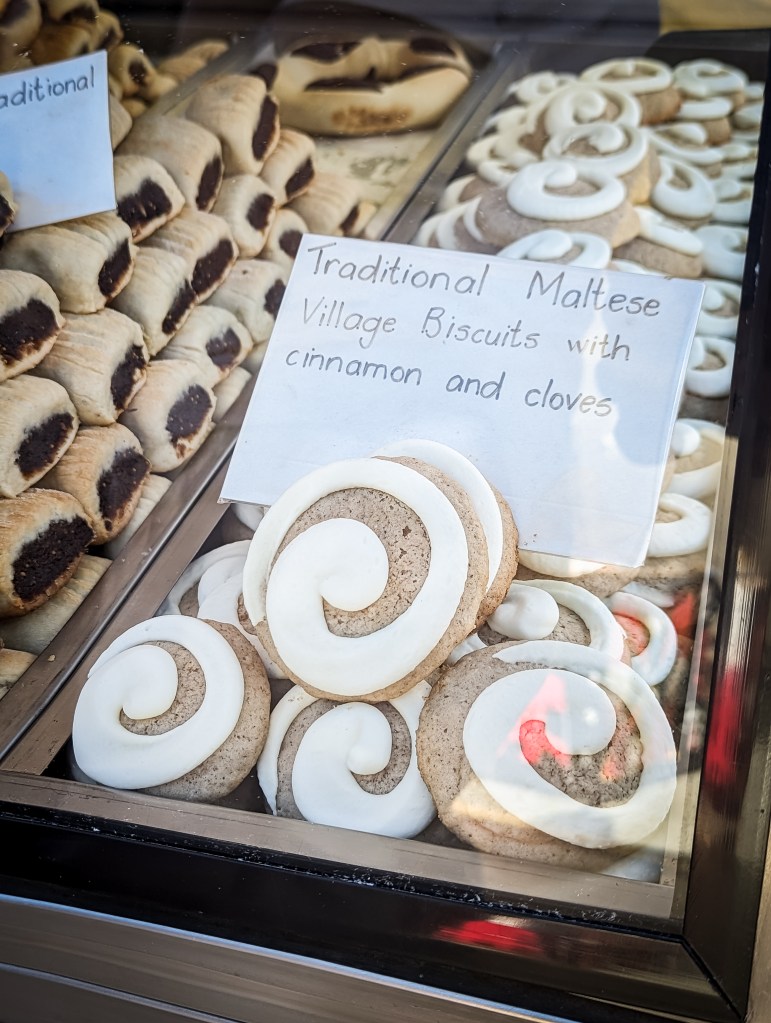
Apart from seafood, the market is also a treasure trove of local produce, artisan crafts, and souvenirs. Handmade lace, delicate filigree jewelry, and vibrant ceramics are just a few of the items that showcase the artistry and skill of Maltese craftsmen. These items are not just souvenirs but pieces of Maltese heritage, each with its own story and significance.
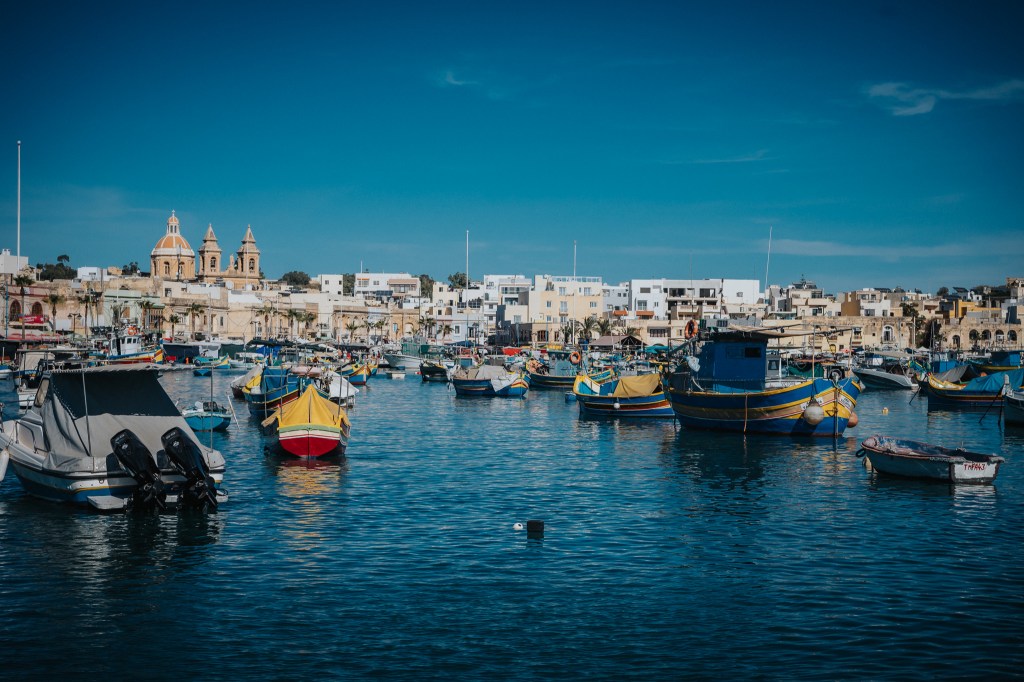
Marsaxlokk, with its serene bay and laid-back ambiance, is a stark contrast to the bustling streets of Malta’s more tourist-centric areas. This village is steeped in fishing tradition, evident in every aspect of its daily life. The harbor, lined with brightly painted boats, each adorned with the Eye of Osiris for protection, presents a kaleidoscope of colors that delight the senses.
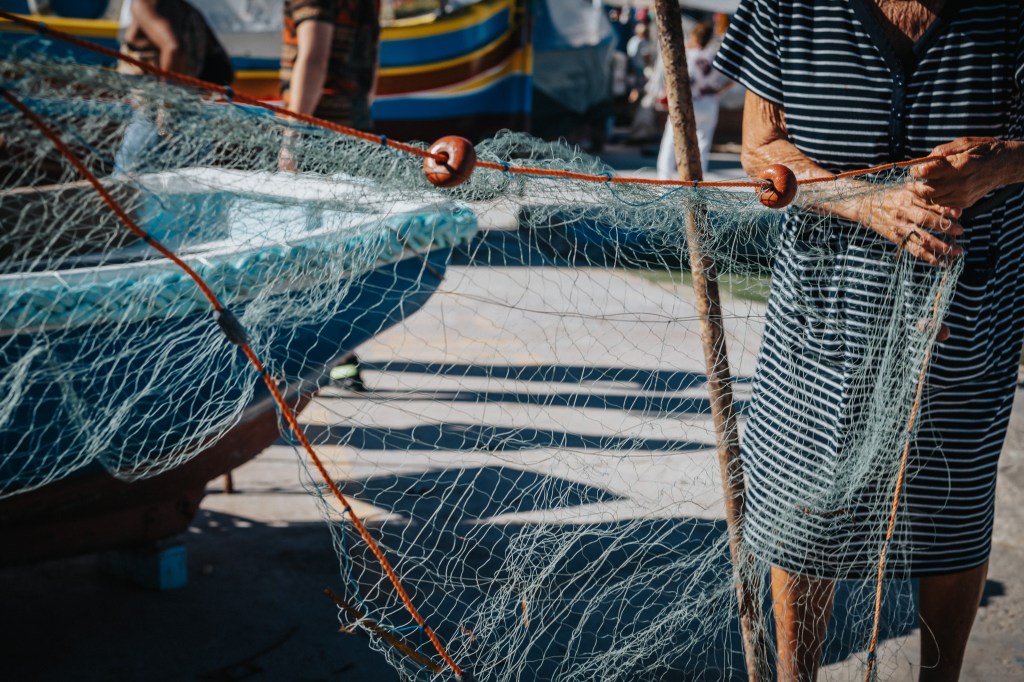
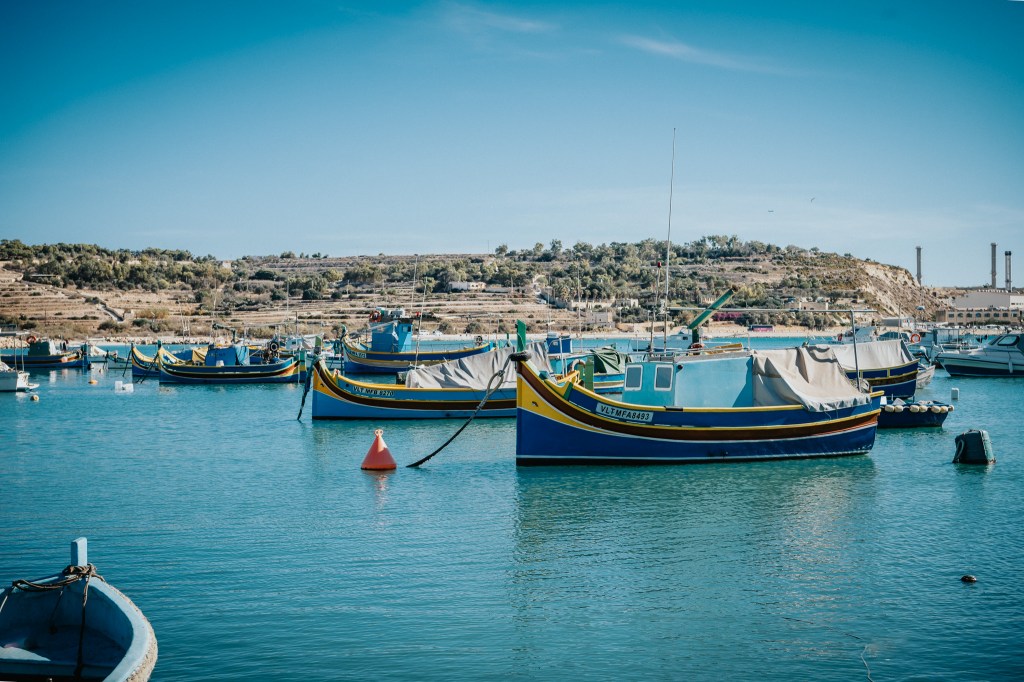
The significance of these boats extends beyond their aesthetic appeal. They represent a centuries-old fishing tradition in Malta, a testament to the island’s deep connection with the sea. The design of the luzzu, with its sturdy frame and vivid colors, has been passed down through generations, each boat telling its own story of the sea and those who brave its waves.
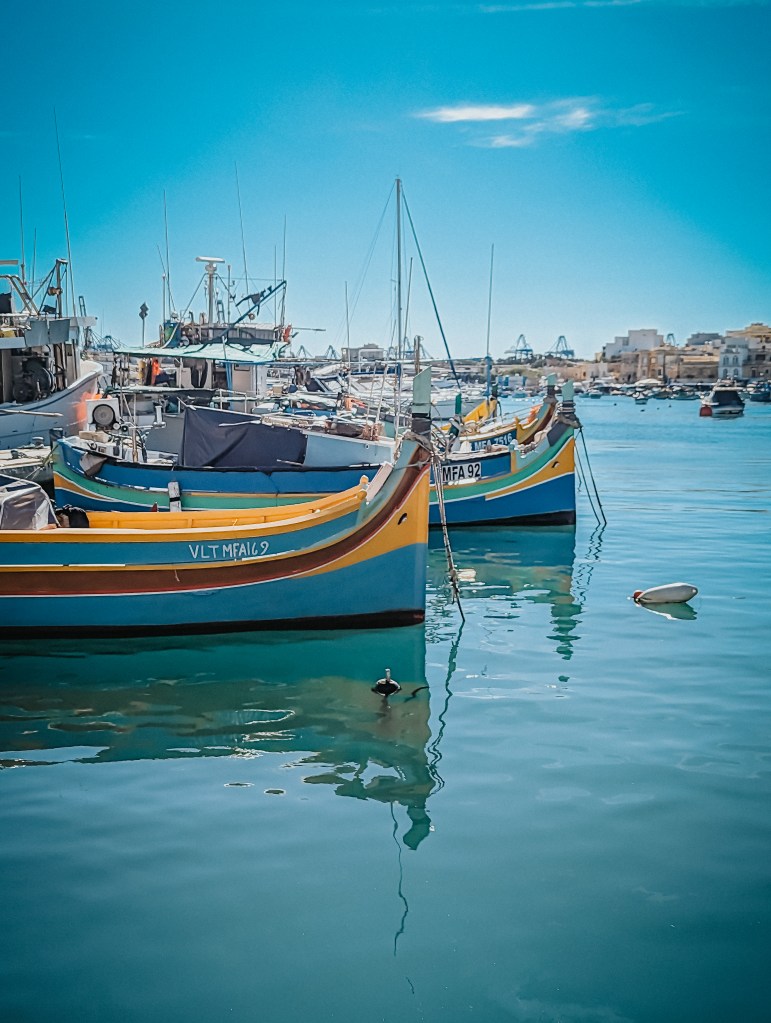
Dining in Marsaxlokk is another highlight, with several seaside restaurants offering a taste of traditional Maltese cuisine. The experience of enjoying a meal while overlooking the harbor, with its bobbing luzzus and the gentle sound of waves, is both picturesque and deeply satisfying. Lunch at UNICO Restaurant was a culinary highlight, with fresh, flavorful dishes that captured the essence of Maltese cuisine.
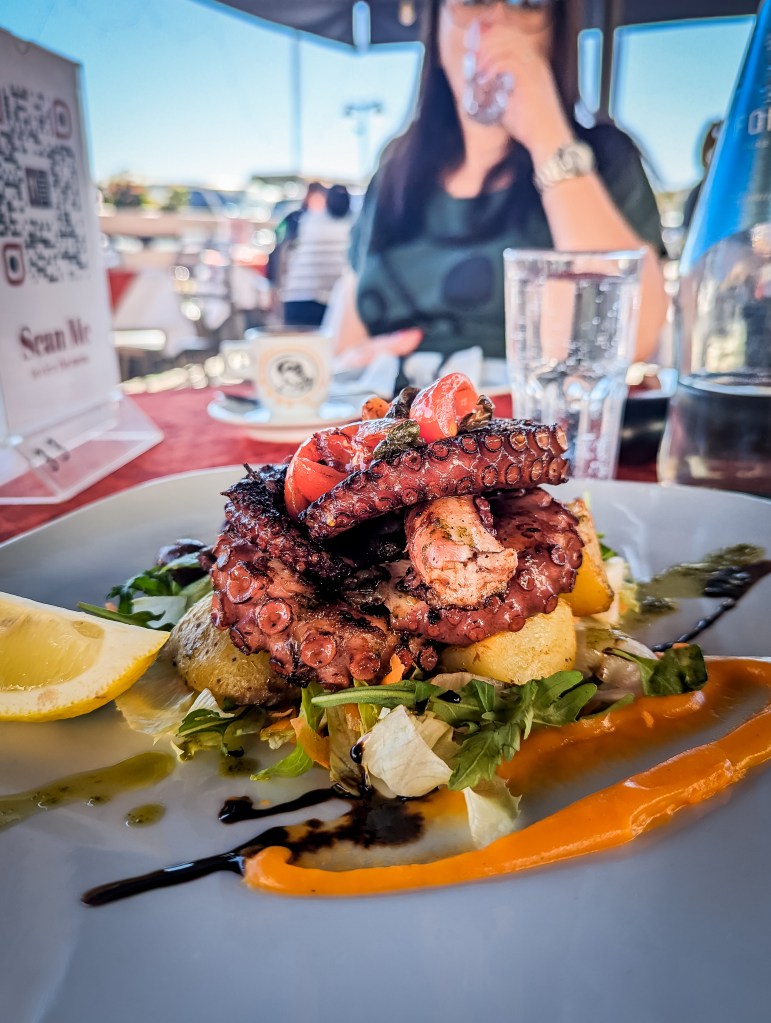
Our visit to Marsaxlokk was a journey into the heart of Maltese tradition. This charming village, with its colorful boats and vibrant market, encapsulates the essence of Malta’s fishing heritage. It’s a place where time seems to slow down, allowing visitors to savor the simple pleasures of life by the sea.
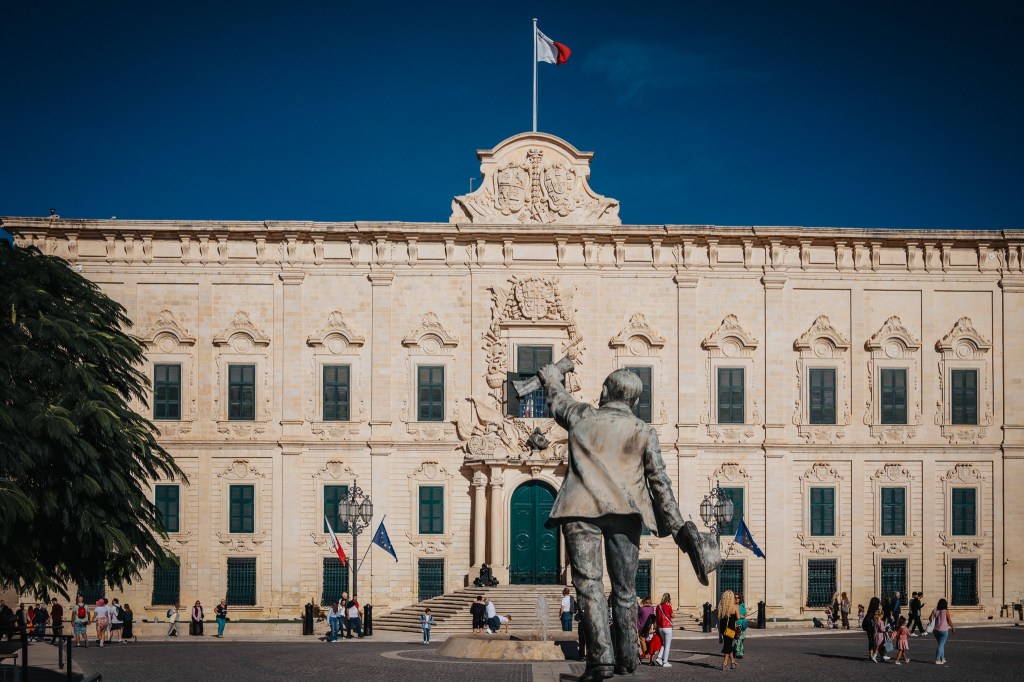
As the final chapter of our Maltese adventure unfolded, we found ourselves in the enchanting city of Valletta. This UNESCO World Heritage site is not only the capital of Malta but also a living museum, brimming with history, culture, and architectural marvels.
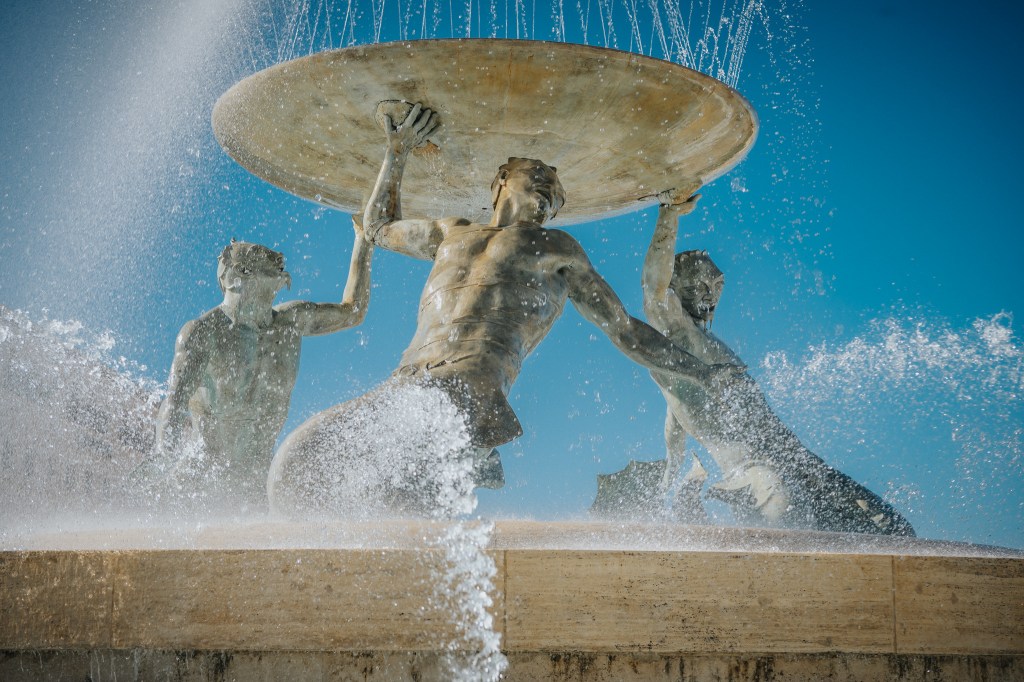
Our exploration of Valletta began at the iconic Triton Fountain, a symbol of the city’s strength and resilience. Situated at the city’s main entrance, the fountain features three bronze Tritons holding up a large basin, a masterpiece that elegantly combines art with mythology. The fountain is more than just a stunning piece of art; it’s a meeting point for locals and tourists, a place where the energy and diversity of Valletta come to life.
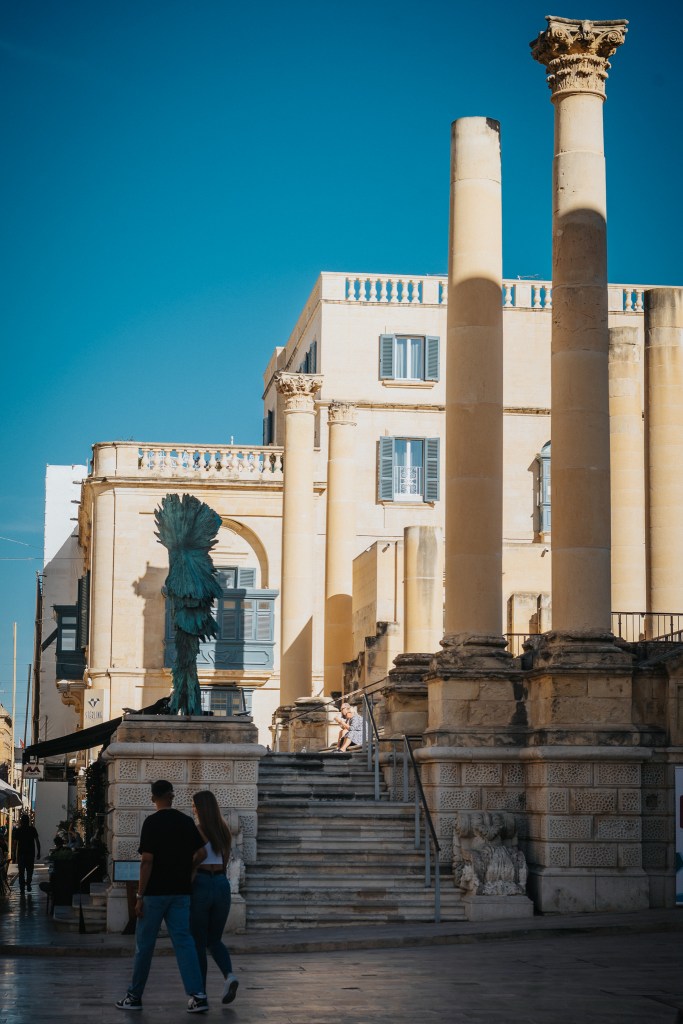
A short walk from the Triton Fountain led us to Pjazza Teatru Rjal, a testament to Valletta’s vibrant cultural scene. This open-air theater, built on the ruins of the Royal Opera House, hosts various performances, blending the historical with the contemporary. The juxtaposition of the theater’s modern structure against the backdrop of Valletta’s historic buildings creates a unique visual and cultural experience.
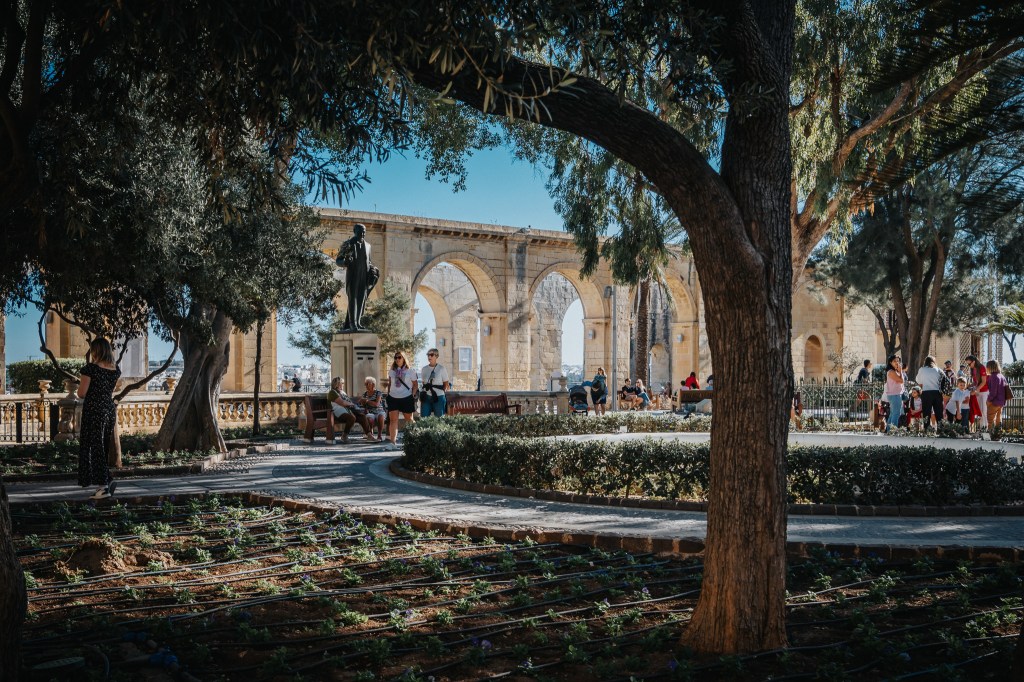
Perhaps one of the most breathtaking sights in Valletta is the view from the Upper Barrakka Gardens. Perched atop the city’s highest point, the gardens offer a panoramic vista of the Grand Harbour and the Three Cities. The lush greenery, coupled with the serene atmosphere, makes the Upper Barrakka Gardens a perfect spot for reflection and admiration of the city’s beauty.
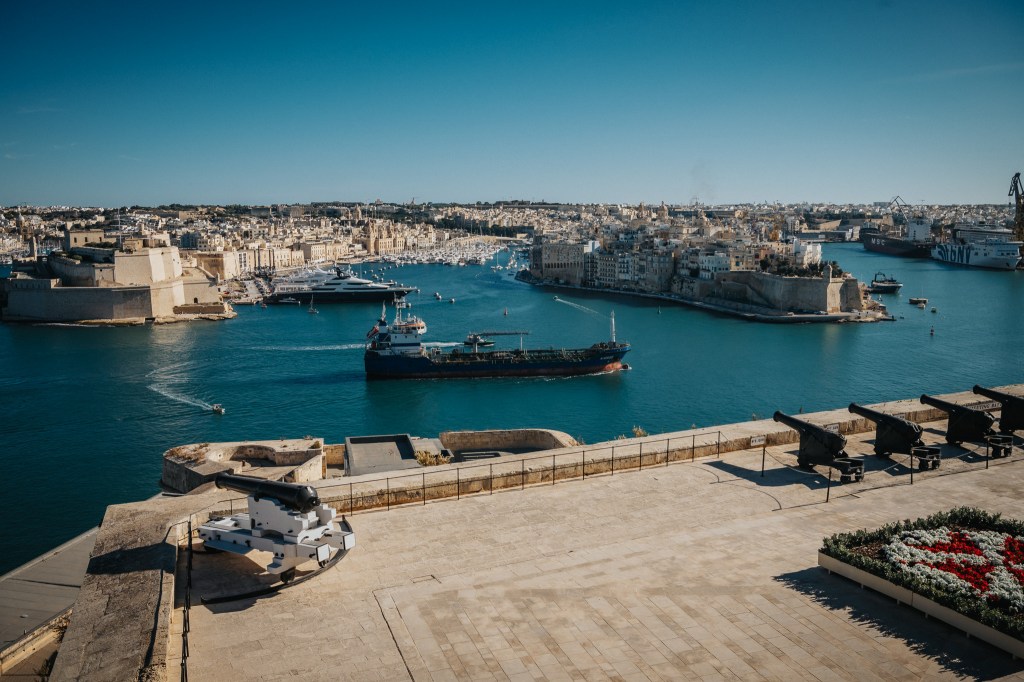
From the gardens, the Three Cities – Birgu, Senglea, and Cospicua – can be seen in their full splendor. These cities, each with their own rich history, contribute to the grand tapestry that is Malta’s history.
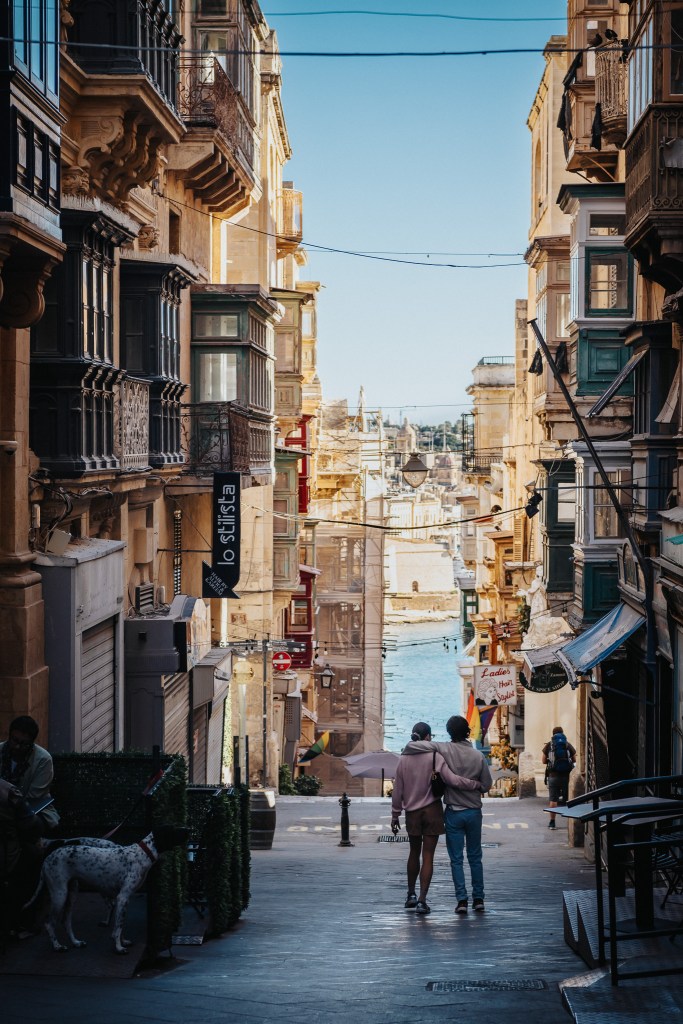
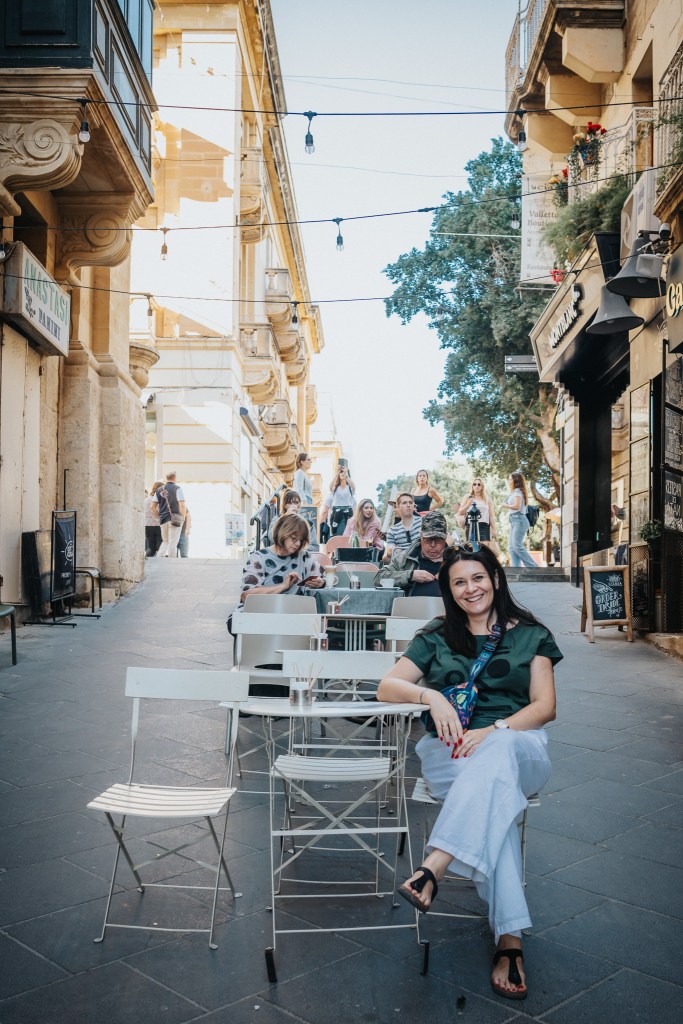
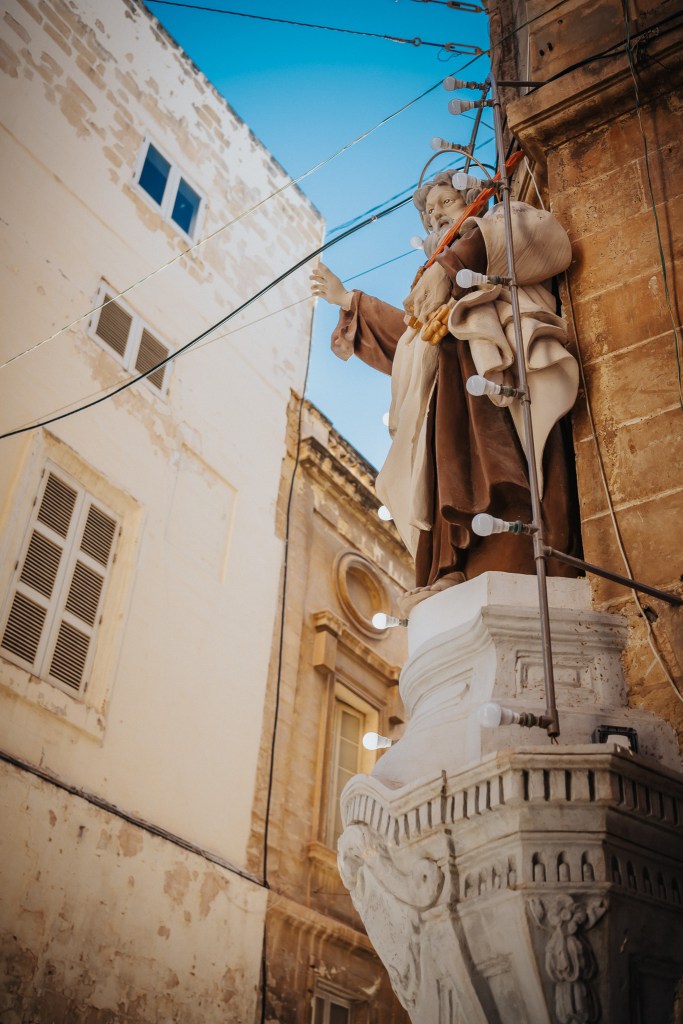
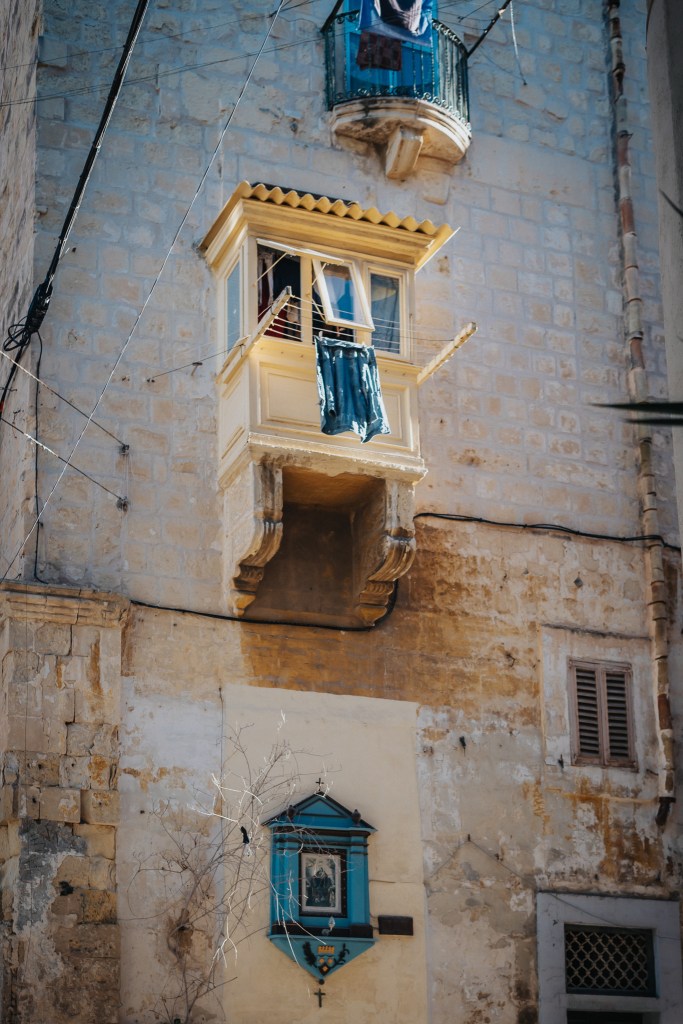
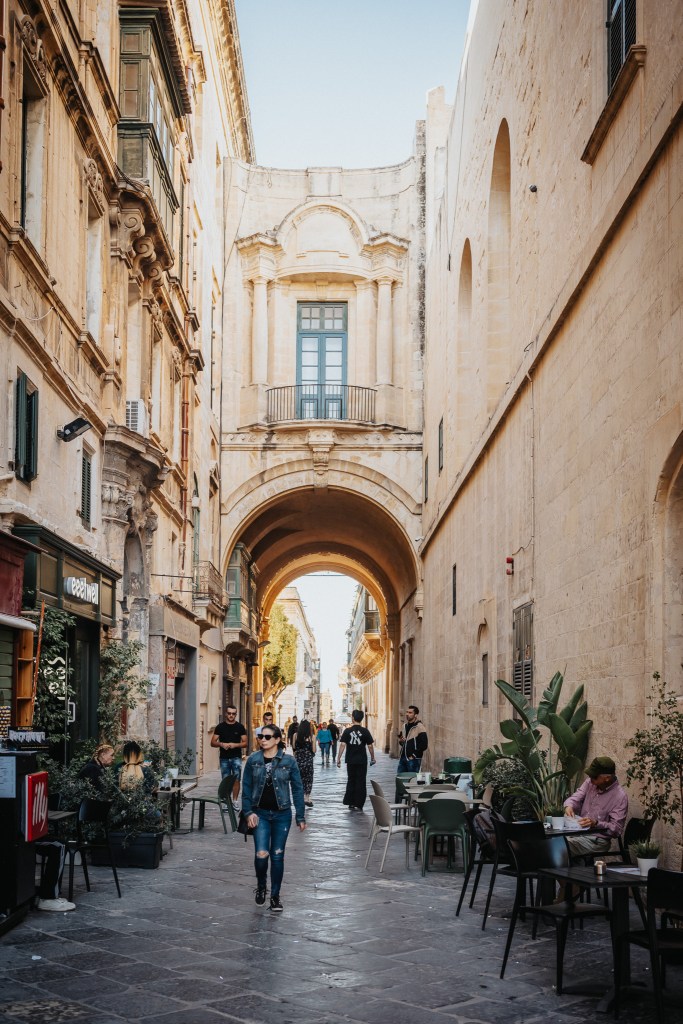
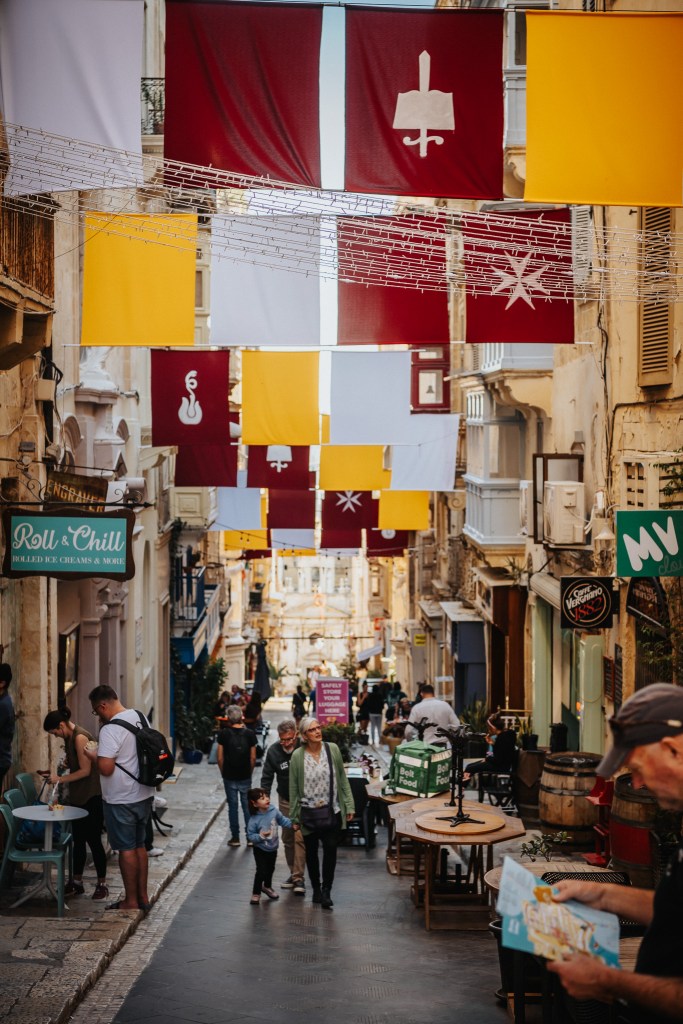
Walking the streets of Valletta is like traversing a living history book. Each corner, each alley holds a story. From the grandeur of St. John’s Co-Cathedral to the charm of the myriad shops and cafes, the city exudes a blend of historical significance and modern-day vibrancy.
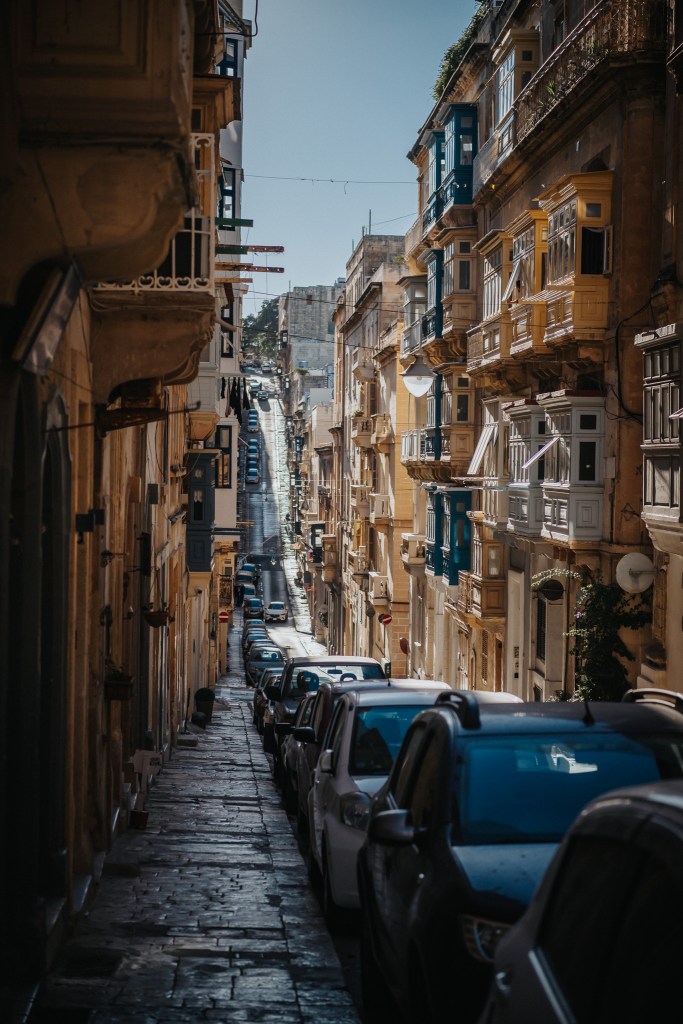
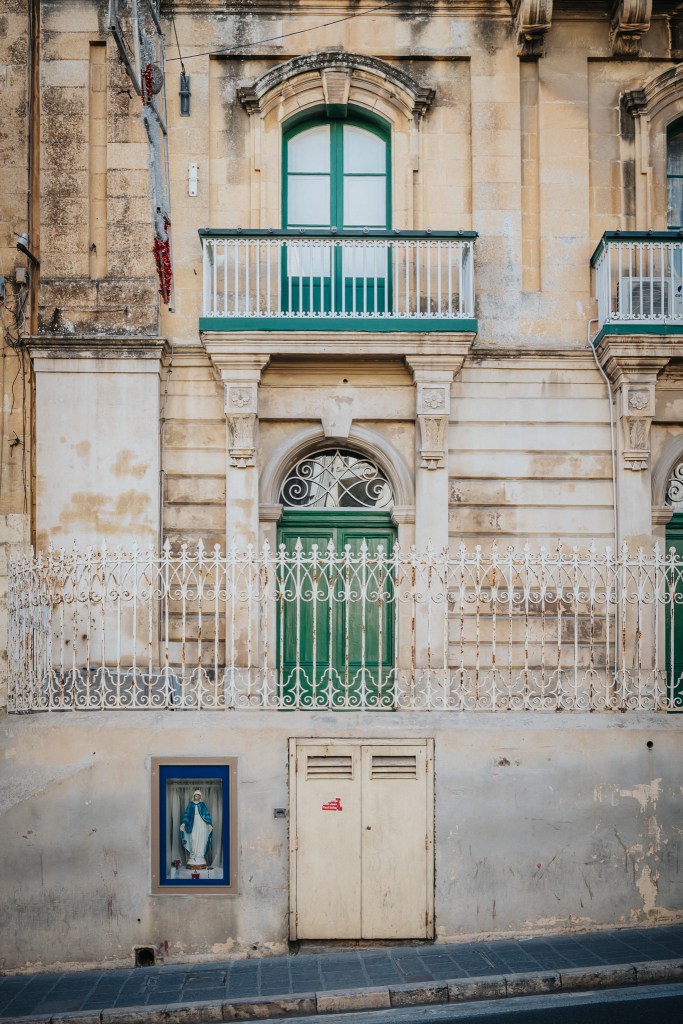
One can’t help but be captivated by the baroque architecture, the ornate balconies, and the myriad of colors that make up the cityscape. The streets of Valletta are not just pathways but gateways to discovering the soul of the city.
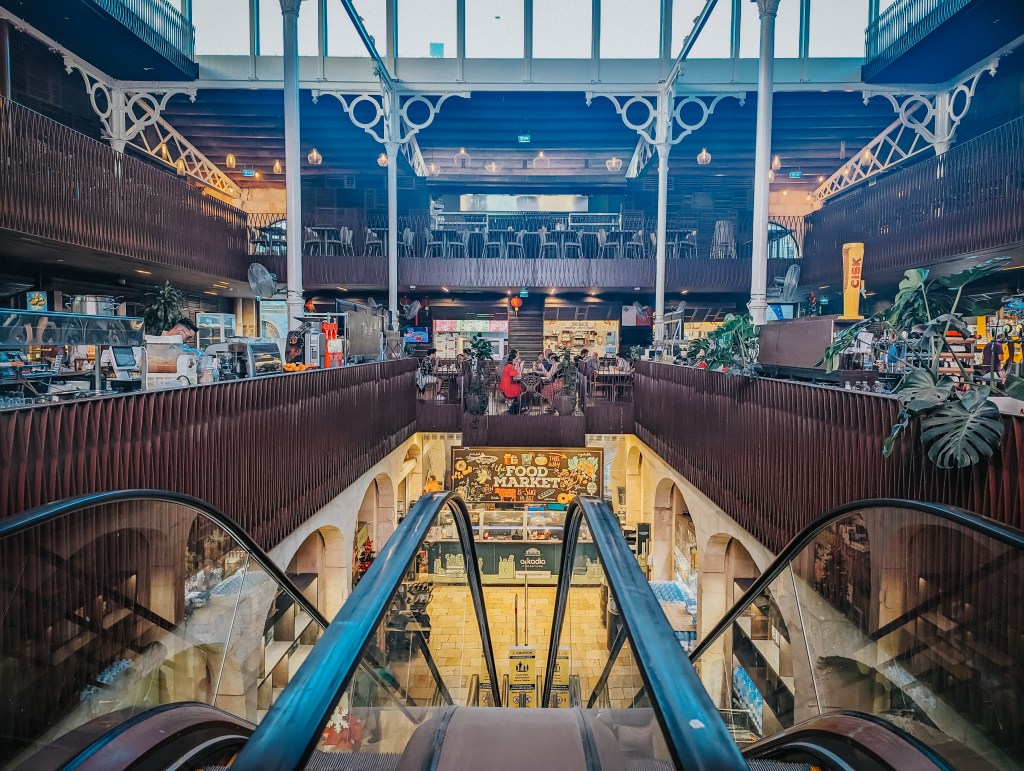
Our exploration led us to Is-Suq Tal-Belt, Valletta’s renowned food market. Housed in a restored Victorian-era building, the market is a hub of culinary activity. From traditional Maltese dishes to international cuisine, the choices were vast and tempting.
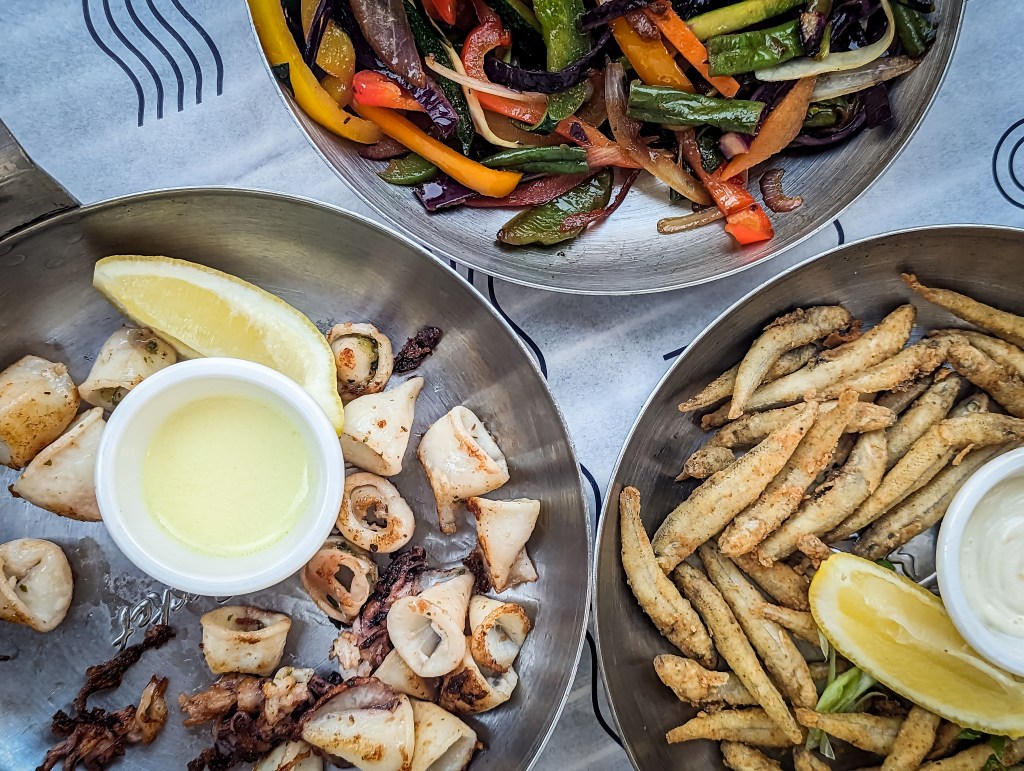
We dined at Ocean Basket, a delightful restaurant within the market, known for its fresh seafood and inviting ambiance. The meal was a perfect culmination to our Valletta experience, offering a taste of the local flavors in a setting rich with history and character.
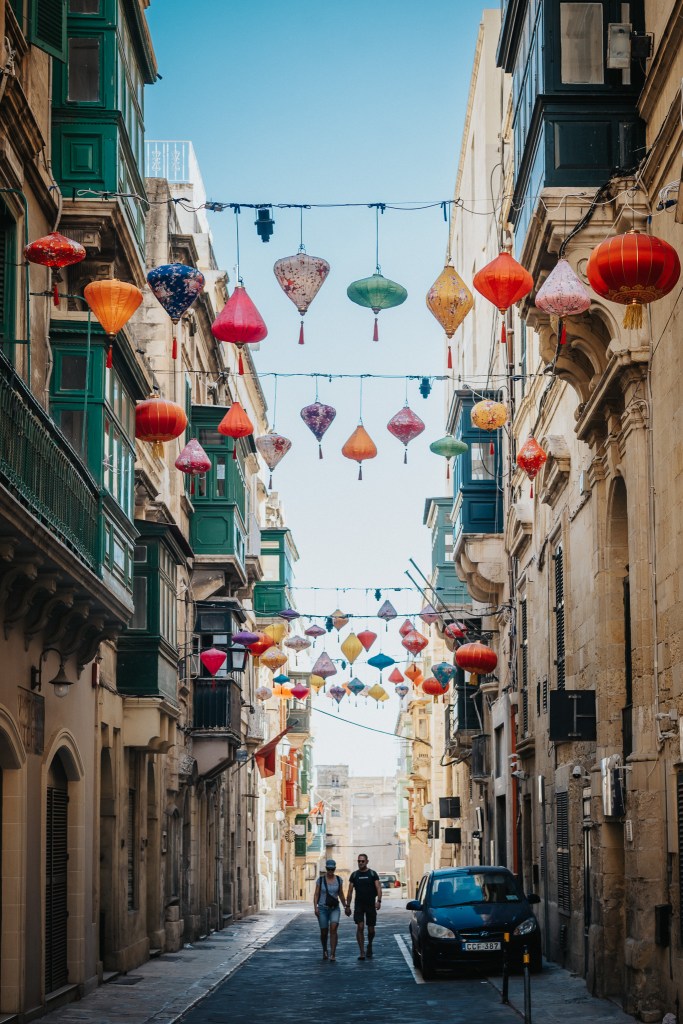
As our time in Valletta came to an end, we were left in awe of the city’s ability to seamlessly blend the past with the present. Valletta is not just Malta’s capital; it is a symbol of the island’s resilience, its rich history, and its vibrant future. It’s a city that deserves to be explored, savored, and remembered.
Why Visit Malta in Winter?
Our weekend in Malta was a whirlwind of discovery and enjoyment. Winter in Malta is a hidden gem – the mild weather makes it ideal for exploring, and the lack of crowds allows for a more intimate experience. The architecture, a blend of historical influences, shines in the softer winter light. From the bustling streets of St Julians to the quiet majesty of Mdina, Malta in winter is a traveler’s delight.
As I boarded my flight back, I was already planning my return. Malta, with its rich tapestry of history, culture, and natural beauty, had captured my heart. I left knowing there was so much more to explore and that I would definitely be back.
 MKS Photography Travel
Leave a comment