After two hours of sleep, just a camera and passport in my bag, I found myself climbing aboard the National Express at 3:00 AM, bleary-eyed and fuelled only by sheer willpower (and a bit of travel adrenaline). The coach whisked me off to Bristol Airport, where the real magic began. Still half-asleep but buzzing with anticipation, I grabbed a lavender matcha and a cinnamon bun from the airport café. Breakfast of champions, right?
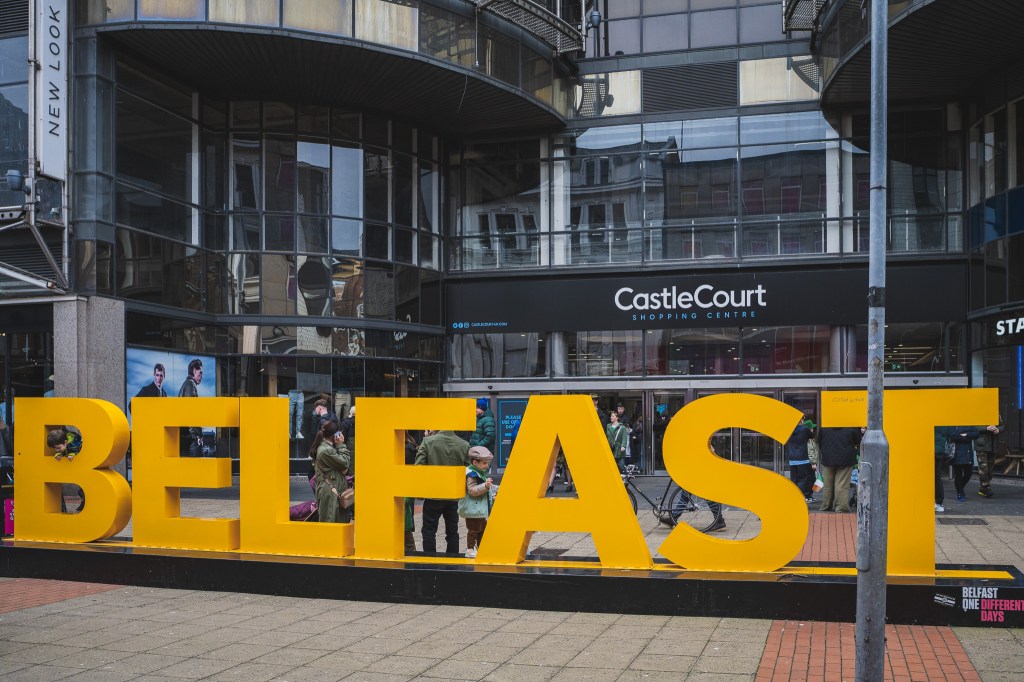
With warm pastry in hand and caffeine beginning to kick in, I hopped onto my nearly empty EasyJet flight. Just an hour later, I landed in… BELFAST!
Yes, I did it! My long-awaited Belfast day trip had begun, and spoiler alert: it was glorious.
Now, let’s get this out of the way—Dublin and Belfast are not the same. Not even close. Dublin is my forever love, don’t get me wrong, but Belfast? Belfast is that cheeky, rebellious weekend fling you end up texting again. And again. No regrets.
First things first: Getting into the city
I arrived at Belfast International Airport and had pre-booked my bus into the city via the Translink website. Easy peasy. But if you’re more spontaneous (or forgot), no stress—you can grab a ticket from the driver. A one-way ride costs £9, or a same-day return ticket is just £13.50.
Pro tips before you go:
🏨 Looking for somewhere to stay? Then take a look at Booking.com or Hostelworld
🚌 Seeking a sense of adventure? Then book day tours and activities with GetYourGuide or Viator
🏥 Wan’t to keep yourself insured as you travel? Then I recommend VisitorsCoverage.
🚘 Planning a road trip? Then check out AutoEurope.
✈️ Looking to score the best flight deals for Ireland? Then check out Trip.com for the best options
📸 Don’t want to forget you have to pack for a trip and make the memories? Then this bag and this camera are for you!
📞Want to stay connected? Yesim has the best e-sim deals.
Morning | Political Walking Tour (Self-Guided)
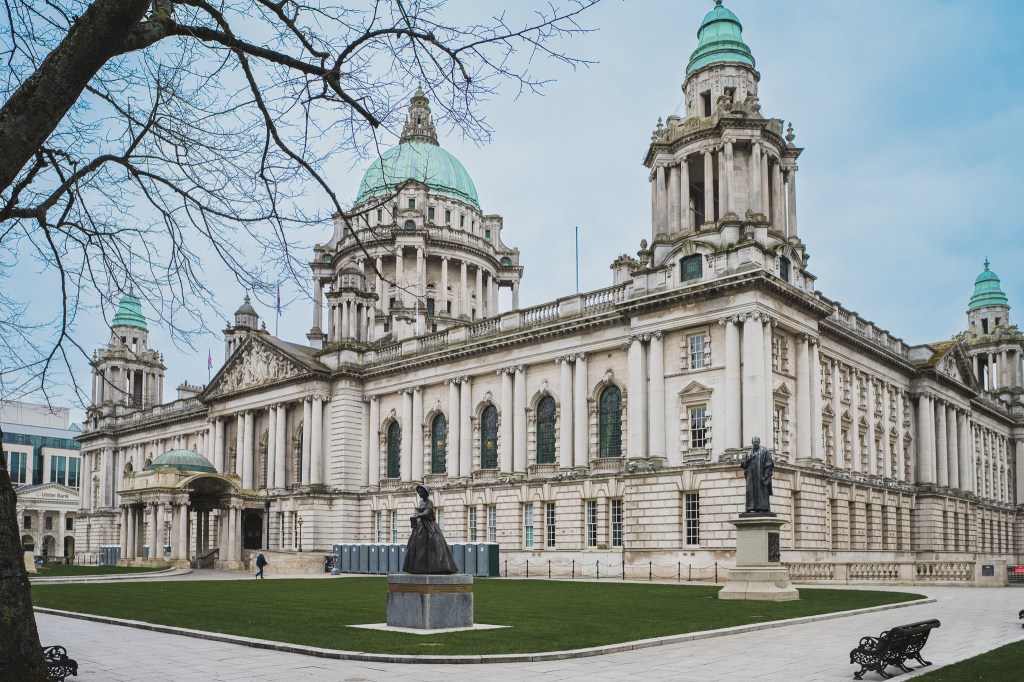
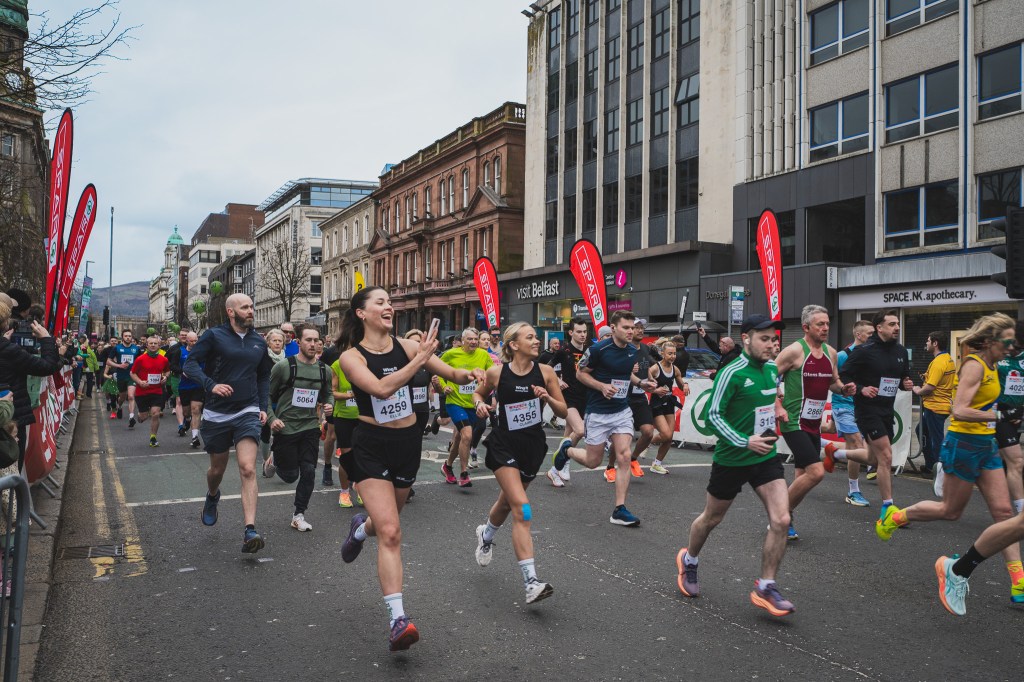
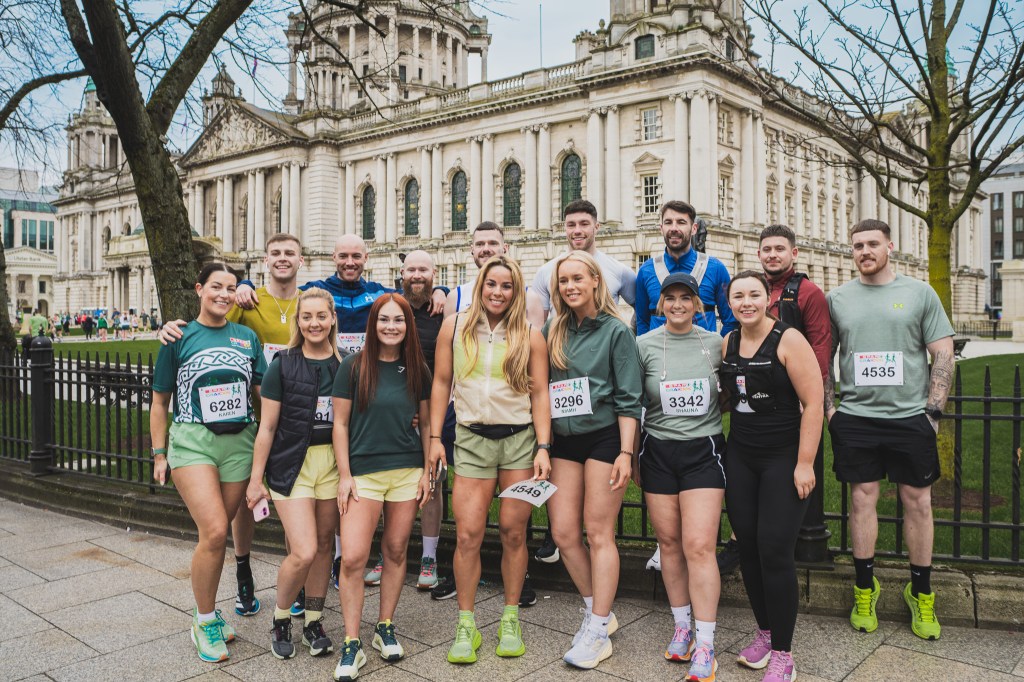
I arrived at Europa Bus Centre on Glengall Street at about 9:30 AM and made my way to Belfast City Hall (BT1 5GS)—a quick five-minute walk. As I arrived, the annual St. Patrick’s Day run was in full swing, and to my surprise, I met the lovely Micky Murray, Belfast’s first openly gay Lord Mayor. And let me tell you, what a delight! Warm, chatty, and just the vibe you’d hope for in a public figure.

After that energetic start, it was time for my self-guided political history tour. Pro tip: if you want to save your feet, consider booking a Black Cab Tour instead. But I love walking, detouring, and snooping into back alleys, so on foot it was!
Stop 1: International Wall Murals
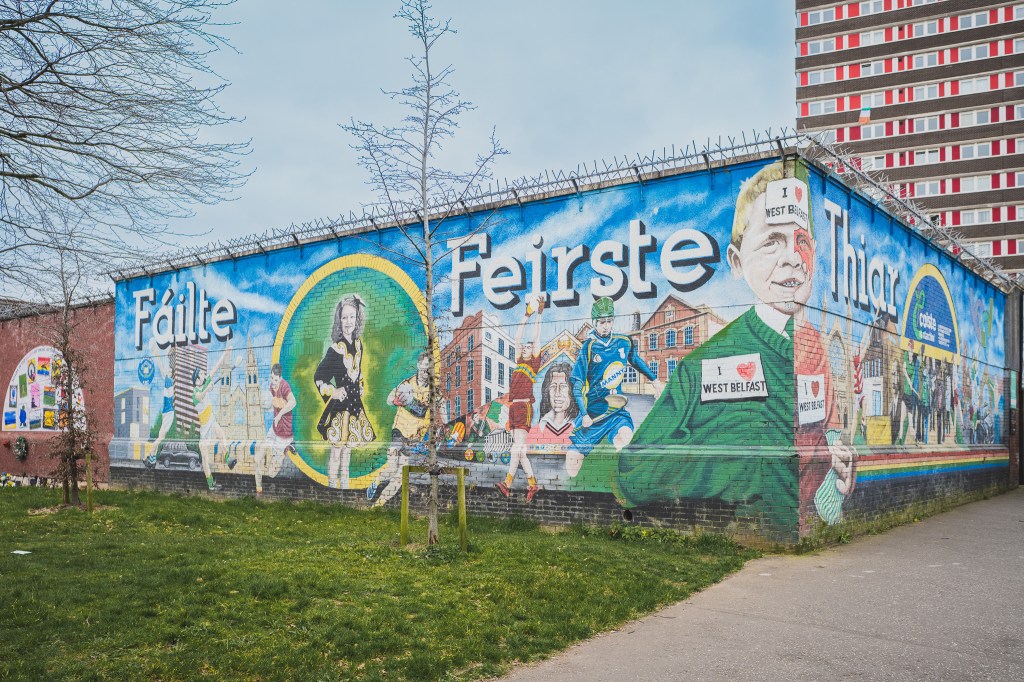
📍 Address: Divis Street & Northumberland Street, BT12 4AH
The International Wall Murals are Belfast’s own open-air political art gallery, offering a raw, unfiltered look into local and global struggles. Each mural is a powerful statement—some depicting The Troubles, others addressing Palestinian resistance, Catalonia’s independence movement, and tributes to Nelson Mandela.
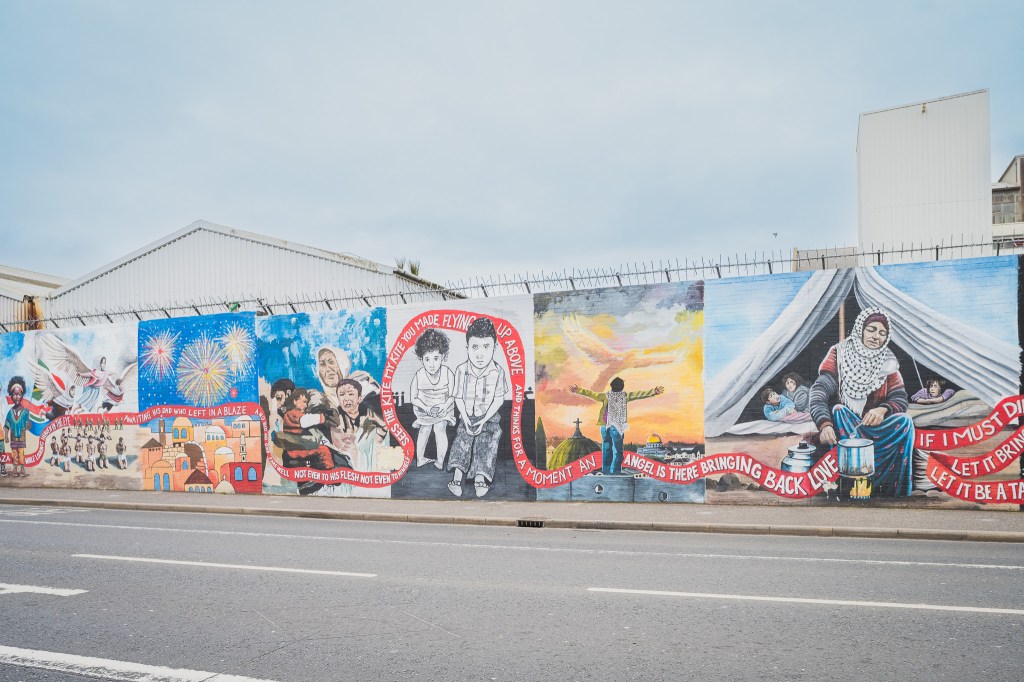
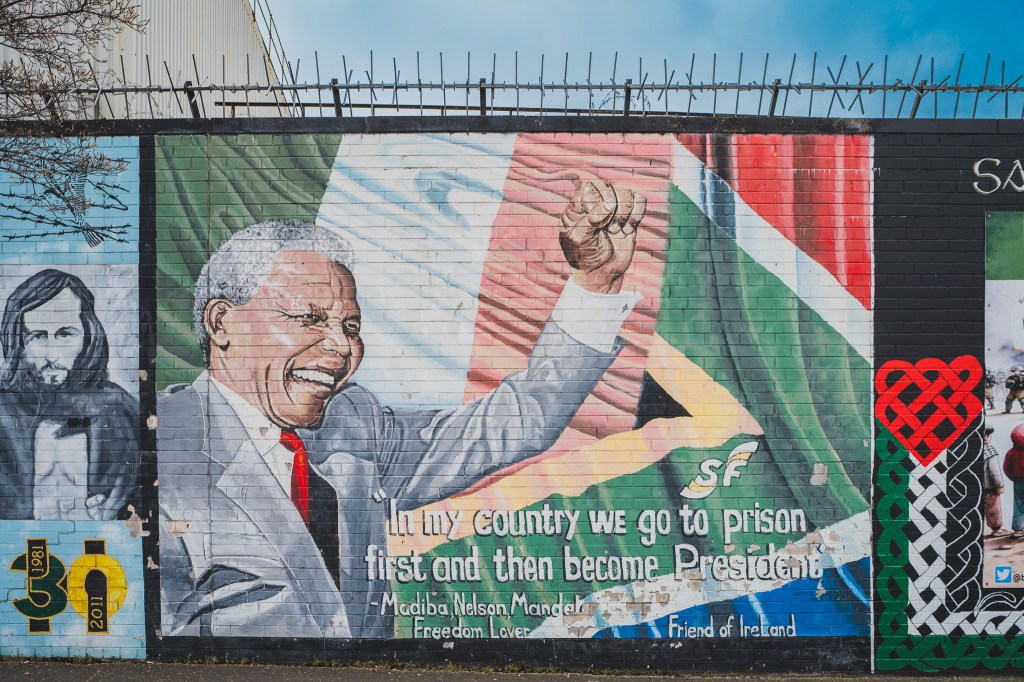
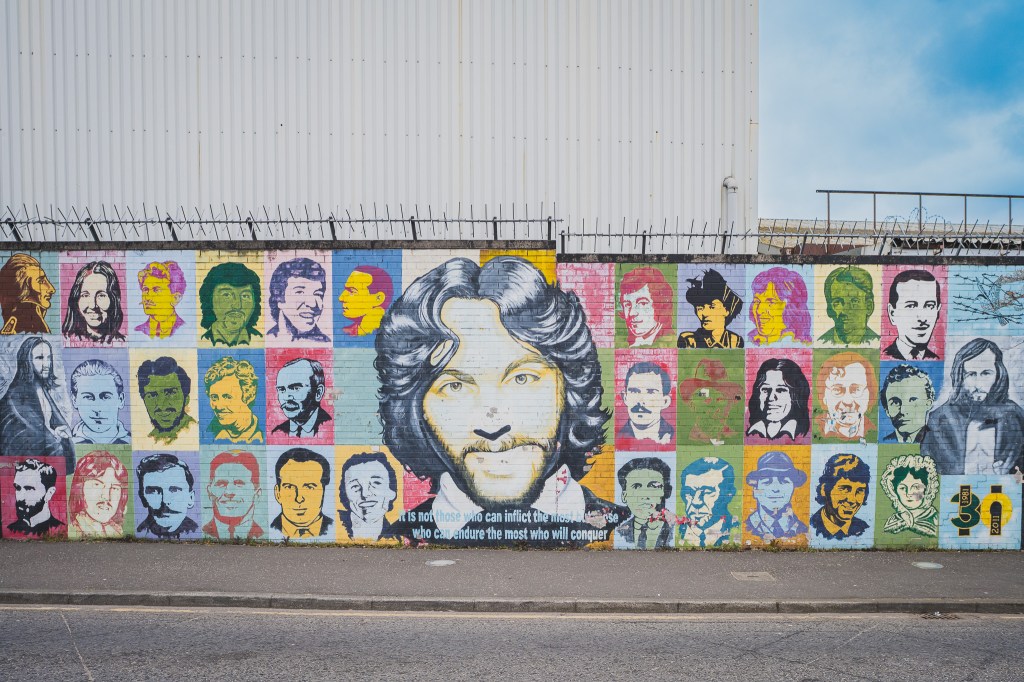
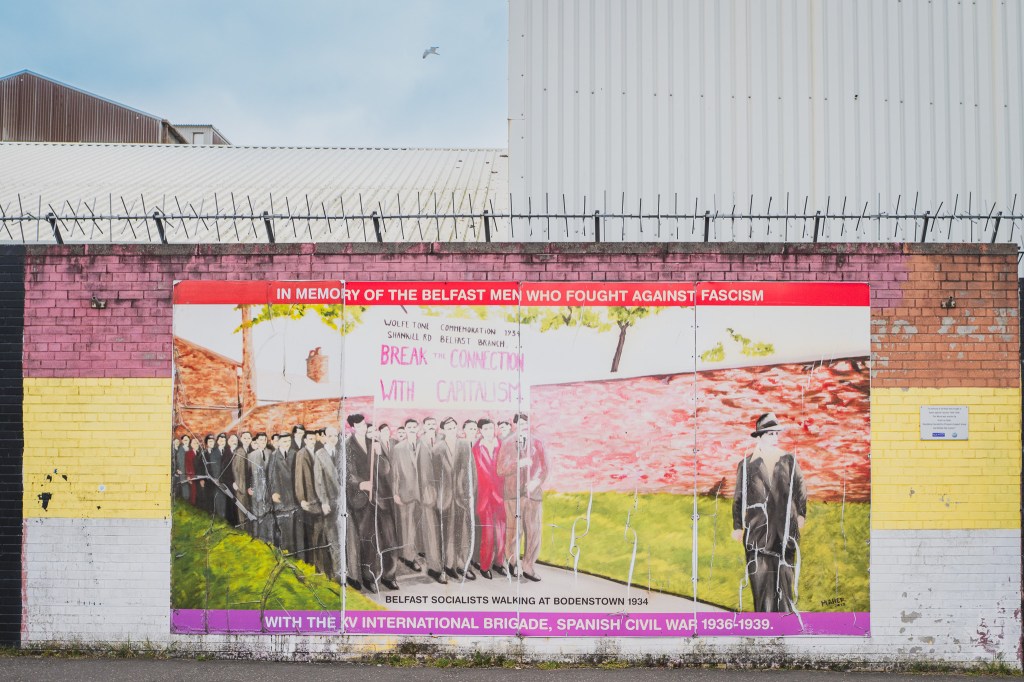
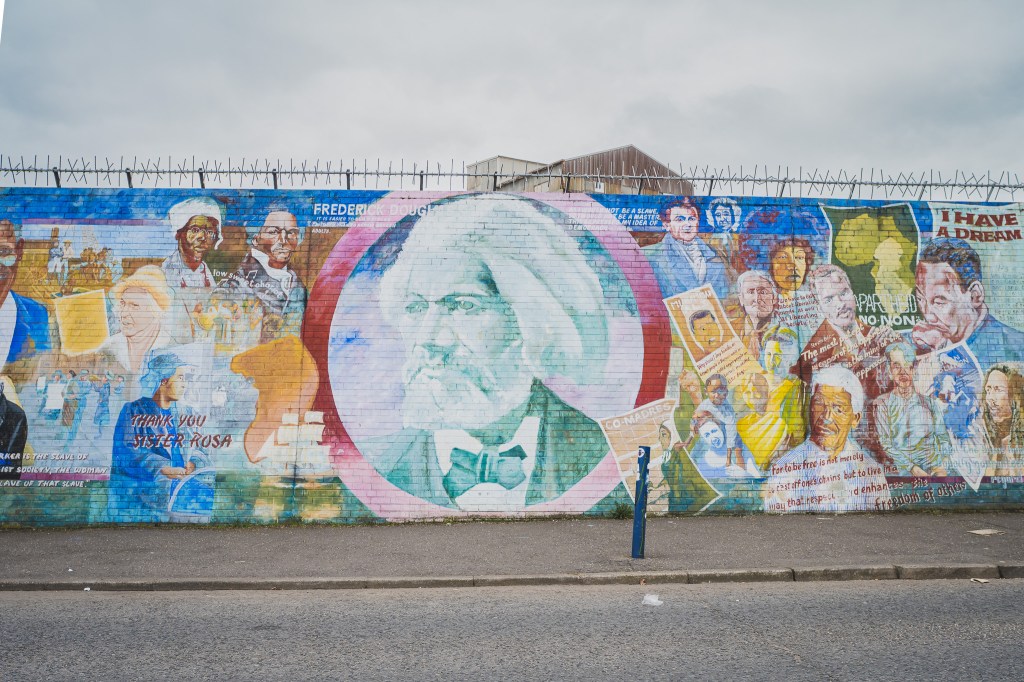
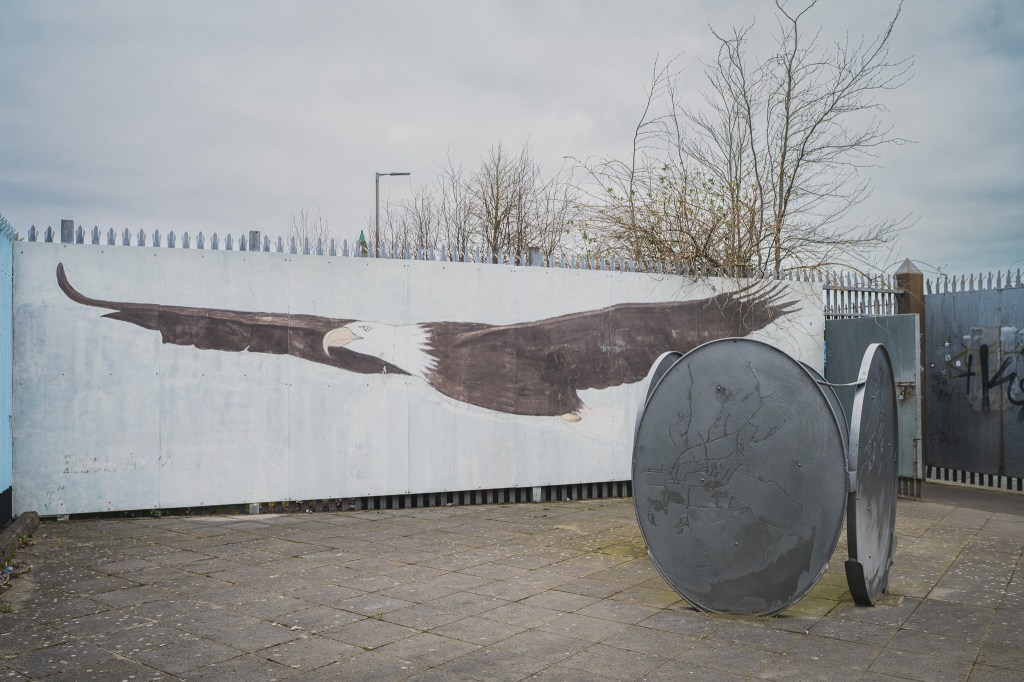
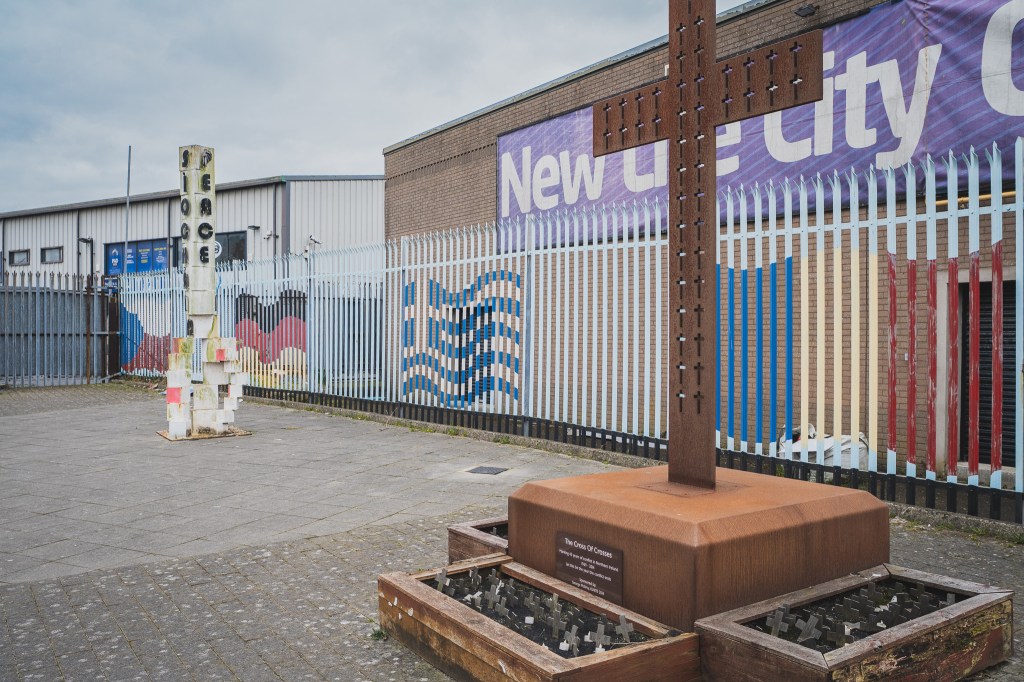
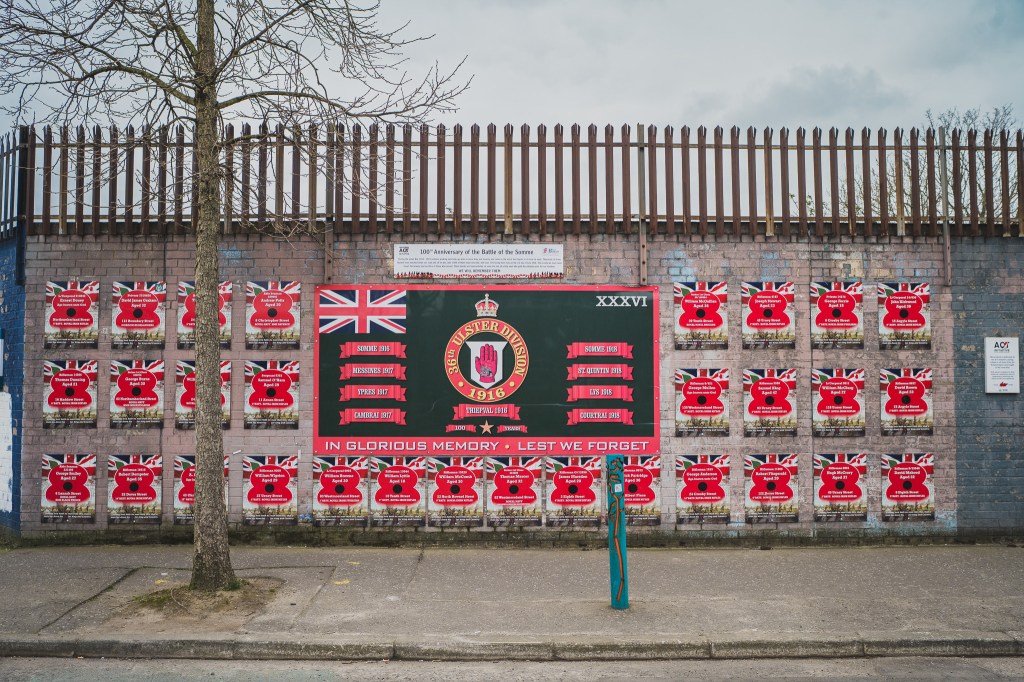
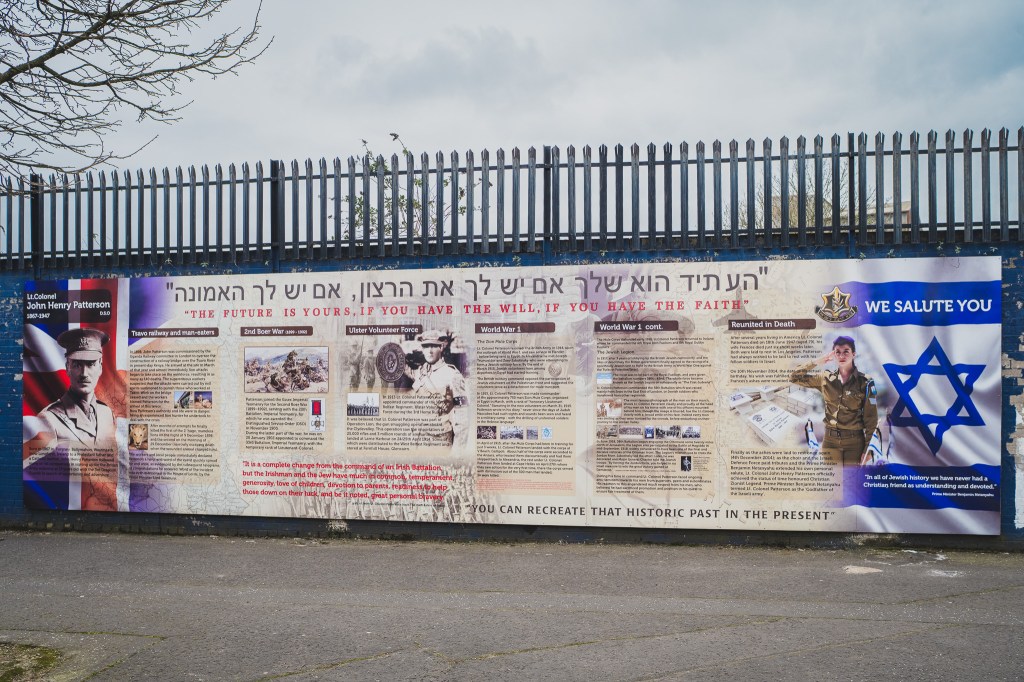
It’s impossible to walk past without stopping. The sheer variety of topics tackled in the artwork makes this wall a living, breathing history lesson—one that changes and evolves with time. Unlike a museum, where history is neatly packaged, these murals are loud, unpolished, and deeply emotional. Whether you’re an art lover, a history buff, or just a curious wanderer, this stop is an absolute must.
Stop 2: Bobby Sands Mural
📍 Address: 55 Falls Road, BT12 4PD
No political tour of Belfast is complete without a visit to the Bobby Sands Mural. His name is etched into Irish history, and this mural stands as a powerful symbol of resistance, sacrifice, and the Republican struggle.
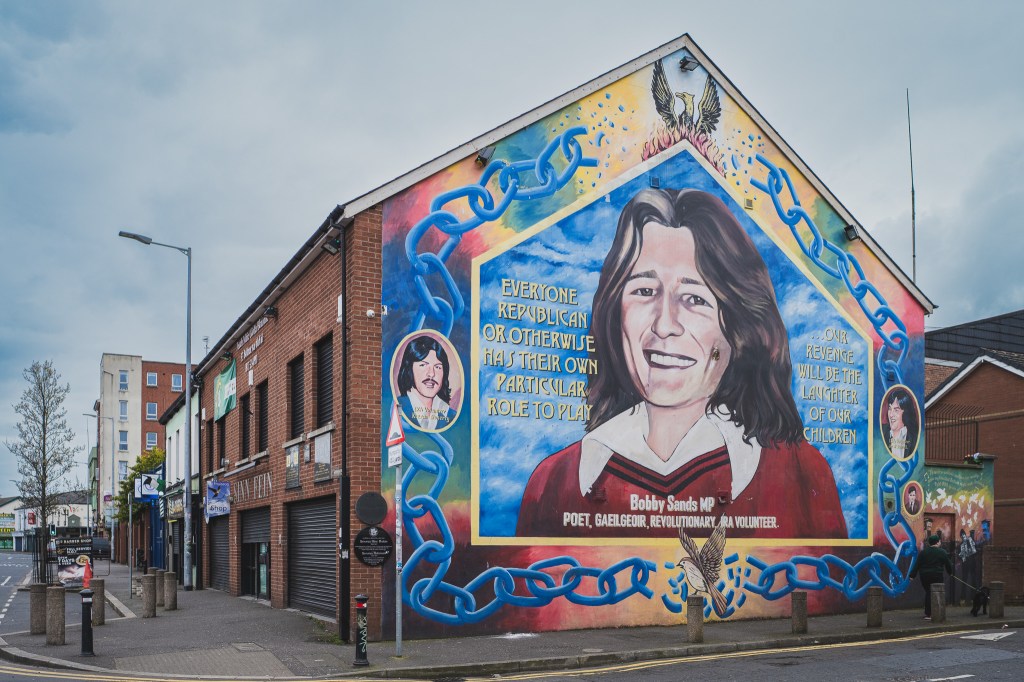
For those unfamiliar, Bobby Sands was an IRA member and the leader of the 1981 hunger strikes, during which ten men starved to death in prison while demanding to be recognised as political prisoners. Sands, who had been elected as an MP during his hunger strike, passed away after 66 days of starvation. His death ignited global attention and is considered a turning point in The Troubles. The mural, painted on the side of the Sinn Féin headquarters, shows Sands looking solemnly out, alongside his famous quote:
“Our revenge will be the laughter of our children.”
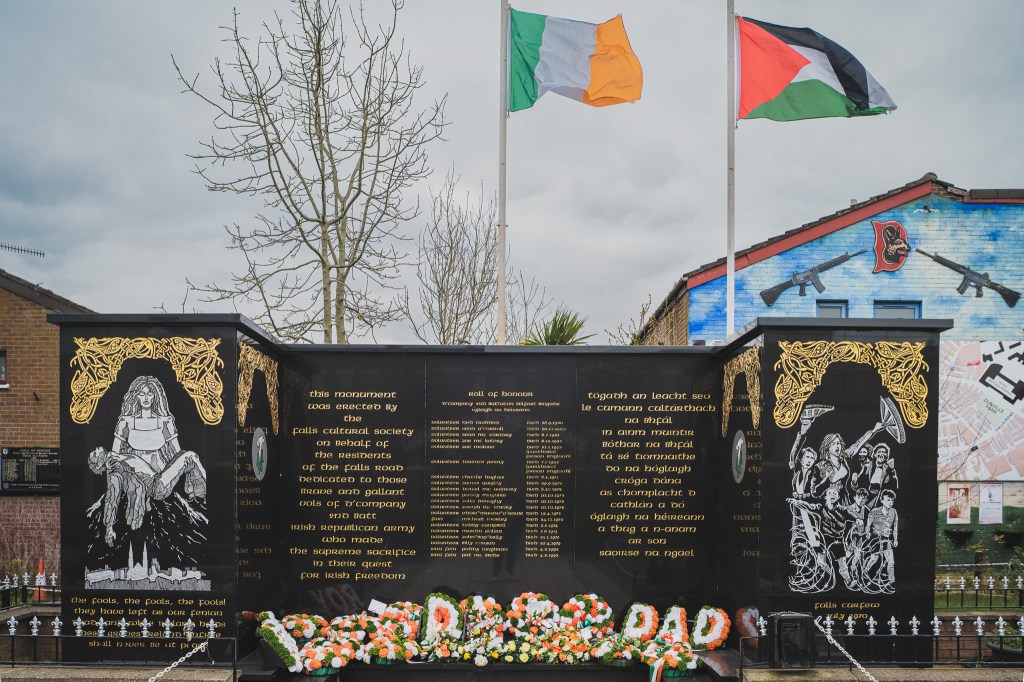
Even if you don’t know much about Northern Ireland’s history, the weight of this place hits you the moment you stand in front of it.
Refuel at Hatch Café
📍 Address: 127 Falls Road, BT12 6AD
By this point, I was running on fumes and needed fuel—fast. Hatch Café wasn’t part of my plan, but it was exactly what I needed.
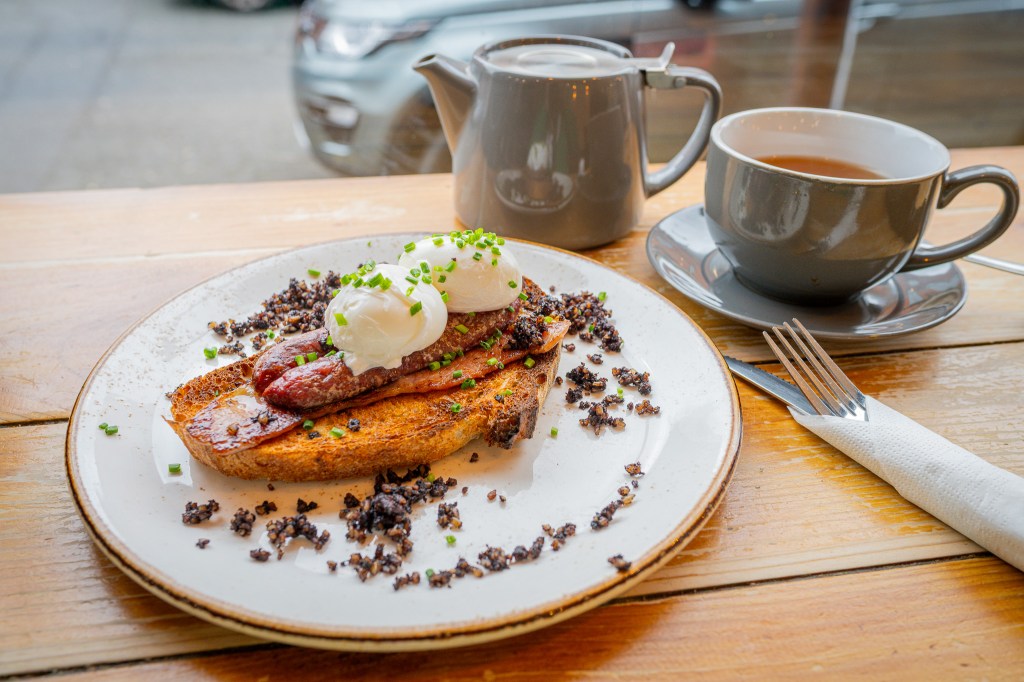
Call it breakfast, brunch, or a much-needed survival meal—either way, it was fantastic. I had no expectations when I walked in, but the food was banging. The bread was nicely toasted, the eggs cooked to perfection, and the whole plate was so satisfying I almost ordered another round. The place itself is small but welcoming, with a proper local feel—the kind of spot where you just know regulars have their usual seats. If you find yourself on Falls Road in the morning, Hatch is 100% worth a stop.
Stop 3: Clonard Monastery
📍 Address: 1 Clonard Gardens, BT13 2RL
Walking into Clonard Monastery feels like stepping into another world—one far removed from the political tension and history-heavy streets just outside.
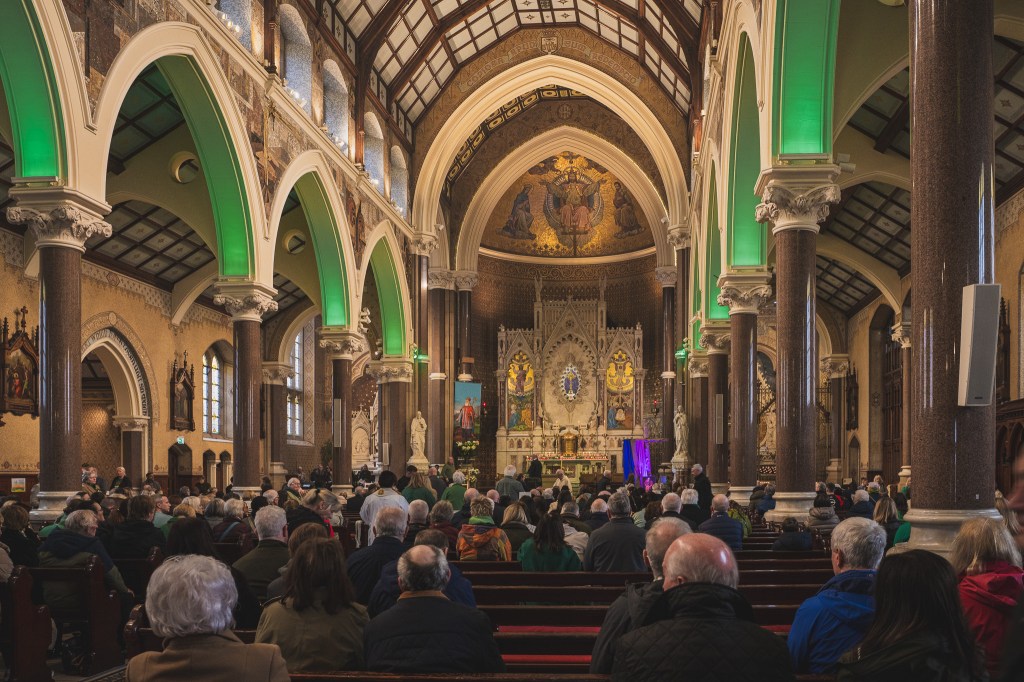
The building itself is stunning, with gothic architecture and an air of peace inside. I wasn’t planning on getting blessed, but a friendly (and cheeky) priest insisted, claiming to be St. Patrick himself. Was he? Probably not. Did I take the blessing anyway? Absolutely.
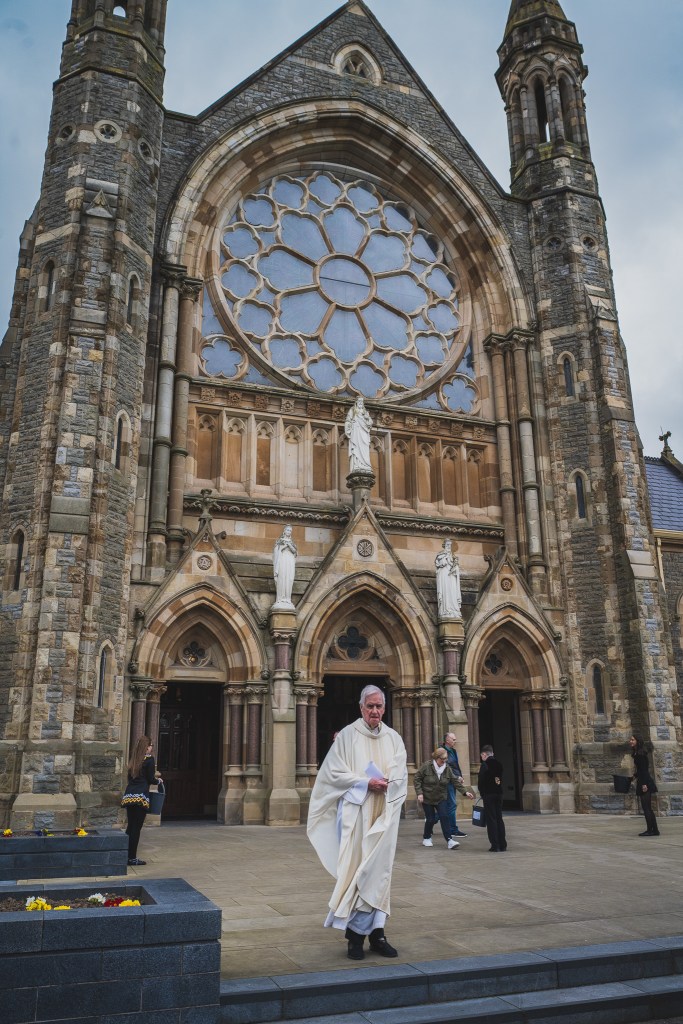
Beyond the humour, Clonard has deep historical importance—it was one of the key places where peace negotiationsstarted between the Catholic and Protestant communities. If you’re looking for a moment of calm and reflection, this is the place.
Stop 4: Bombay Street Memorial
📍 Address: Bombay Street, BT13 2RX
Bombay Street is small, but its history is massive. This was the site of one of the most infamous attacks in 1969, when houses were burned to the ground during sectarian violence, forcing entire families to flee.
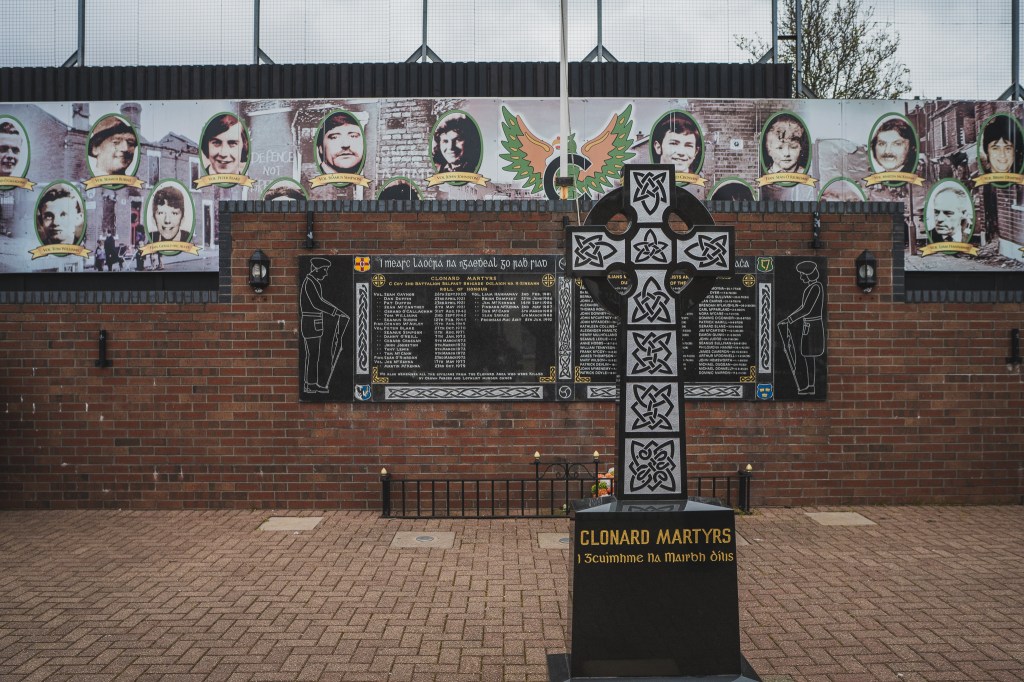
The street was rebuilt, and a memorial now stands here to remember the innocent people who lost their homes. It’s not flashy or elaborate, but it doesn’t need to be—its power is in its simplicity. Unlike the murals, which tell stories through bold artwork, this memorial is quiet and heavy. Standing there, you can almost hear the echoes of history. It’s a humbling and important stop.
Stop 5: Peace Wall (Cupar Way)
📍 Address: Cupar Way, BT13 2RX
The Peace Wall is one of the most striking and controversial landmarks in Belfast. It was originally built to separate Catholic (Nationalist) and Protestant (Loyalist) communities, but unlike the Berlin Wall, this one still stands—and the gates still close at night in certain areas.
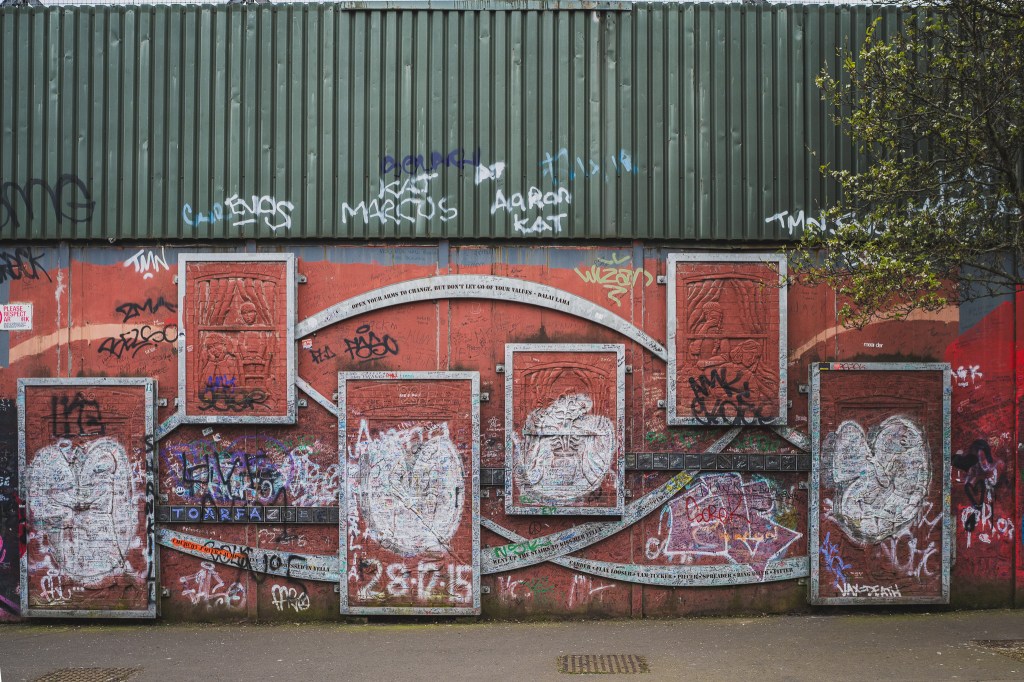
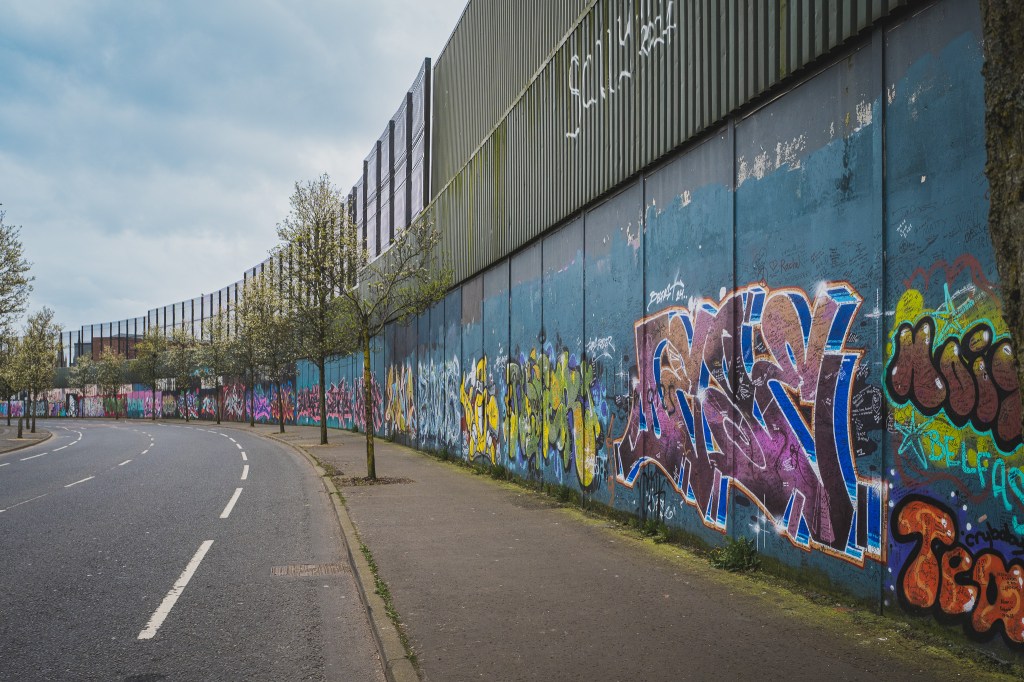
It’s surreal to see such a massive barrier in a modern city, but the most interesting part? It’s covered in messages, graffiti, and artwork from visitors worldwide. People leave messages of peace, unity, and hope, wishing for a Belfast that no longer needs these walls.
Stop 6: Shankill Road Murals & Loyalist History
📍 Murals: 80–100 Shankill Road, BT13 1FD
📍 King Billy Mural: Shankill Parade, BT13 1DJ
📍 Somme Memorials: Near 229 Shankill Road
📍 Memorial Garden: 236 Shankill Road, BT13 2BJ
Crossing into Shankill Road felt like stepping into a completely different story. Where Falls Road had murals dedicated to Republican figures, Shankill Road tells the Unionist and Loyalist side of Belfast’s history. Here, murals depict British pride, military service, and tributes to the Ulster Volunteer Force (UVF) and Ulster Defence Association (UDA). You’ll also find murals honouring soldiers who fought in WWI at the Battle of the Somme, which is a key part of Unionist identity.
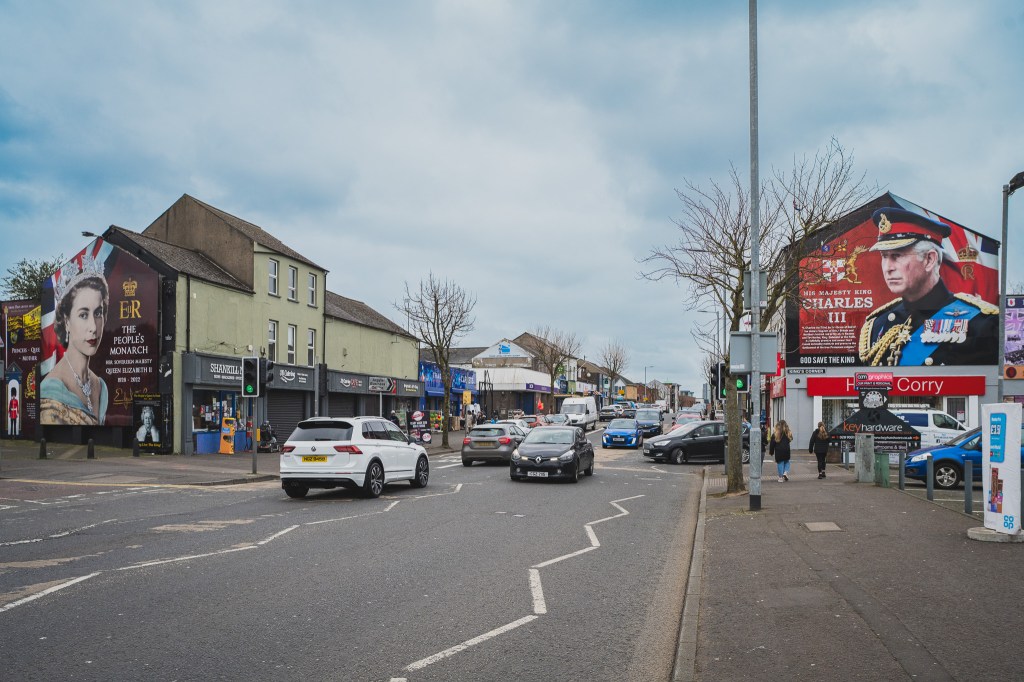
The most famous mural? The King Billy Mural, featuring King William of Orange, a crucial figure in Protestant history. What I found most interesting was the contrast between these murals and the ones on Falls Road. They reflect two different identities, two different histories, and two different perspectives on the same city. Despite the heavy themes, the people here were welcoming—I even got chatting with a local who told me stories about growing up during The Troubles. It was the kind of conversation you can’t get in a history book.
Additional Thoughts
This self-guided walking tour took up my entire morning, but I wouldn’t change a single step. Walking through Belfast’s murals and memorials is not just about seeing history—it’s about feeling it.
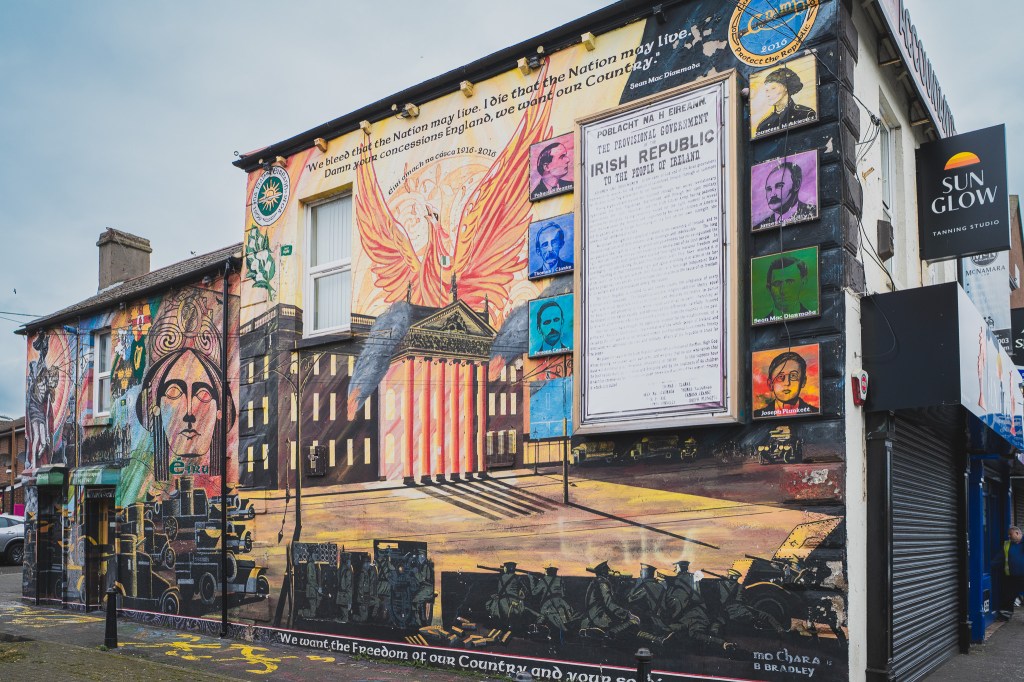
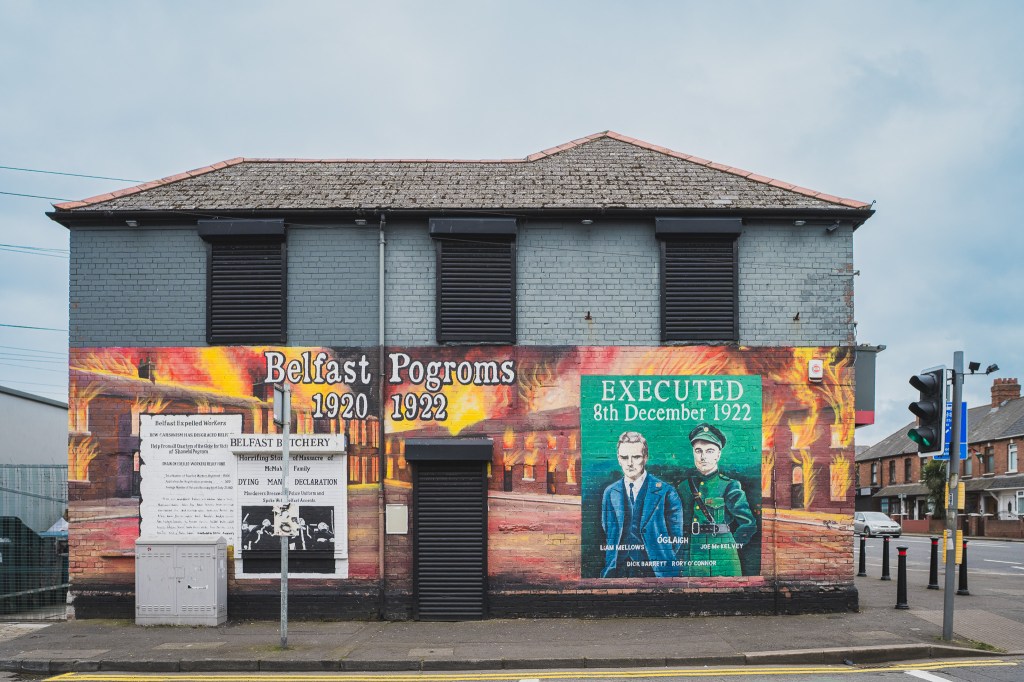
If you only have one day in Belfast, this is the best way to start it. You’ll leave with a better understanding of the city, its people, and the stories that still shape Northern Ireland today.
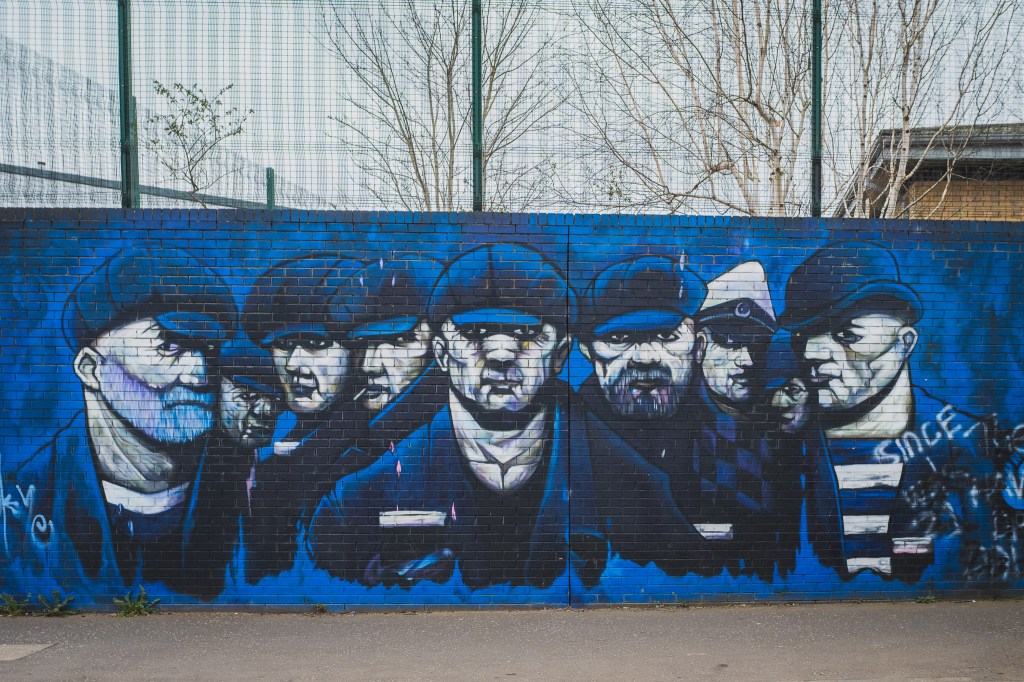
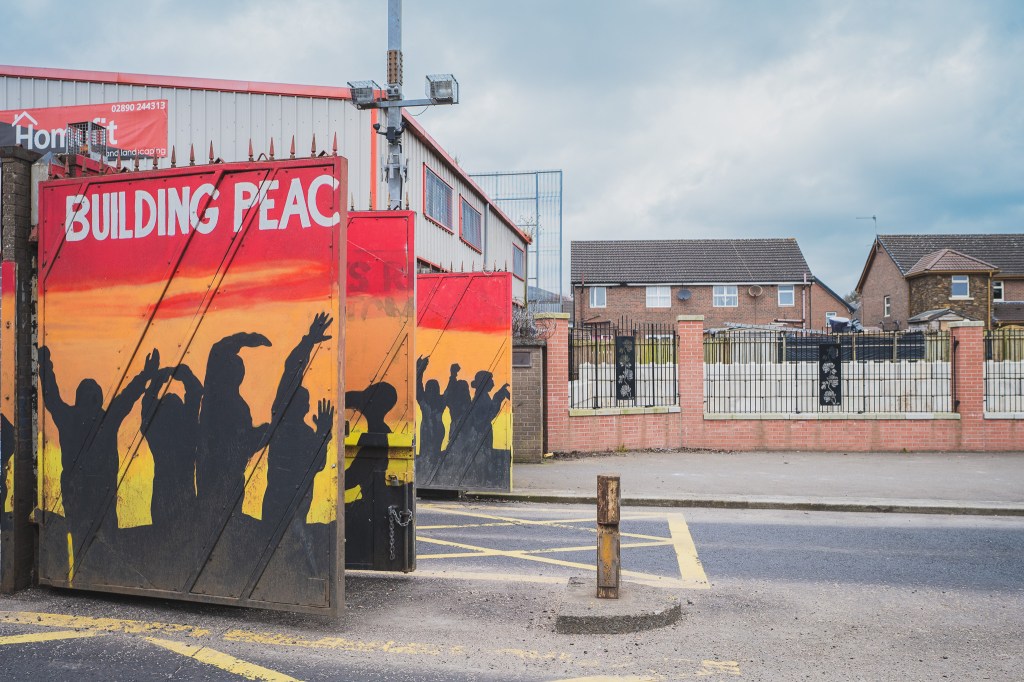

Oh, and wear comfy shoes—because Belfast is best explored on foot!
This took up most of my morning, but it was totally worth it. Walking lets you stumble across unexpected gems and dive deeper into Belfast’s rich (and complex) history.
Afternoon | Parade & Titanic Vibes
St. Patrick’s Day Parade
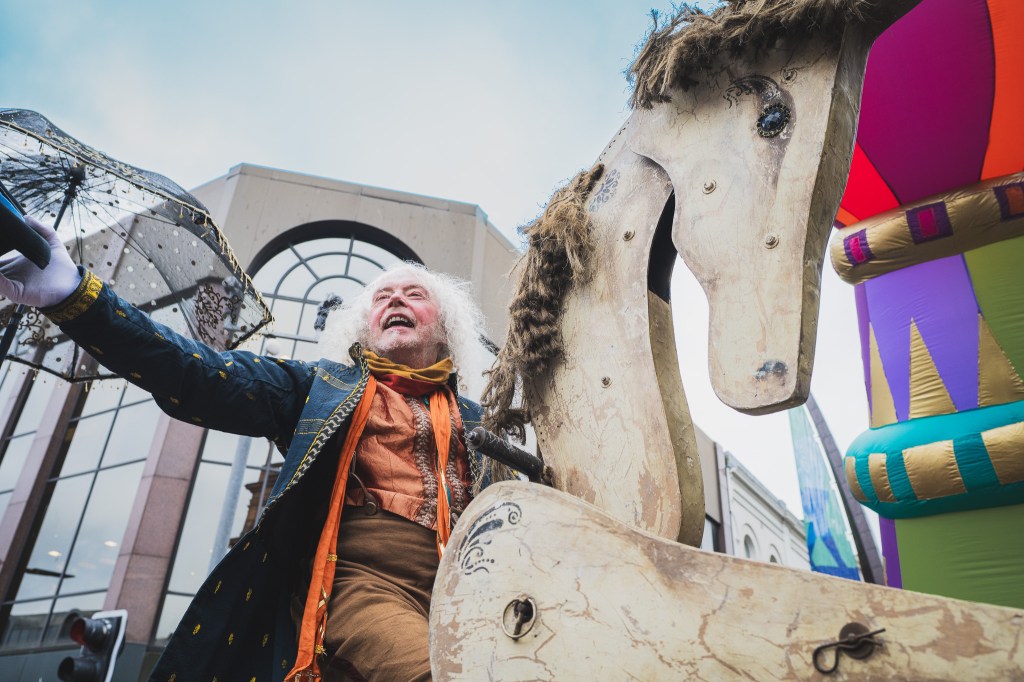
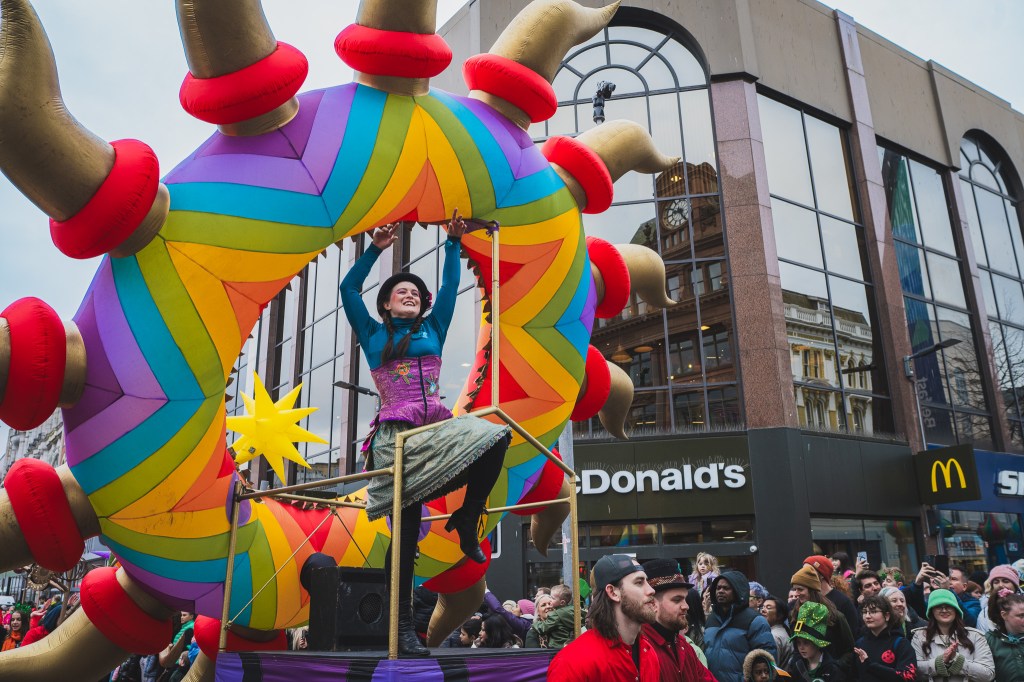
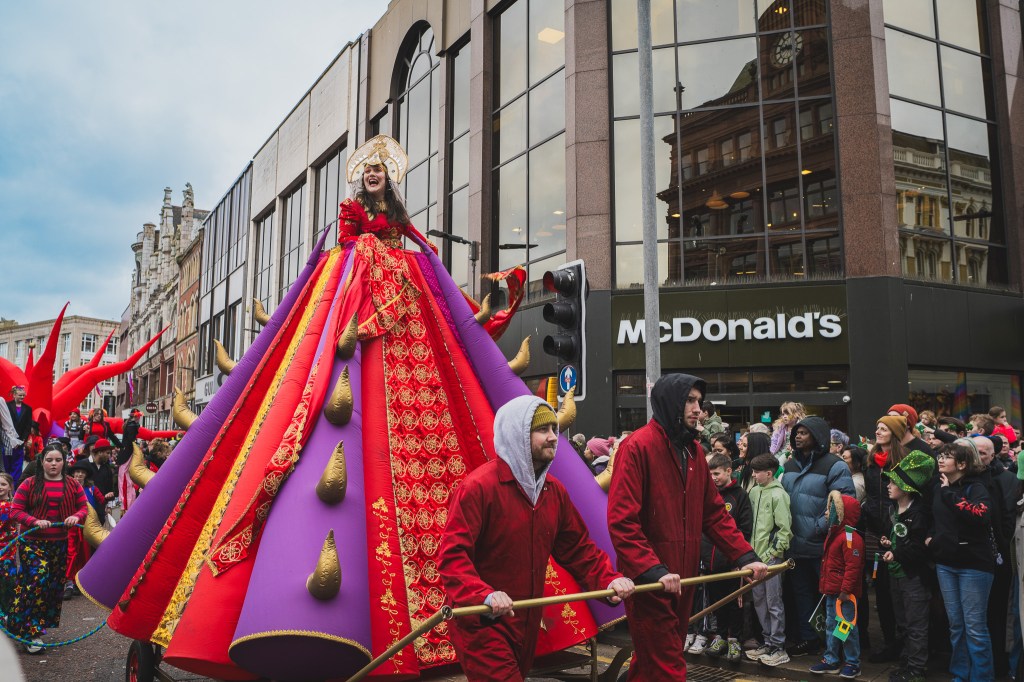
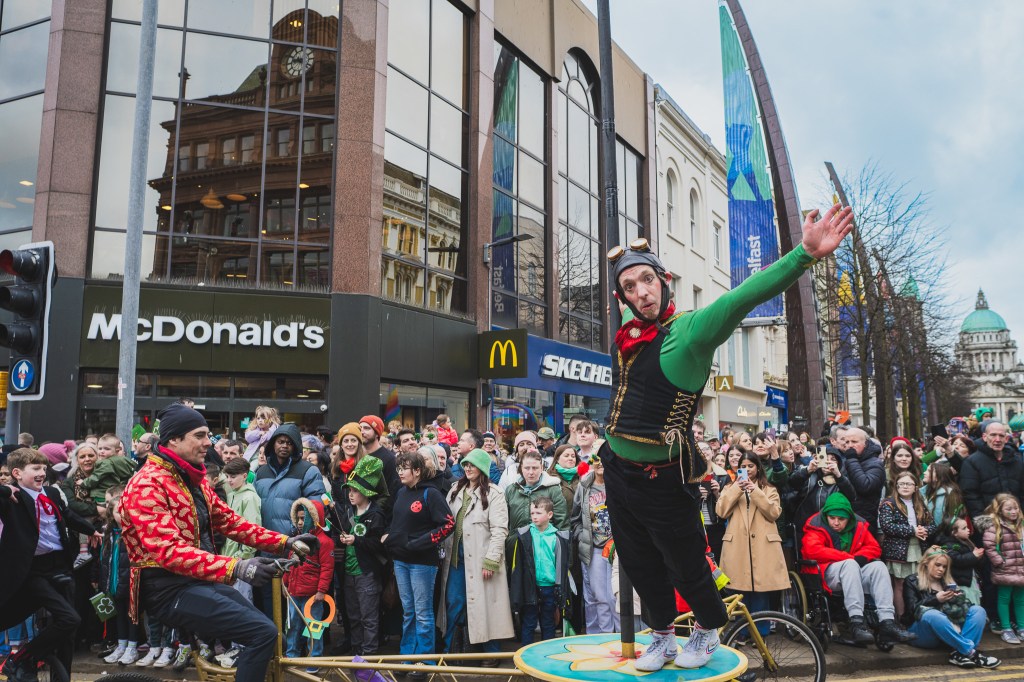
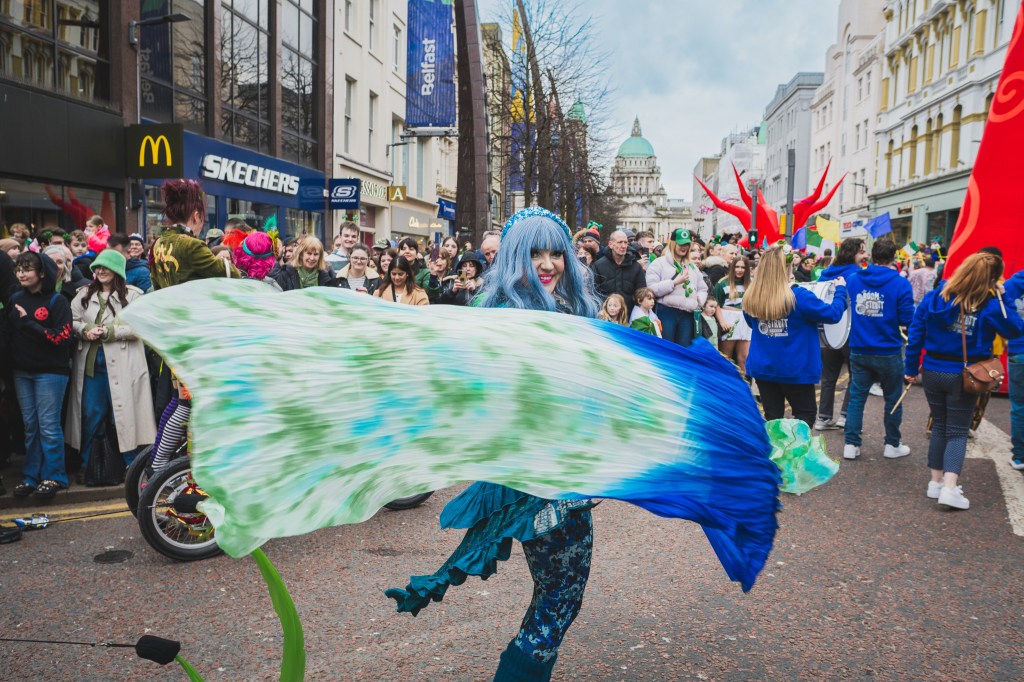
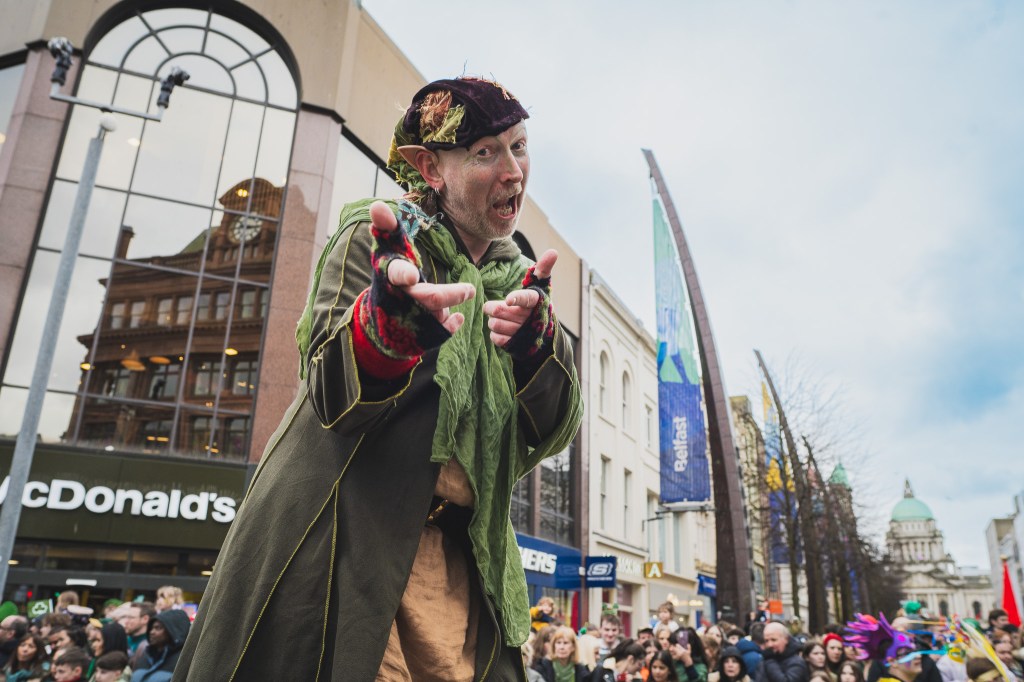
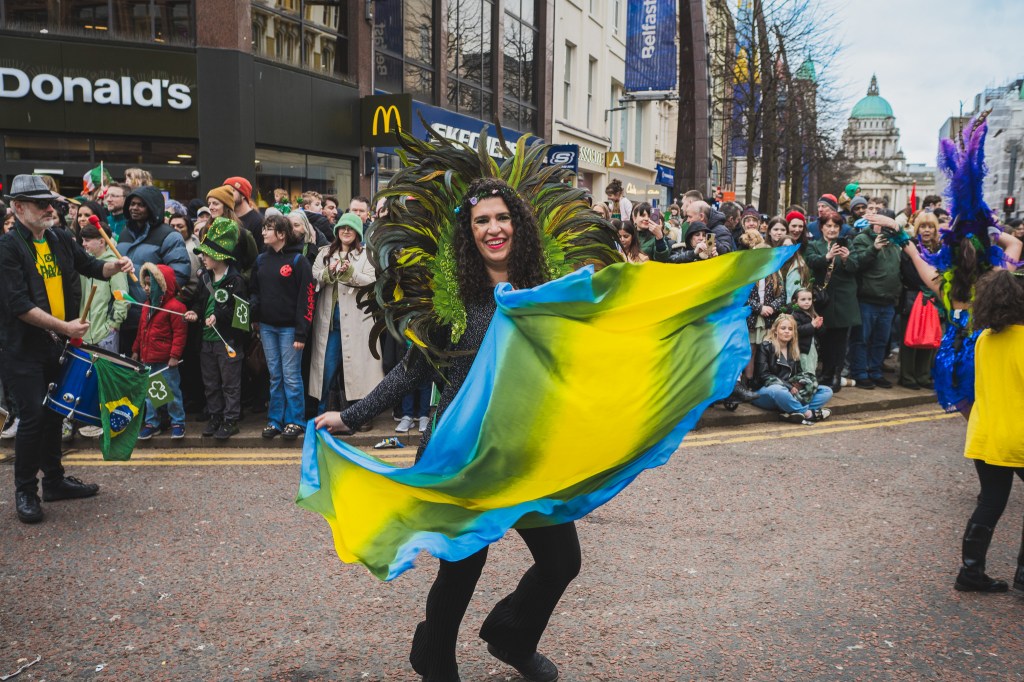
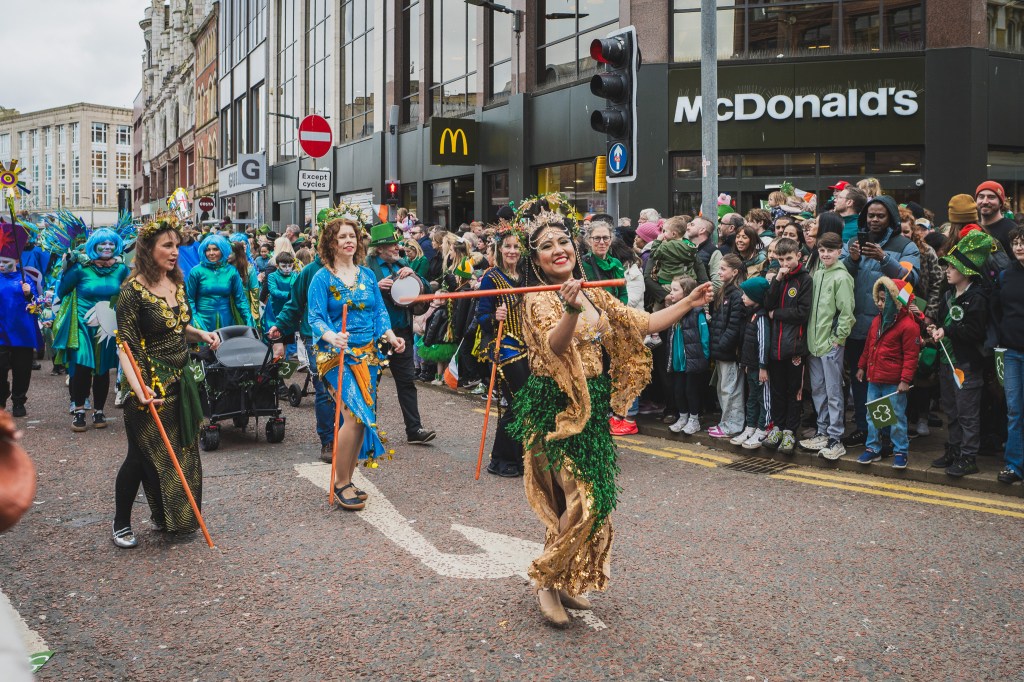
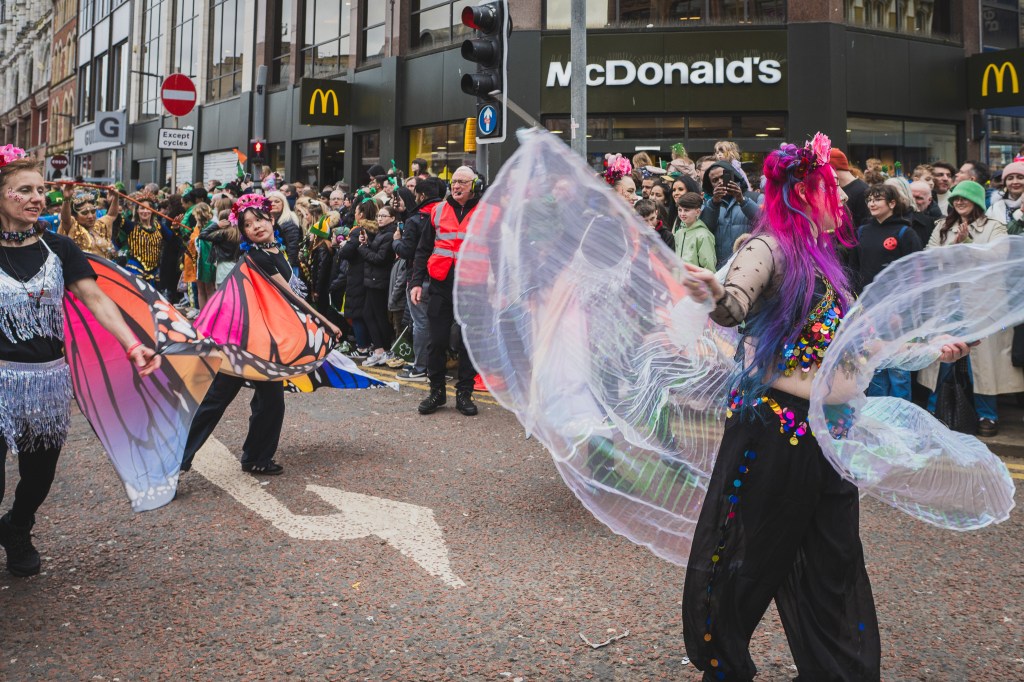
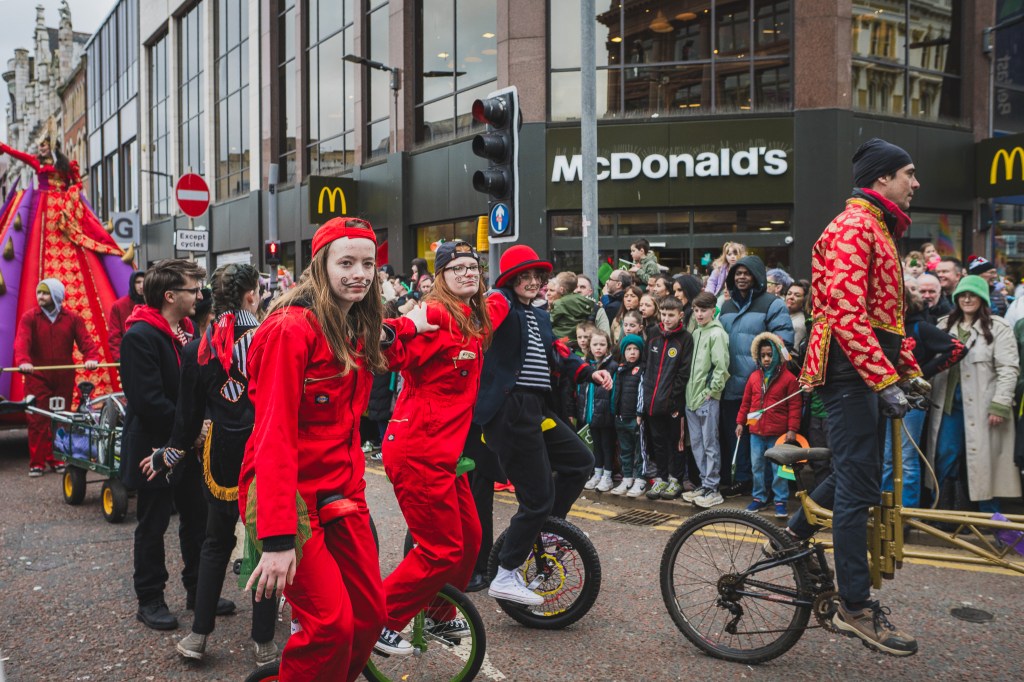
I made it back to City Hall just in time for the 1:30 PM parade. If you’re planning ahead, other good spots are Custom House Square or along Donegall Place. Expect colour, dancing, live music, and more green than Kermit’s wardrobe.

Now let’s talk real talk—how does Belfast’s parade compare to Dublin’s?
Well, Dublin’s is the global superstar of St. Patrick’s Day parades. It’s bigger, brasher, louder, and feels like a city-wide carnival on steroids. You’ll find elaborately choreographed floats, international tourists in green feather boas, and massive crowds waving tricolours while dancing to pounding beats. It’s the kind of event where you’re just as likely to see a fire-breathing leprechaun as a marching band from Ohio. It’s a spectacle in the best sense of the word—chaotic, colourful, and borderline bonkers.
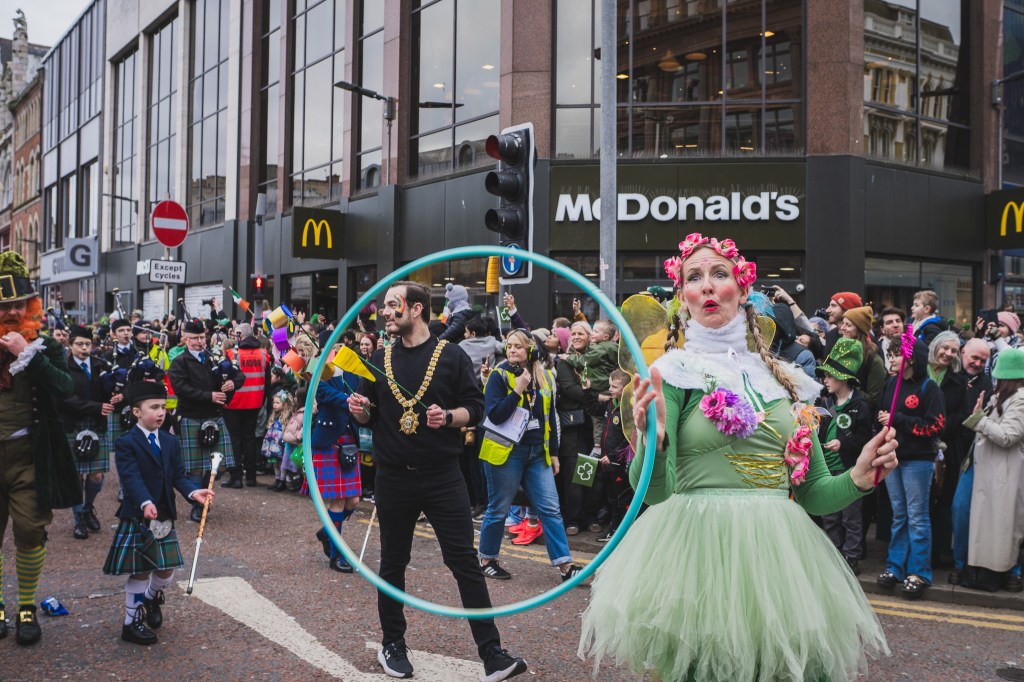
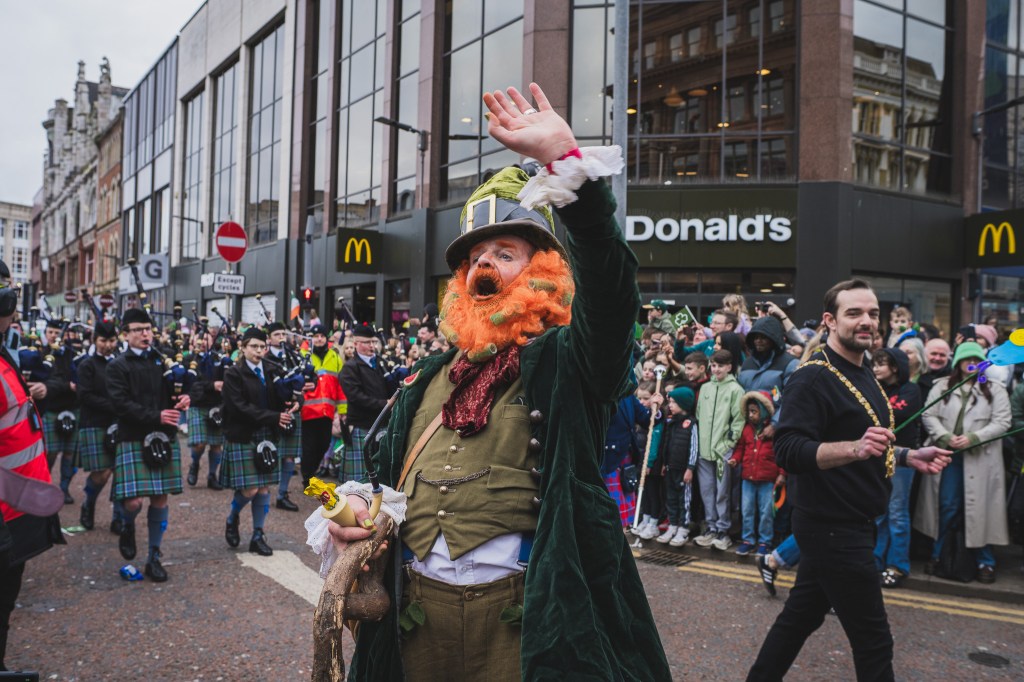
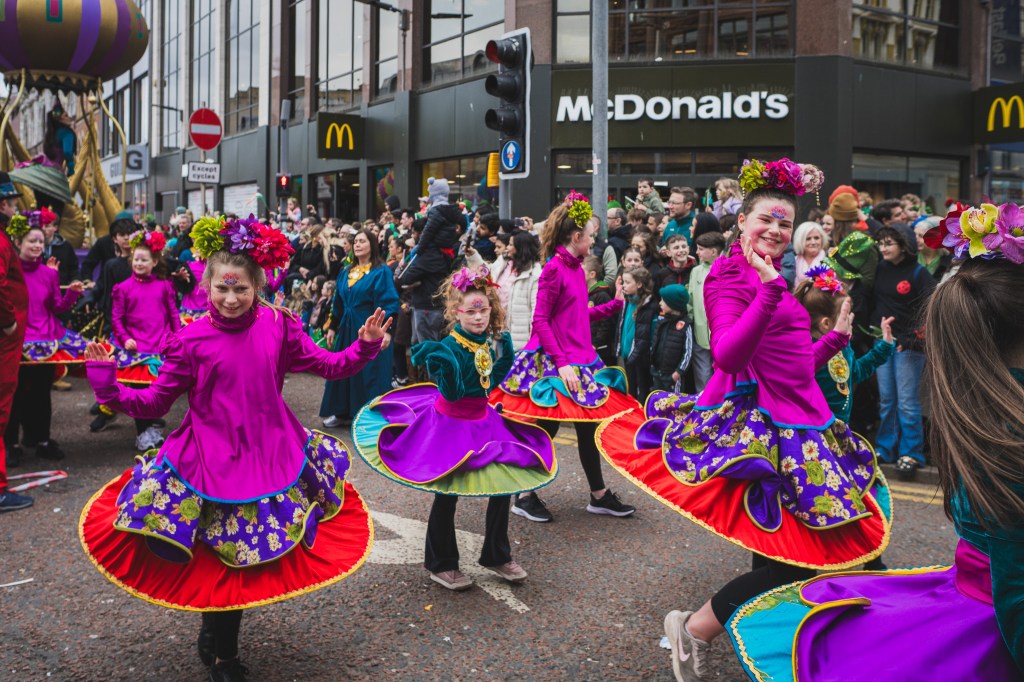
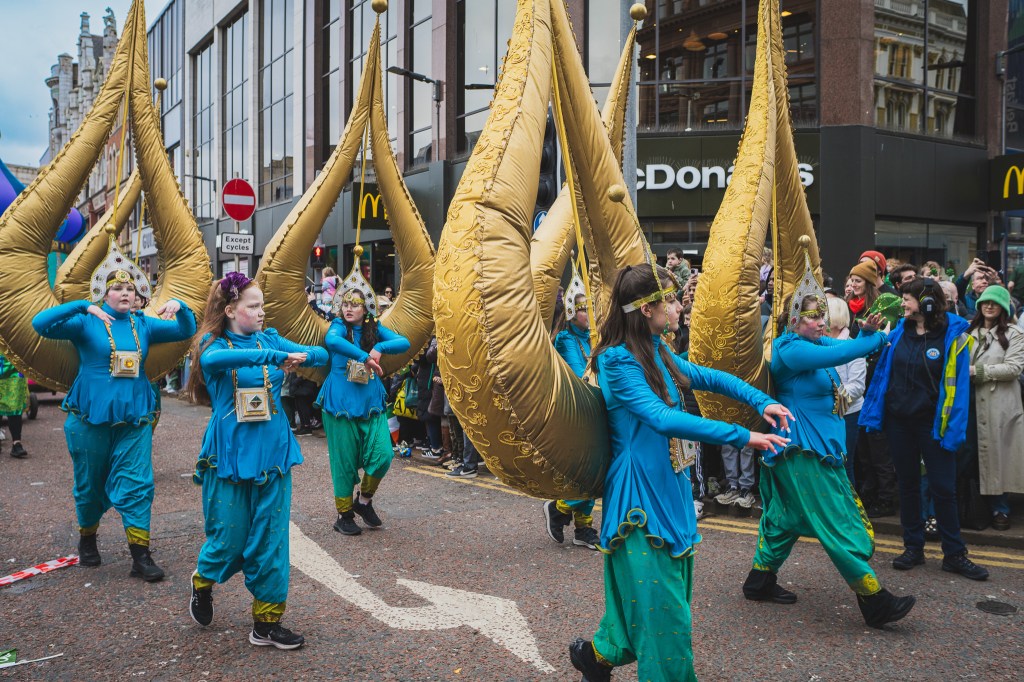
Belfast, on the other hand, has a totally different charm. It’s like Dublin’s quirky cousin who might not shout as loud, but tells better stories and remembers your name. The parade here has this warm, intimate, grassroots vibe—like you’ve been invited into a local street party rather than attending a massive performance.
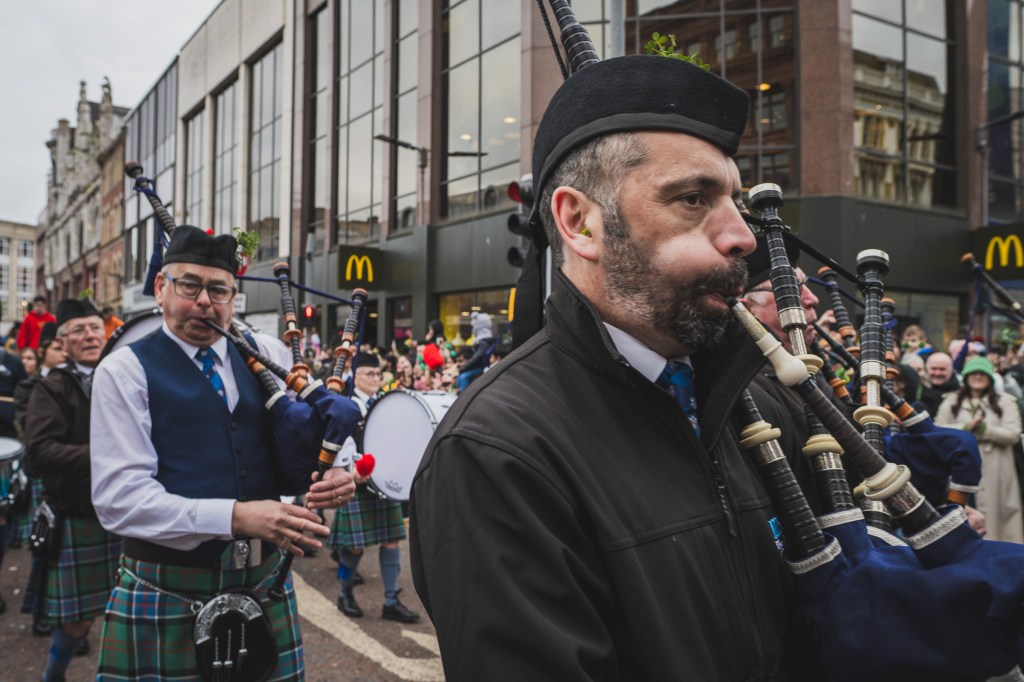
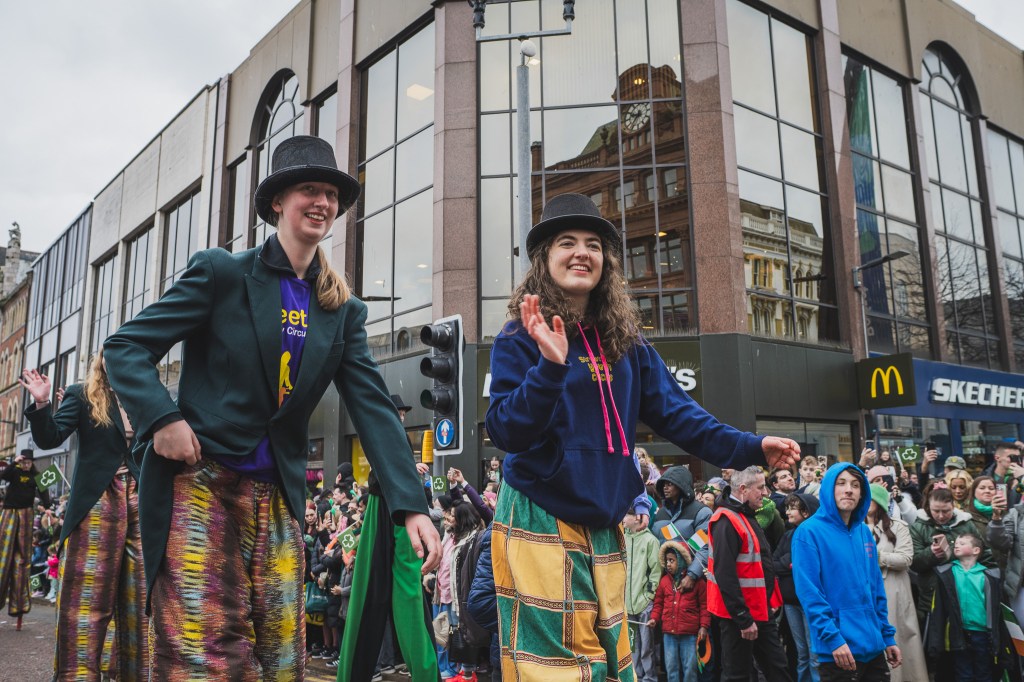
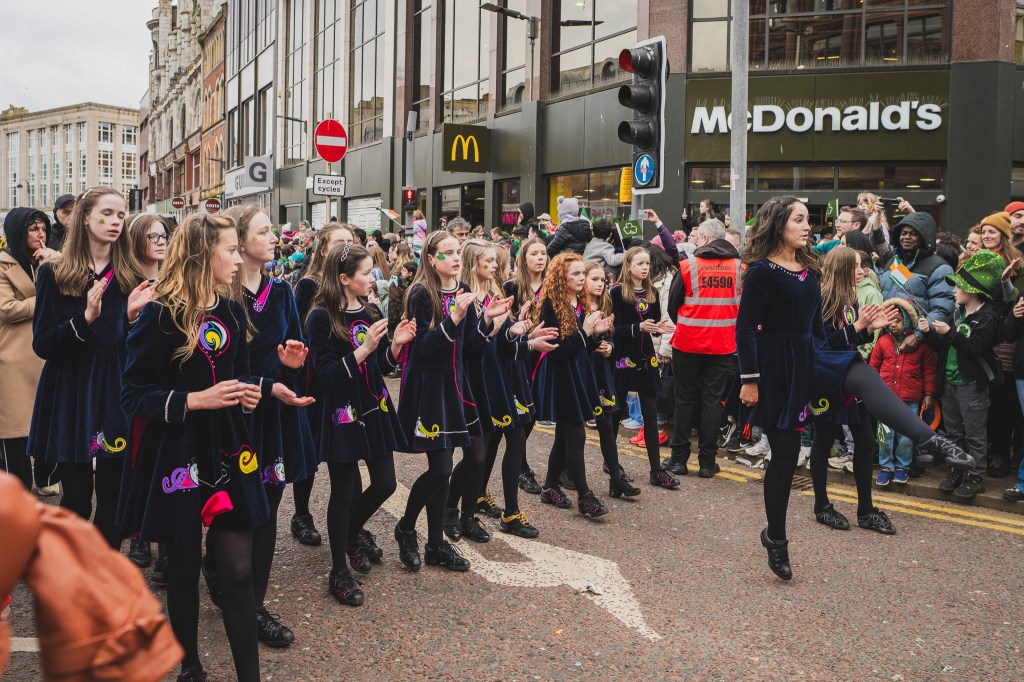
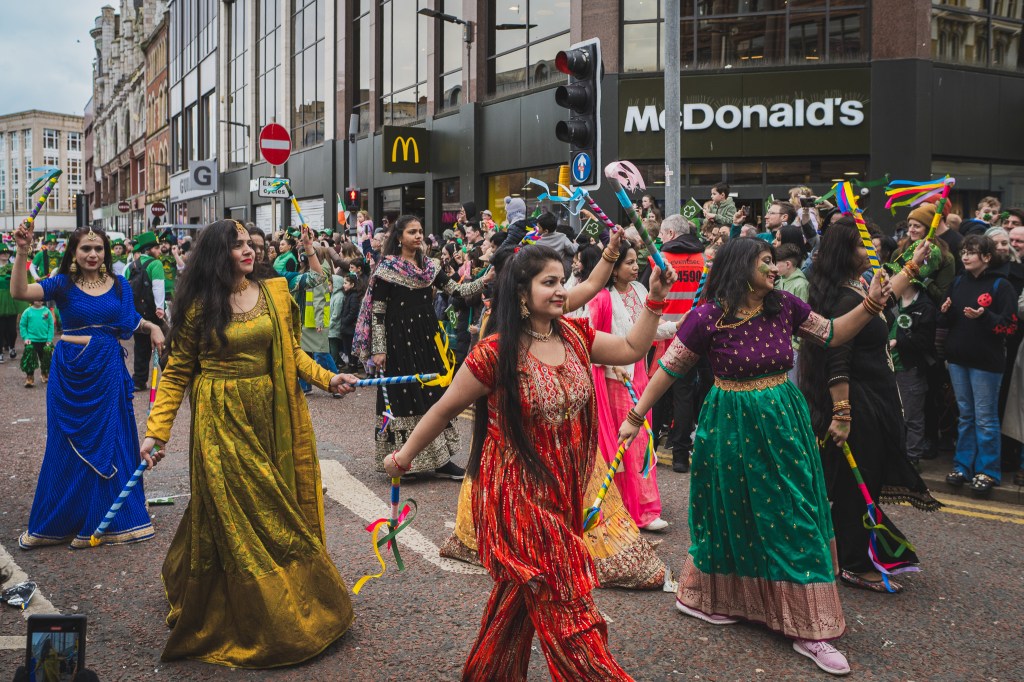
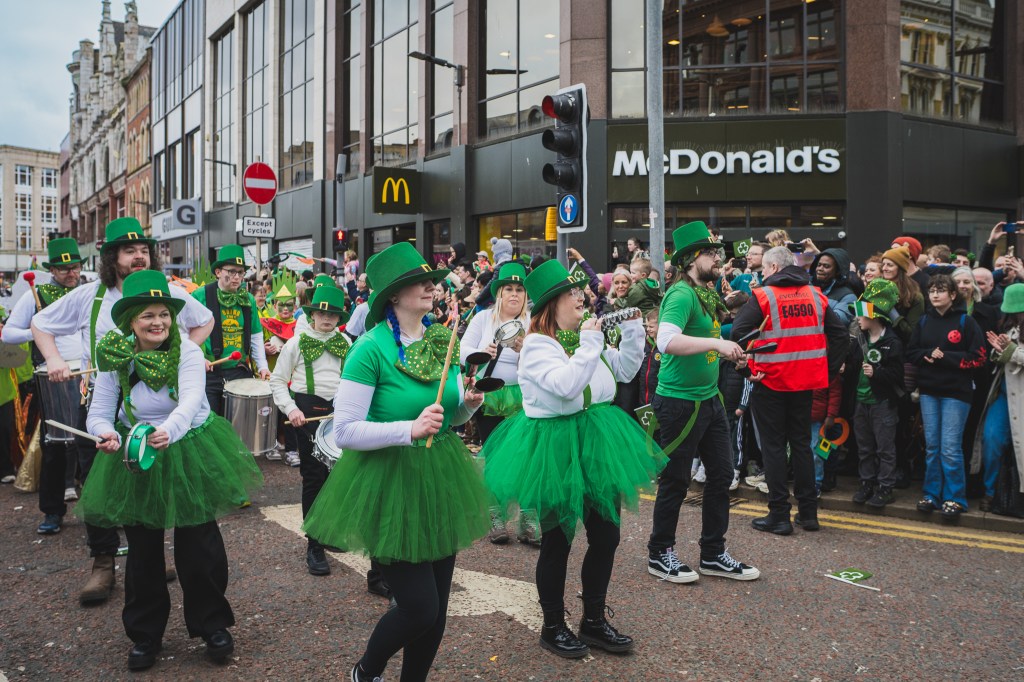

You’ll still get music, dancers, floats, and colour—but there’s more space to breathe, more time to soak it all in. It’s easier to strike up a chat with someone next to you, and you might even bump into the Lord Mayor like I did (who, by the way, is one of the friendliest humans alive).


In Dublin, you’re part of a crowd.
In Belfast, you feel like part of the community.
So, who wins? Honestly, both parades are brilliant—but they’re serving very different energies.
- If you want a bucket-list, wild, Guinness-fuelled adventure: go to Dublin.
- If you want something more heartfelt, real, and refreshingly local: Belfast’s your place.
And if you’re lucky enough, like me, you’ll get to experience both—and fall a little bit in love with each. ☘️💚
Titanic Quarter & Waterfront Walk
After soaking up all the parade vibes and getting my steps in with the mural tour, I decided to slow things down a bit with a wander through the Titanic Quarter—because when in Belfast, you have to pay tribute to the city’s most famous export: a ship that famously never finished the journey.
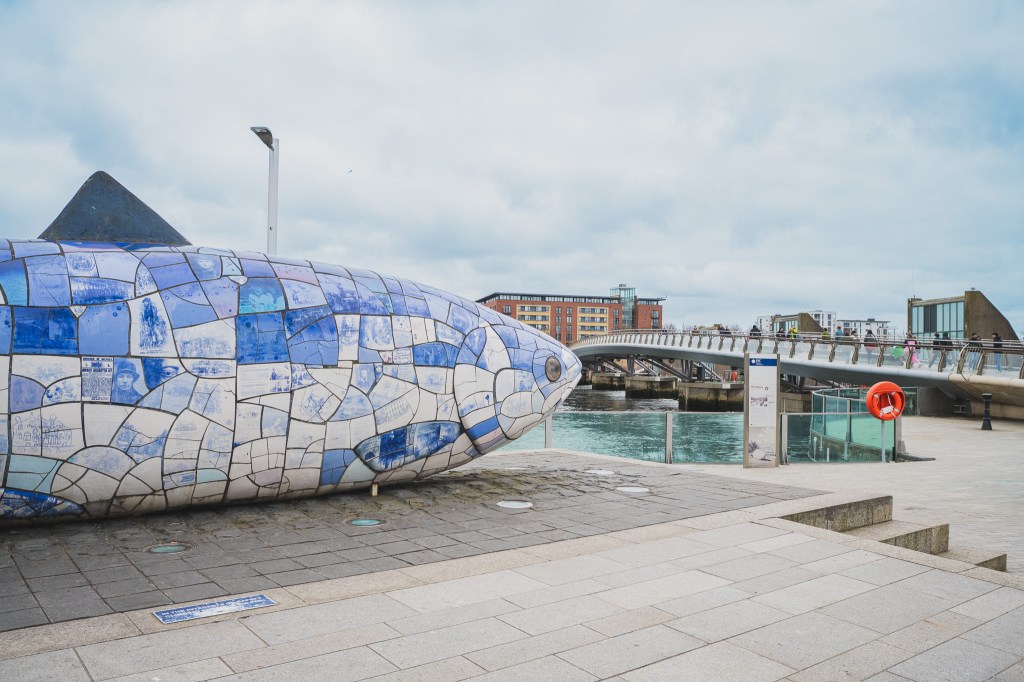
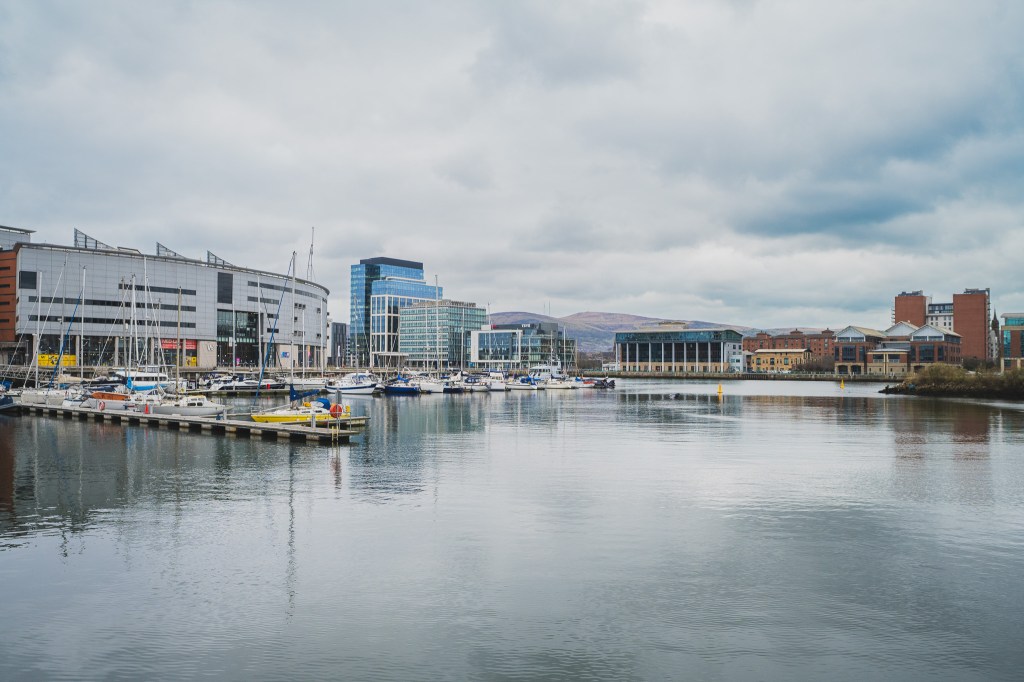
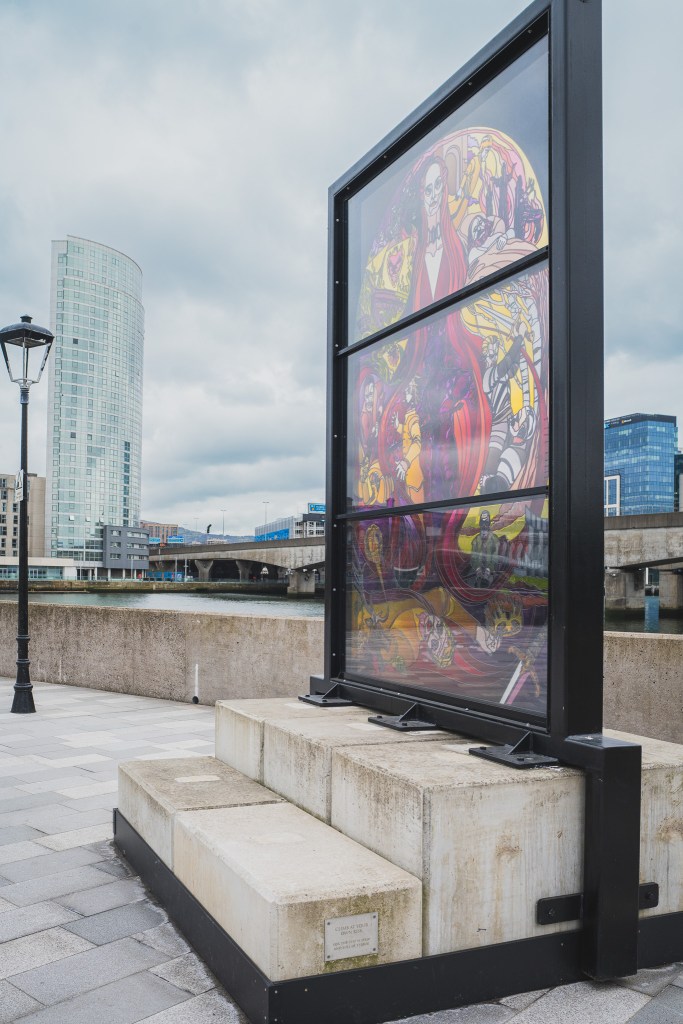
Getting there from the city centre is a scenic stroll of about 20 minutes, or you can hop on a quick bus like I did later (more on that in a bit). As I made my way over the River Lagan, the energy shifted. Gone were the crowds and bagpipes—suddenly I was surrounded by wide-open spaces, calm waters, and some of the most iconic industrial architecture in the country.
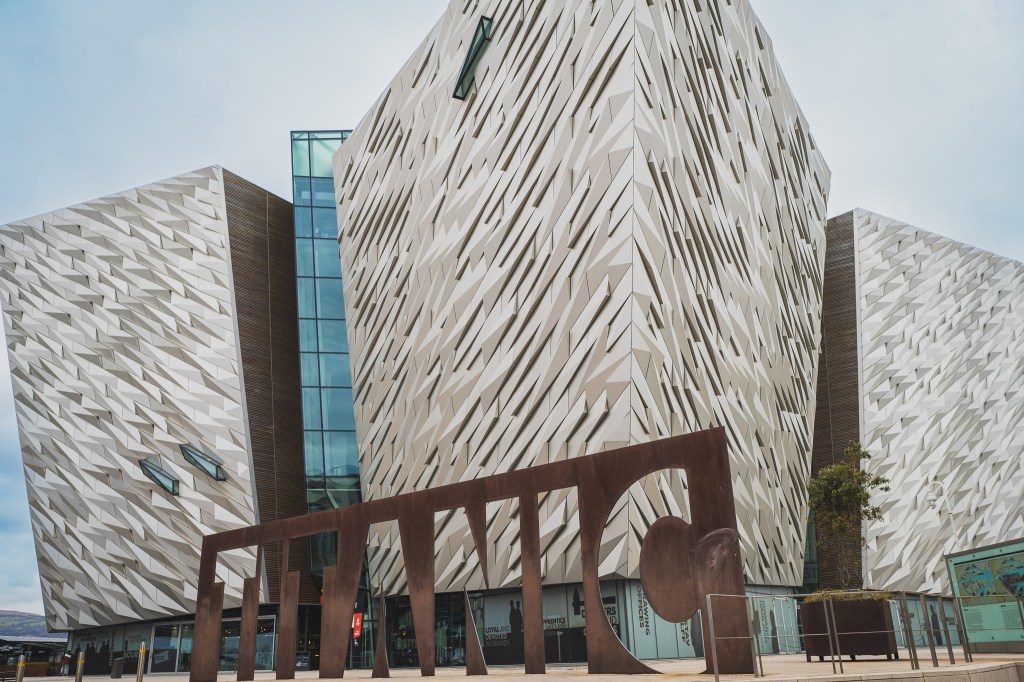
First stop? Just standing in front of the Titanic Belfast building felt like a moment.
📍 Titanic Belfast, 1 Olympic Way, BT3 9EP
This place isn’t just a museum—it’s a massive, angular architectural statement. The silver structure is shaped to mirror the hulls of ships, towering above you as if to say, “Yes, we built the Titanic, and no, we’re not done talking about it.”
Now, I didn’t go inside this time (entry is around £24 and it’s a whole immersive experience), but let me tell you—I’ve already pencilled it in for my next visit. People say it’s part museum, part theme park, part time machine, so yes… I’m intrigued.
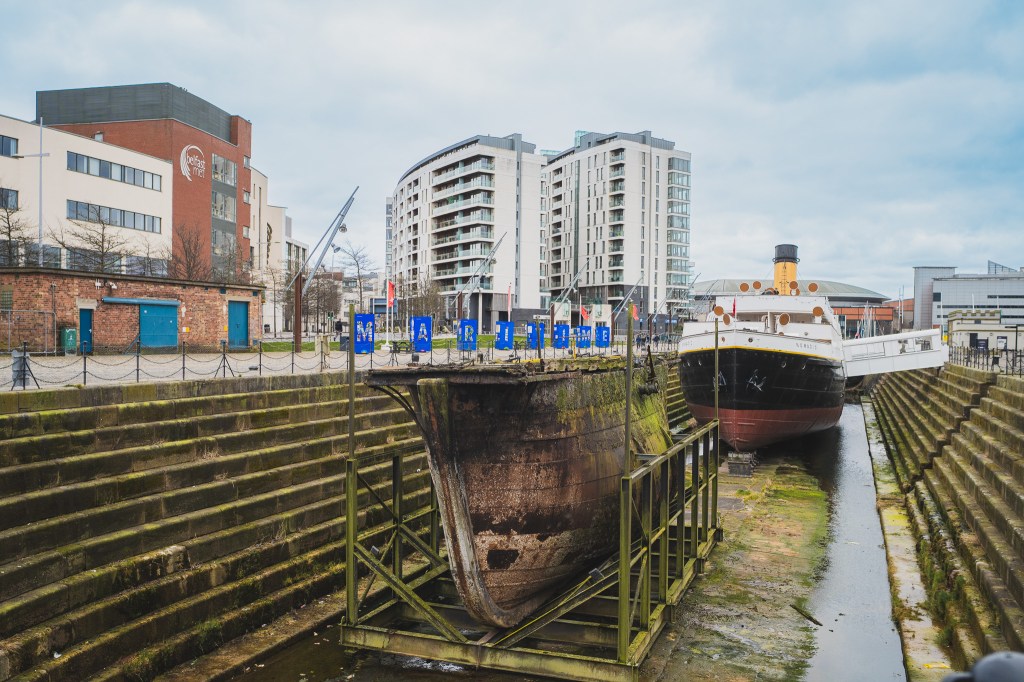
Just next to it is the lovely little SS Nomadic, the last remaining White Star Line vessel in the world.
It’s basically the Titanic’s little sibling, originally used to ferry passengers from Cherbourg to board the Titanic itself. It looks small next to the modern backdrop, but when you realise it carried the same high-society types and third-class hopefuls who boarded the doomed ship, it gives you chills. A beautiful restoration, and very photogenic too (obviously I took too many photos).
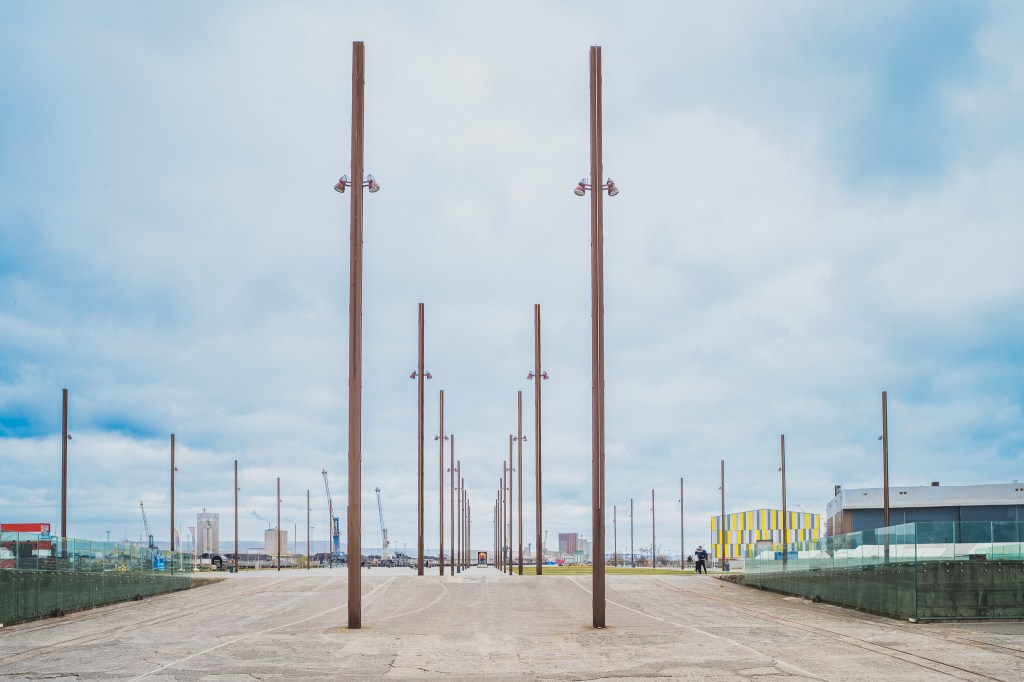
From there, I wandered along the Titanic Slipways, where the Titanic and her sister ship Olympic were actually constructed. There are glass panels on the ground outlining the ship’s footprint, making it easy to visualise the sheer size of it. It’s equal parts historical and haunting—especially with the cold wind off the river, which made me feel like I was in some moody BBC crime drama.
And then, of course, you can’t miss Samson and Goliath, the two giant yellow cranes of Harland & Wolff, towering over the entire quarter like gentle industrial giants. They are so absurdly massive they look like they belong in a Transformers movie—and yet, somehow, they’re beautiful. Locals love them, and once you see them for yourself, you’ll understand why. They’re not just cranes; they’re icons.
You could easily spend half a day here visiting the Titanic Museum, the interactive experiences, cafés, art installations, and more, but alas—I had a bus to catch and more exploring to do. So, after ticking off my personal Titanic checklist, I hopped on a quick city bus back to the centre, which cost me a very reasonable £1.80. It was a smooth, 10-minute ride, and honestly, I wish public transport was that easy everywhere I went.
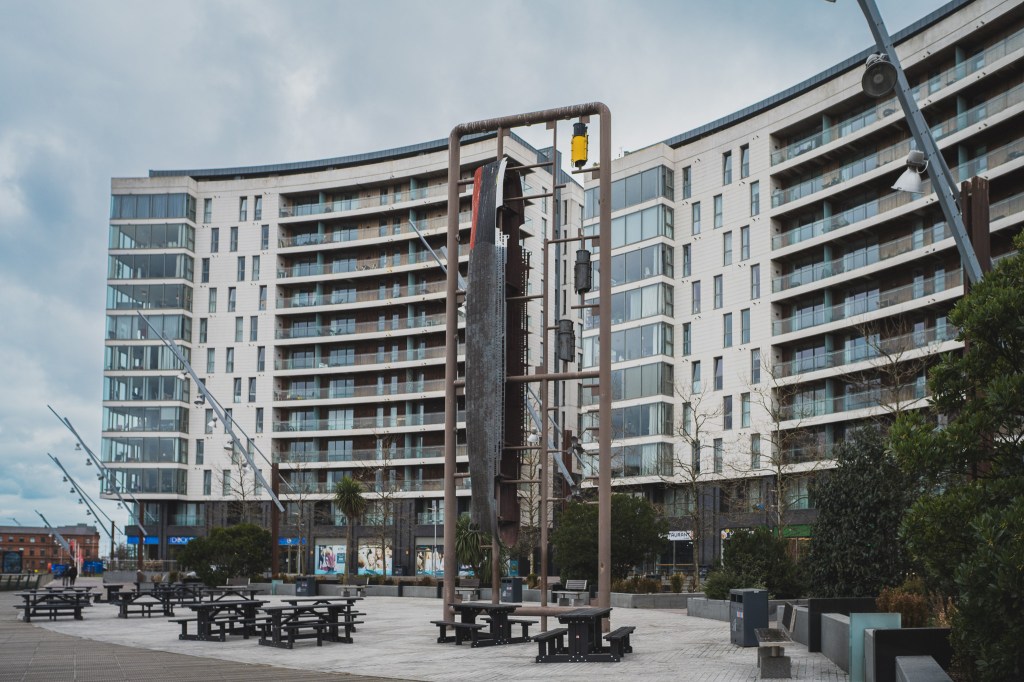
If you want a place in Belfast to breathe, reflect, and take in some views, the Titanic Quarter is it.
It’s not just about the ship—it’s about the city’s spirit of craftsmanship, survival, and reinvention. A must-do. Just don’t make the same mistake I did—give yourself more time here.
Evening Food, Pints, Friends & Final Wanders
Dinner & Irish Craic at The Deer’s Head
📍 Address: 1–3 Lower Garfield Street, BT1 1FP
By the time the sun was beginning its slow descent over Belfast’s rooftops (and my feet had officially registered over 20,000 steps), I knew it was time to treat myself. Enter: The Deer’s Head.
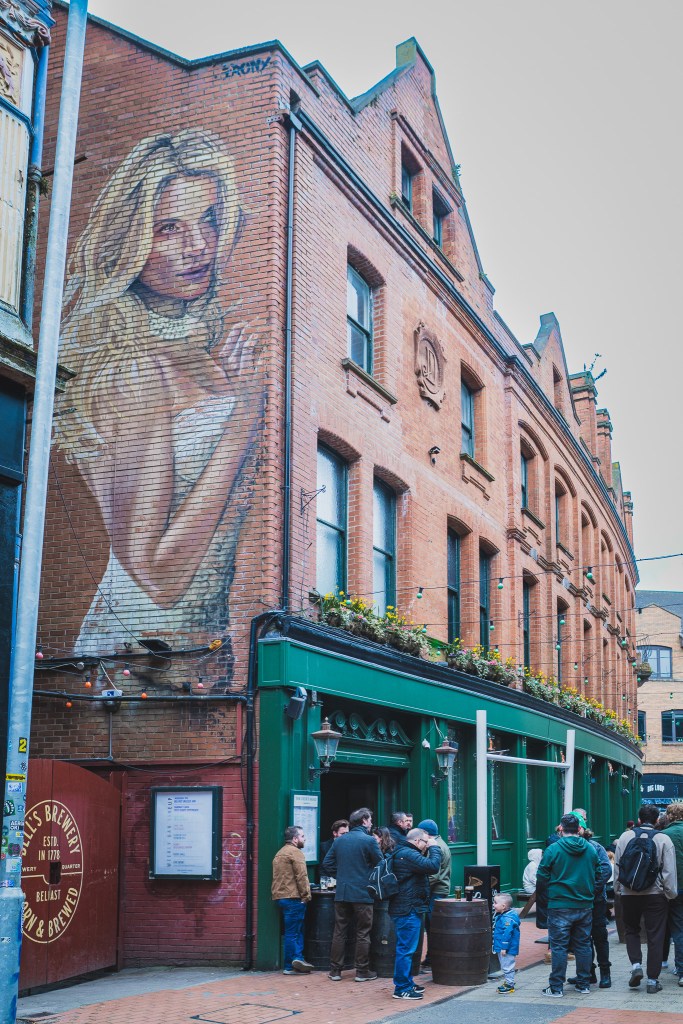
Now, The Deer’s Head isn’t just your run-of-the-mill pub. It’s a Belfast institution, lovingly restored to blend old-school charm with a modern twist. Nestled in a quiet corner of the Cathedral Quarter, its glowing windows and rustic signage felt like a warm invitation. And once I stepped inside, I knew I’d made the right choice.
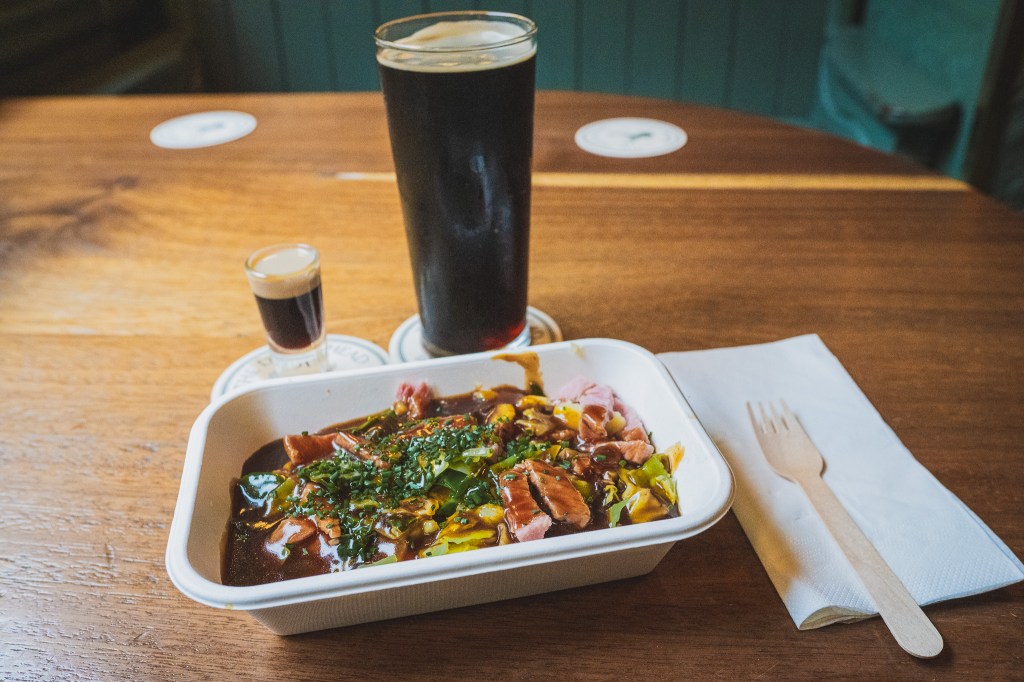
I squeezed into a cosy corner booth, still buzzing from the day’s adventures, and ordered a locally brewed pint—because when in Belfast, it would be rude not to. Lucky for me, The Deer’s Head is home to Bell’s Brewery, Belfast’s first brewpub in almost 100 years. The beer was smooth, the glass was chilled, and the atmosphere was everything I didn’t know I needed.
But what truly brought the place to life was the live Irish music and dancing that kicked off just moments after I sat down. I was expecting maybe a folk guitarist or a background playlist—what I got was a full-on, foot-stomping, high-kicking Irish dance performance right in the middle of the pub. I nearly choked on my chips in pure delight. People clapped along, raised their glasses, and sang the choruses they knew by heart. It wasn’t some overly polished tourist show—it was authentic, joyful, and brilliantly chaotic, the kind of performance where you feel like you’re watching your cousin’s best mate’s band—but they just happen to be phenomenal.
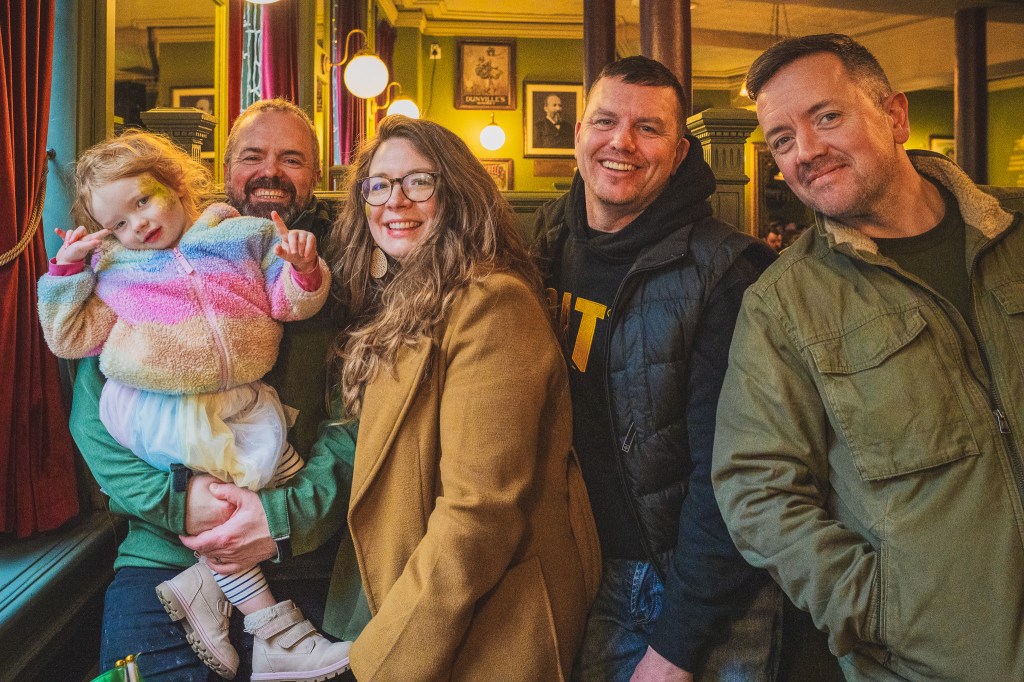
And then came my favourite part of the evening: chatting with the locals.
Belfast folk are truly one of a kind. Within five minutes of sitting down, I’d already had two recommendations for where to go next, a story about someone’s great-uncle and the shipyards, and an offer to “mind me bag if I needed a wee”. They’re funny, warm, and generous with their stories, often telling them with a wink, a grin, or the dry wit that only comes from living through a bit of everything. It wasn’t long before I was deep in conversation, pint in hand, belly full, and feeling completely at home.
Chasing Street Art Before Goodbye
With about an hour to spare before my airport bus, I decided I couldn’t leave without one last wander. So, I grabbed my camera (as if I hadn’t already taken a hundred shots that day) and headed off in search of Belfast’s lesser-known murals and hidden pieces of street art.
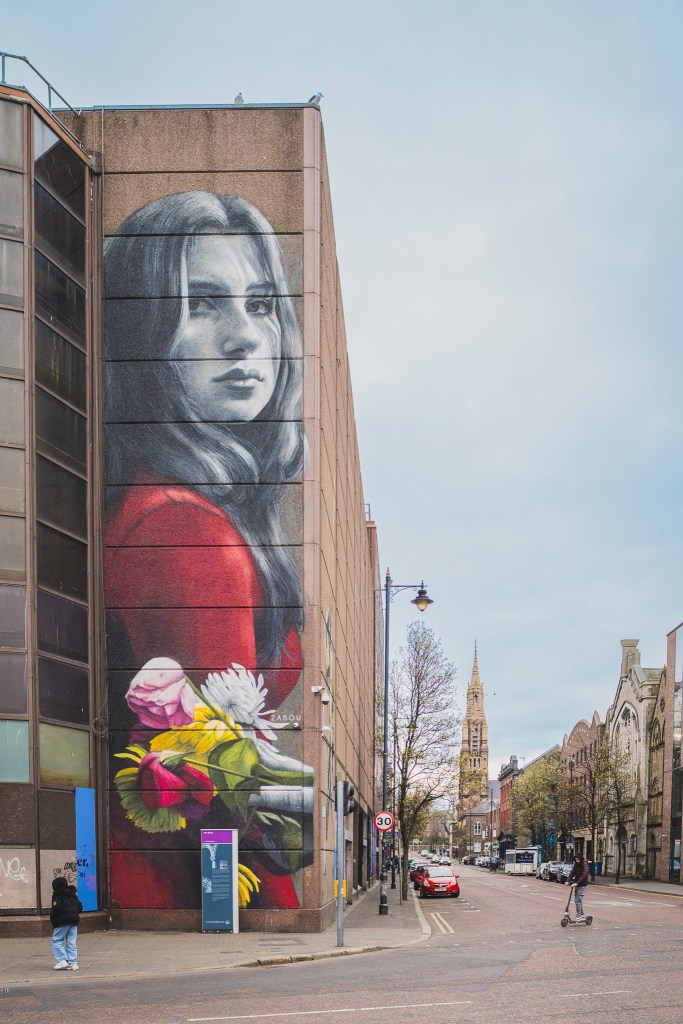
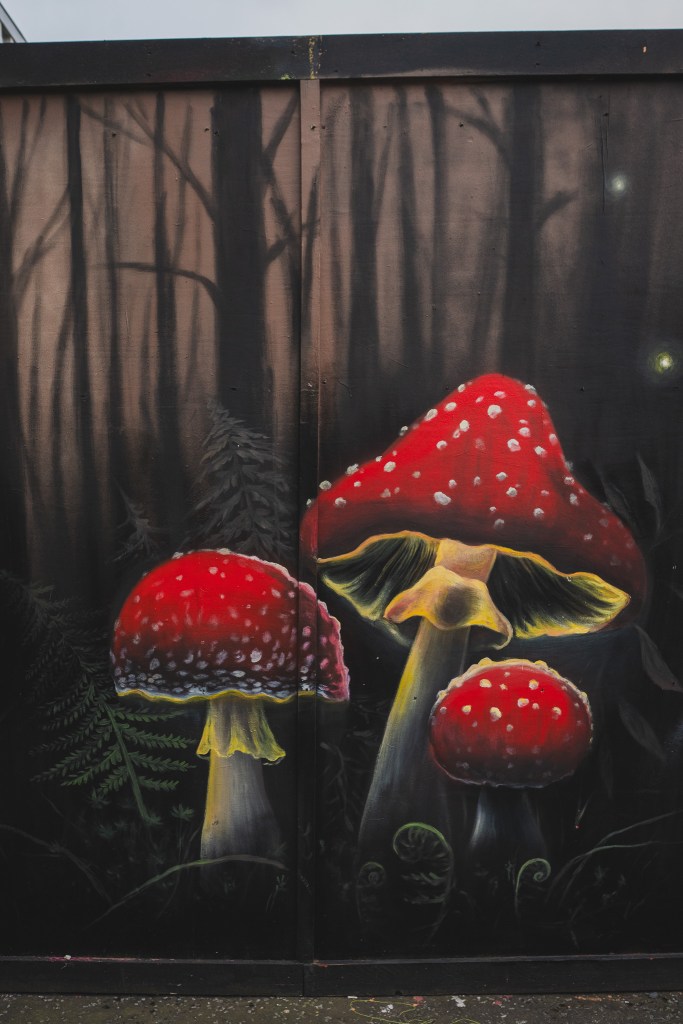
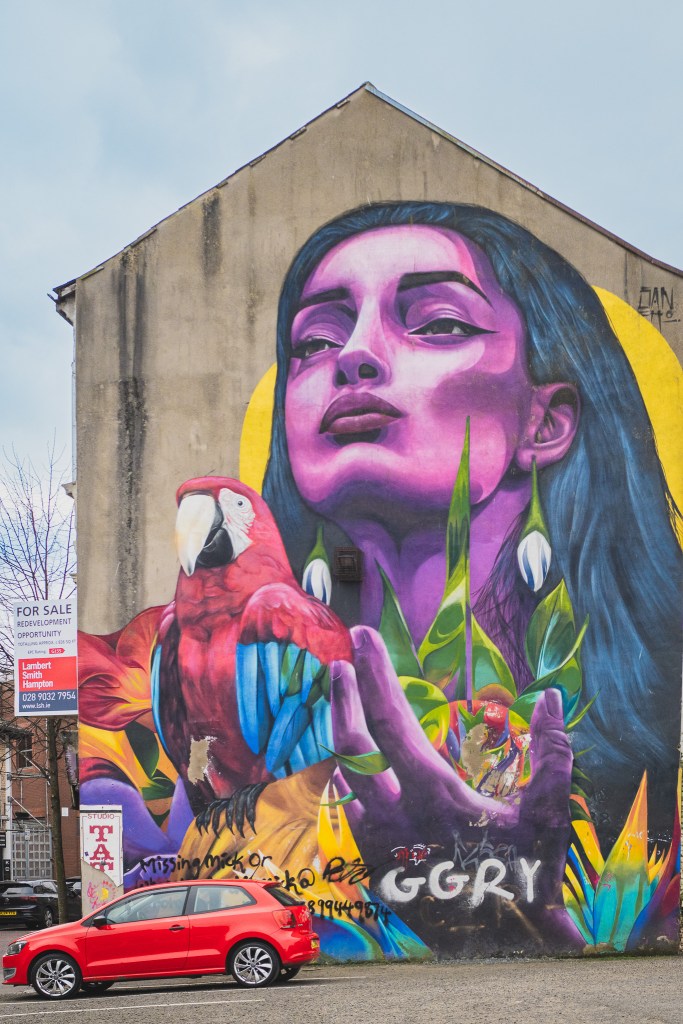
I ended up near the University area, where the vibe is totally different—more indie, more youthful, and packed with alleyways that double as urban art galleries. The walls were a canvas of colour, with everything from political commentary to abstract expression. Some were enormous and unmissable, others tiny and tucked into corners, like secret messages left for those who take the time to look up.


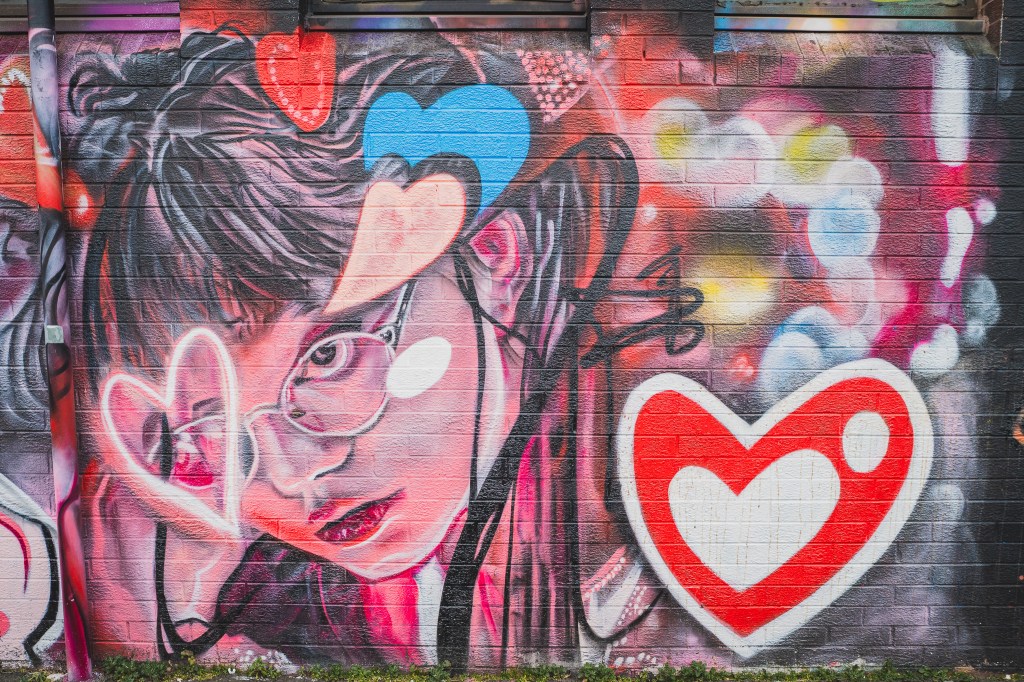
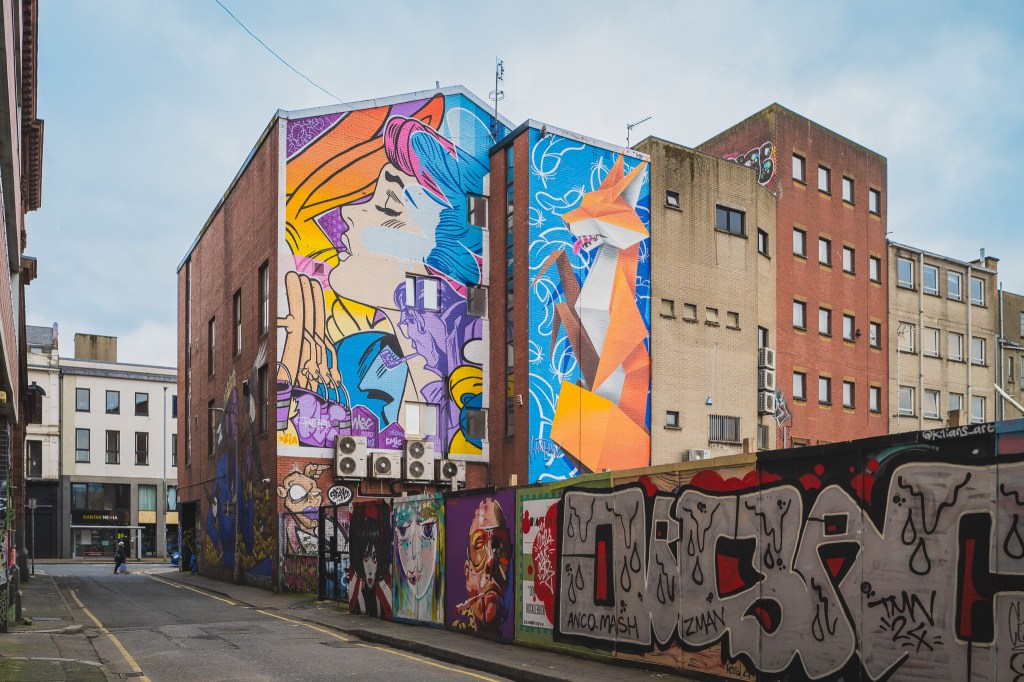

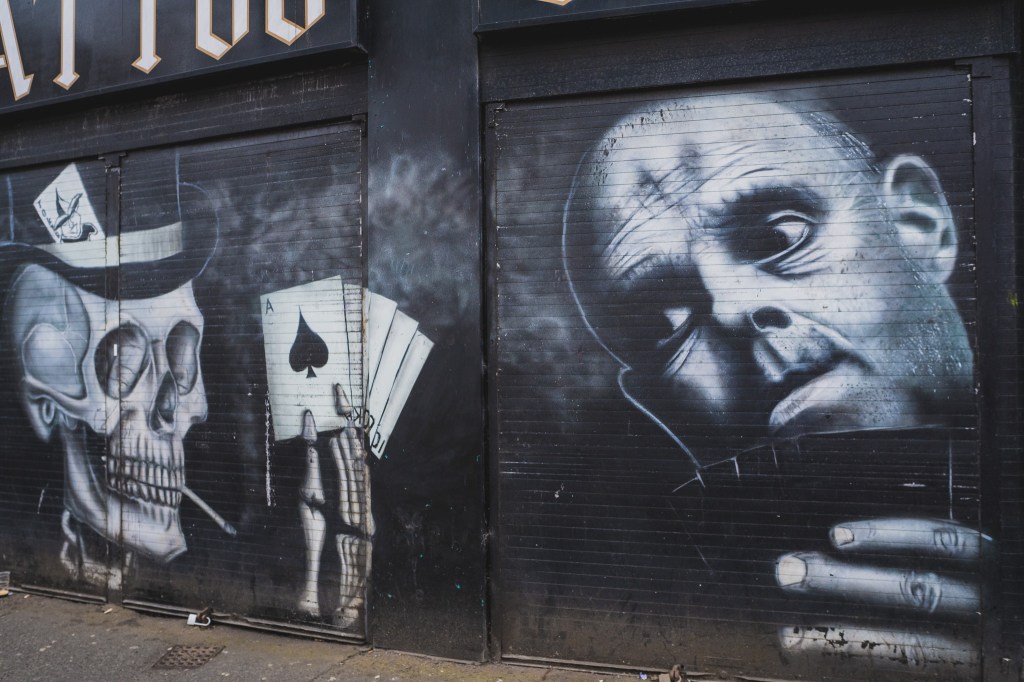
It was one of those beautiful solo travel moments—the kind where you’re alone, but not lonely. Just me, my camera, and a city that had totally stolen my heart.
And yes, in true me fashion, I completely lost track of time.
I was so immersed in snapping photos, soaking up the last bits of golden hour light, and admiring every painted brick and stencil tag that I looked at my phone and—oops!—realised I had about 8 minutes to get to the bus station.
Departure: Almost Missed It!
Classic me—I misjudged the clock while photographing murals and missed my 6:00 PM Airport Express 300a. Thankfully, Translink didn’t mind and let me hop on the next one with my same-day return ticket. Total lifesaver.
- Pick-up: Europa Bus Centre, Glengall Street
- Journey: ~40 mins
- Arrival at Airport: ~6:45 PM, plenty of time for my 9:00 PM EasyJet flight back to Bristol.
Extra Bits (If You’ve Got More Time)
If you’re lucky enough to stay longer in Belfast, don’t miss:
- Victoria Square Dome Viewpoint (1 Victoria Square, BT1 4QG) – free panoramic views over the city
- Commercial Court in Cathedral Quarter – fairy lights, murals, pubs
- Carroll’s Irish Gifts (52 Royal Avenue) – for all your shamrock keyring needs
Was One Day in Belfast Enough?
Not by a long shot. But was it worth every second? Absolutely.
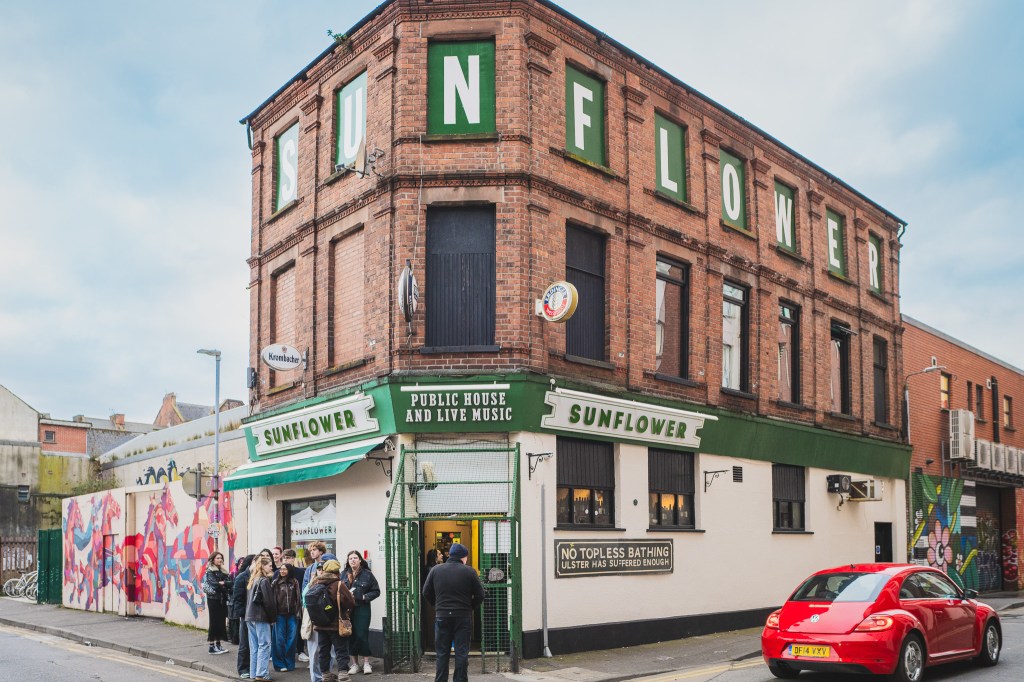
Belfast is the kind of place that doesn’t just welcome you—it wraps you up in its story, hands you a pint, and tells you a tale you won’t forget. I came with a camera and curiosity, and left with sore feet, a full heart, and at least three new local legends burned into my memory.
This city packs a punch—not just because of its turbulent past or its powerful murals, but because of its people, its energy, and that cheeky sense of humour that seems to come baked into the cobblestones.
Whether you’re walking along the Peace Walls, dancing in a pub with strangers who feel like old friends, or being blessed by a priest who claims to be St. Patrick reincarnated—Belfast has this way of making the extraordinary feel completely ordinary, and the ordinary feel unforgettable.
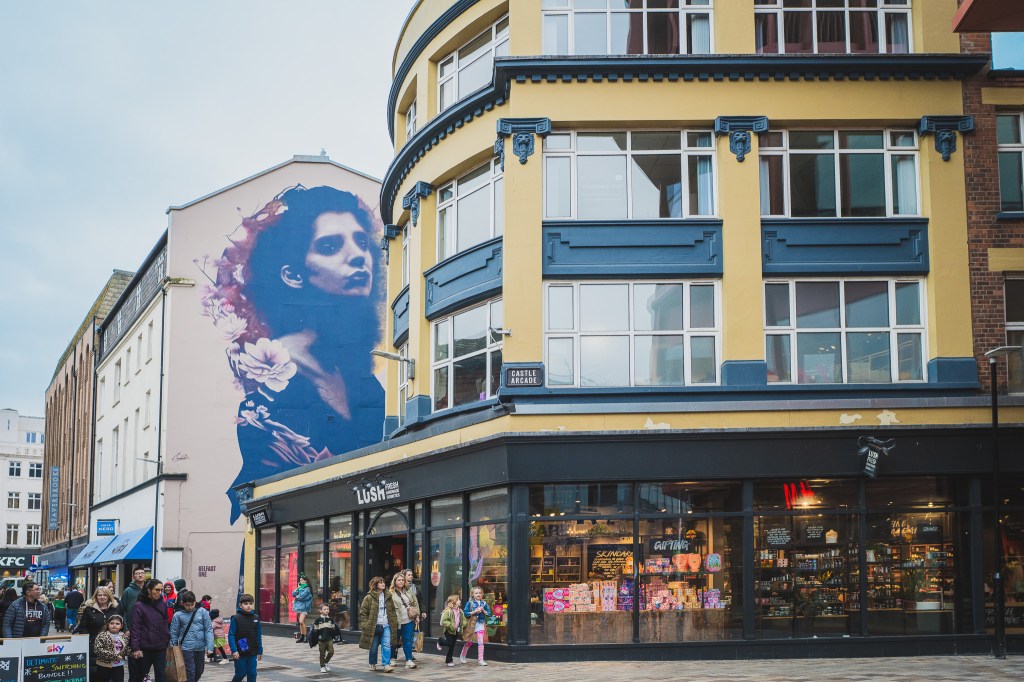
I used to be that person who said, “One day will be enough to see the main things.”
Now I’m the person who says, “You HAVE to visit Belfast.”
And not just to my friends. Oh no—I’ll tell anyone who’ll listen. The postman. The lady in front of me in the queue. Your nan. Even people who didn’t ask.
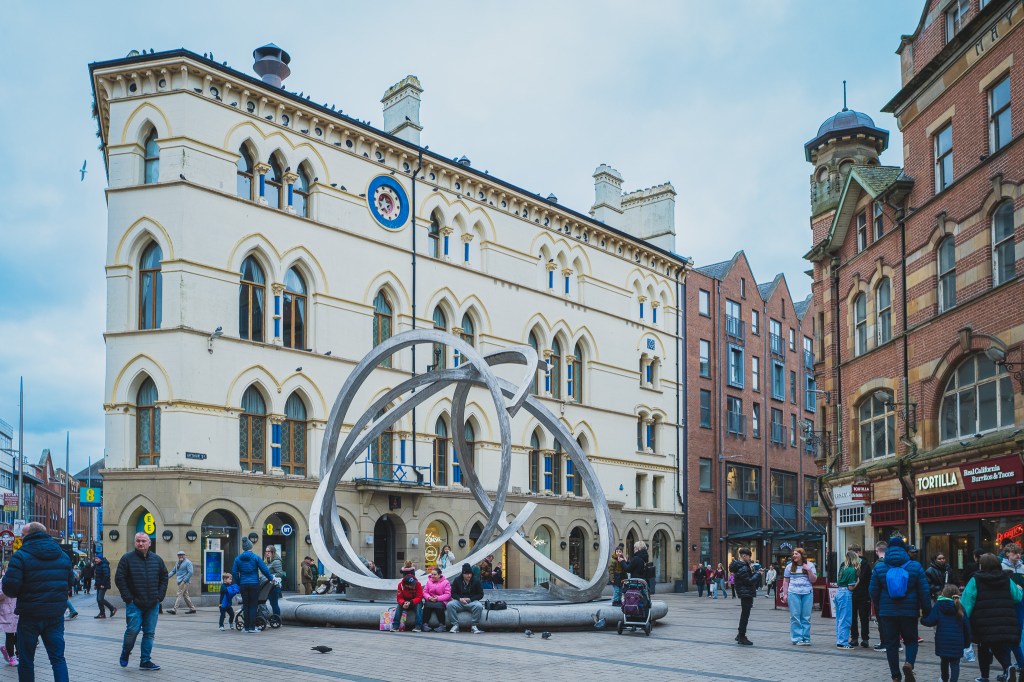
Would I do it again?
Absolutely.
Already planning it, actually—with more time to explore the Titanic Museum, sample even more local brews, and take another deep dive into Belfast’s art, history, and magic. Maybe I’ll even bring friends next time… or maybe not. I quite liked having the city all to myself, even if just for a day.
So here’s to Belfast: a city of murals, music, memory, and mighty craic.
Sláinte! 🍻🍀
Until next time.
 MKS Photography Travel
Leave a comment