Quick disclaimer: Some posts here have affiliate links. If you purchase something through these links, I may earn a small commission (at no extra cost to you). It’s like buying me a coffee without actually buying me one! I only recommend products I genuinely like, as I believe in giving good advice and enjoying great tea!
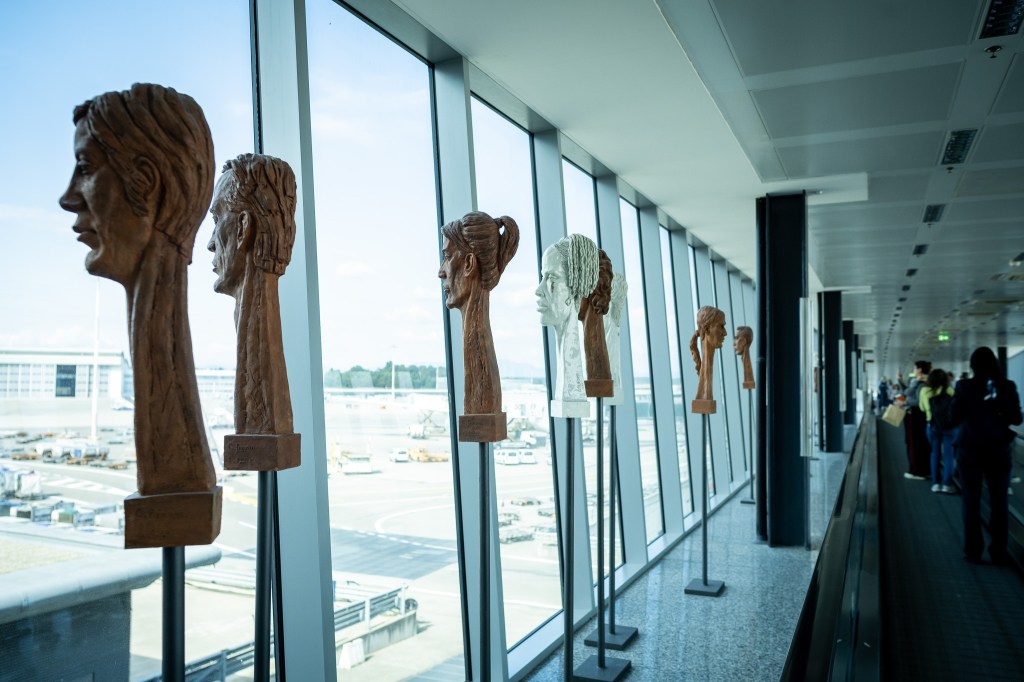
Milan. Just hearing the name brings to mind images of high fashion, historic architecture, and the rich aroma of Italian espresso floating through cobblestone streets. For years, Milan had been the glittering gem on my travel wish list, calling me with its promise of culture, art, and culinary delights. I’d been temptingly close on numerous occasions, but somehow, the timing was never quite right to stop by. That all changed two months ago when, in a spontaneous flurry of excitement, I stumbled upon some irresistibly cheap flights for September. Without a second thought, or any thought, really, I booked the tickets. Little did I know, this impulsive decision would lead to a series of amusing misadventures that would make our 24-hour stay in Milan unforgettable.
The Great Travel Plan That Wasn’t
Living in a far land of South Wales, my partner and I are no strangers to spontaneous road trips. We had the option to fly from Bristol Airport, which is conveniently closer to us. However, flights to Milan from there were as rare as a sunny day in Wales, and we were determined to keep our trip brief, beyond what was necessary, aiming for a quick yet enriching getaway.

In our infinite wisdom, we opted for a 6:35 am Ryanair flight departing from London Stansted on a Wednesday. Brilliant, right? The choices were stark: should we spend over £100 on an airport hotel room, only to wrench ourselves from the comfort of a warm bed at 3 am? Or should we embrace our inner night owls and drive through the night to catch our early flight? Being the adventurous souls we are, we chose the latter. After all, sleep is overrated when you’re on the cusp of adventure!
Midnight Run: Coffee, Car Rides, and Caffeine Highs
We decided to grab a quick nap until midnight, which, in reality, involved tossing and turning while our minds buzzed with pre-trip excitement. A hasty shower later, we made a pit stop at McDonald’s for some much-needed coffee. The staff gave us curious looks. Apparently, not many people seek caffeine fixes at such ungodly hours.
With the car loaded and the GPS set, we embarked on our nocturnal journey. The roads were eerily quiet, a stark contrast to our lively chatter inside the car. I’m accustomed to driving through the night due to my photography events, where late-night shoots and early morning arrivals are par for the course. Piotr, on the other hand, isn’t exactly adept at sleeping in moving vehicles. So, we both resigned ourselves to a sleepless night, fuelled by coffee and the thrill of the trip ahead.
We had booked parking through Holiday Extras, and the only available option for our 36-hour escapade was a whopping £60. It seems that short stays come with premium prices, and trust me this was the cheapest option. We consoled ourselves with the thought that the convenience was worth it, allowing us to swiftly transition from car to plane without the stress of last-minute logistics.
Arrival in Milan: From Sleepless to Breathless
Our flight was uneventful, which, given our lack of sleep, was a blessing. As we descended into Milan Malpensa Airport, the sun was just beginning to cast its glow over the Italian landscape. We stepped off the plane, and the fresh air felt like a welcoming embrace.
The next challenge was getting from the airport to the city centre. You can explore GetTransfer.com which offers one marketplace in the world for booking transfers, long distance travel, cab rides, hourly chauffeured car rentals and delivery services anywhere in the world. We decided on two options: the bus or the train. The bus was £10 one way but subject to the whims of traffic. The train was slightly more at £13 one way but promised a punctual arrival in central Milan in about an hour. The Malpensa Express departs every 30 minutes, which meant we wouldn’t have to wait long for the next train if we missed one. Additionally, the train offered comfortable seating and space to stretch our legs, which sounded heavenly after our cramped flight.
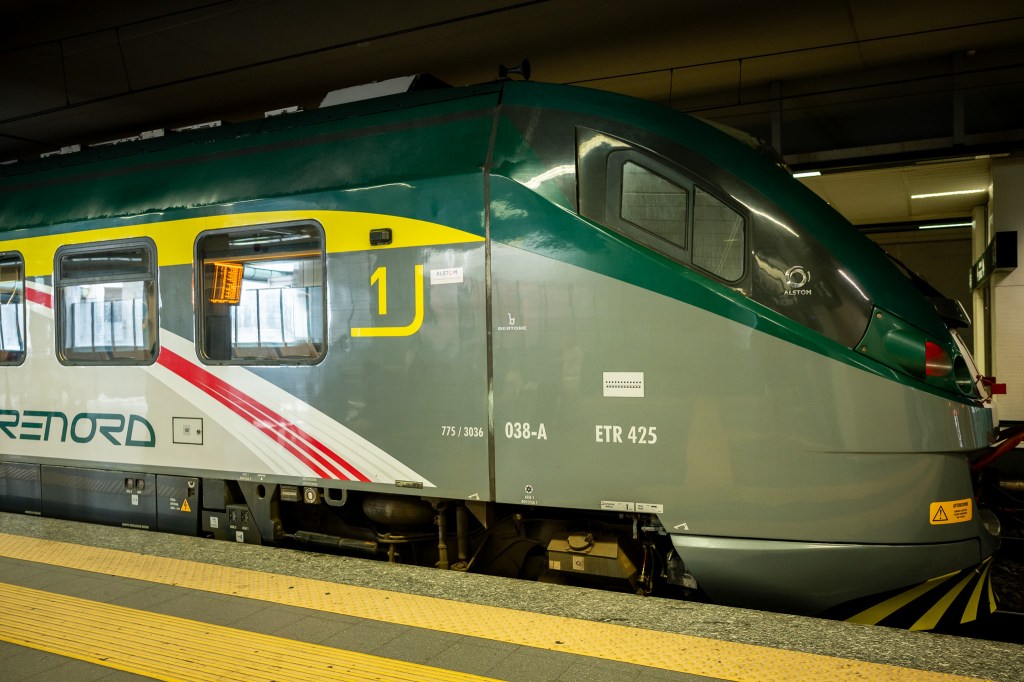
One of the best features of the Malpensa Express is the flexibility it offers. The train makes several stops before reaching its final destination at Milano Centrale, including stations like Milano Porta Garibaldi and Milano Cadorna. This hop-on, hop-off option allowed us to start exploring parts of Milan even before reaching the central station, a feature that turned out to be very useful.
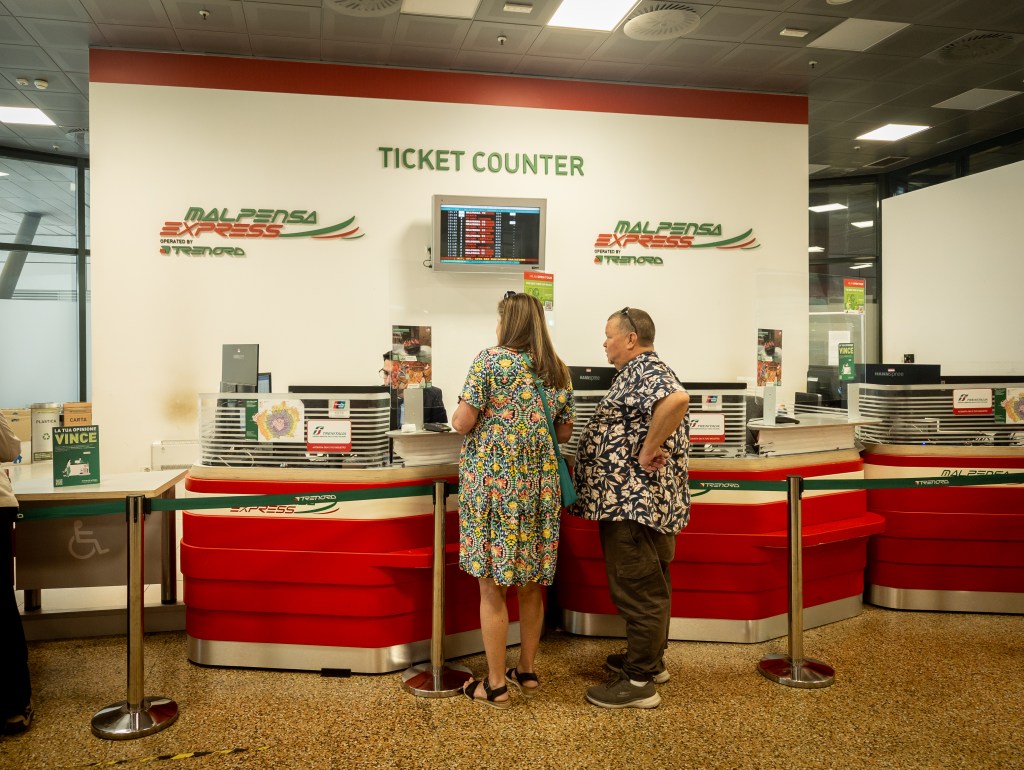
When it came to purchasing tickets, there are multiple convenient options. Tickets can be bought directly at the airport from the ticket office and the staff is very knowledgable, nice and helpful.
Alternatively, tickets can be purchased online through the official Malpensa Express website or other links like Rail Europe, which save our life during this trip. Buying tickets online has its advantages. You can avoid potential queues at the kiosks and have your tickets ready on your smartphone, which is both convenient and eco-friendly. Since we hadn’t thought of this in advance, we ended up buying our tickets at the kiosk, but in hindsight, booking online would have saved us a bit of time.
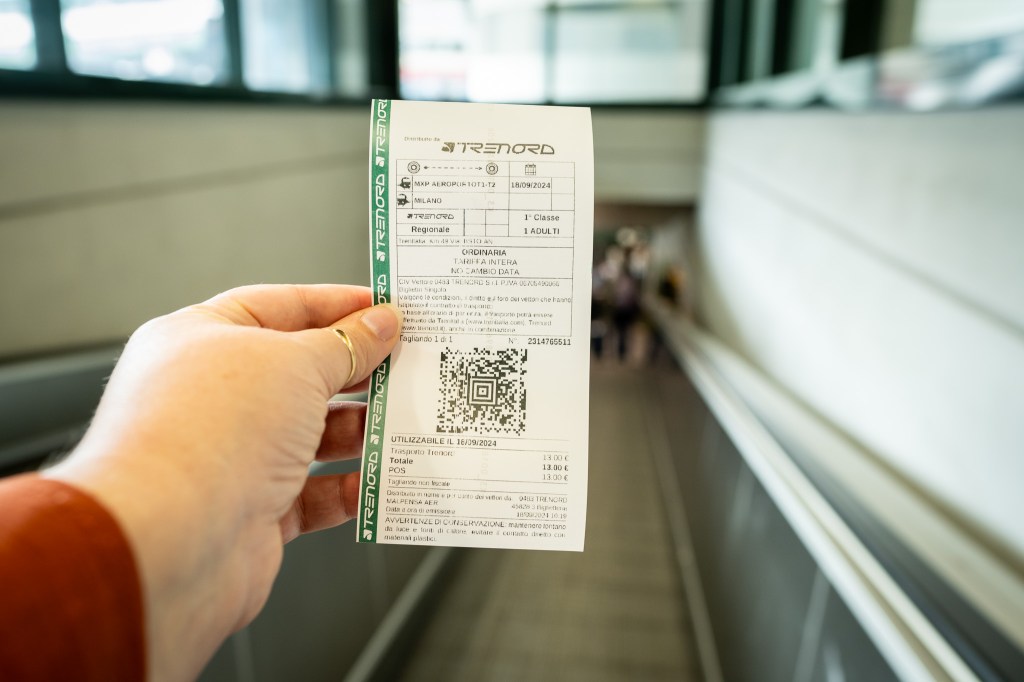
Another tip we learned is that if you’re planning to return to the airport the same day or within a set period, it’s more cost-effective to buy a return ticket rather than two singles. Return tickets often come at a discounted rate compared to purchasing two one-way tickets separately.
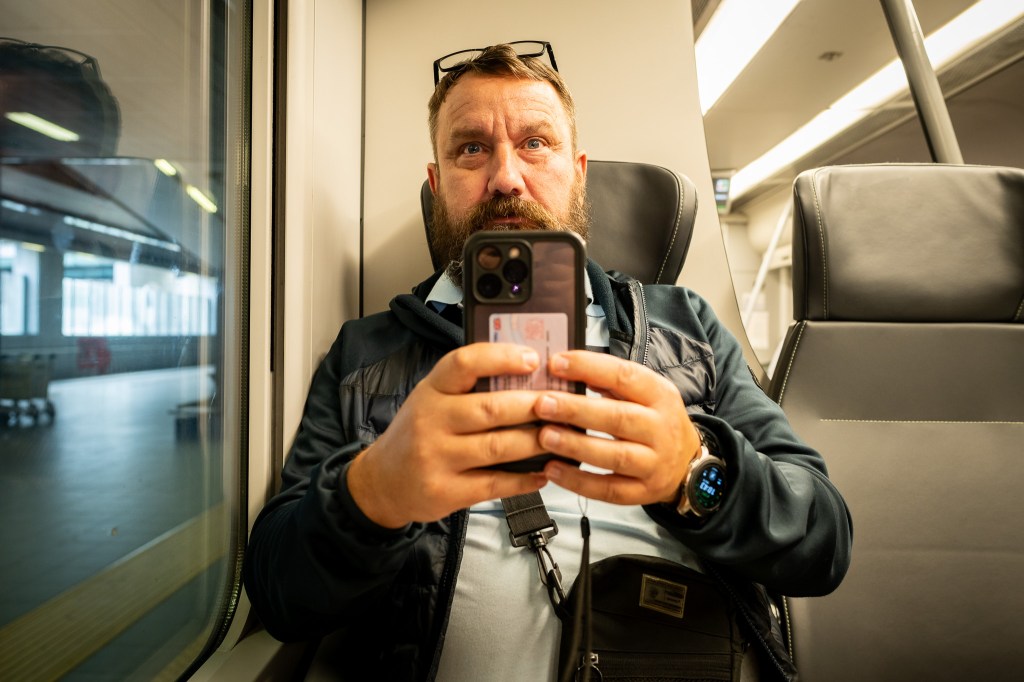
With tickets in hand, we made our way to the platform. The train was clean, modern, and equipped with free Wi-Fi, which was a nice bonus for travelers needing to catch up on messages or plan their itinerary. As the train smoothly pulled away from the airport, we relaxed into our seats, watching the scenery transition from the outskirts to the urban heart of Milan.
Our decision to take the train proved to be the right one. Not only did we avoid traffic, but we also used the opportunity to explore the Garibaldi area before reaching the central station. A detour that added unexpected joy to our trip.
First Stop: The Vertical Forest of Porta Nuova
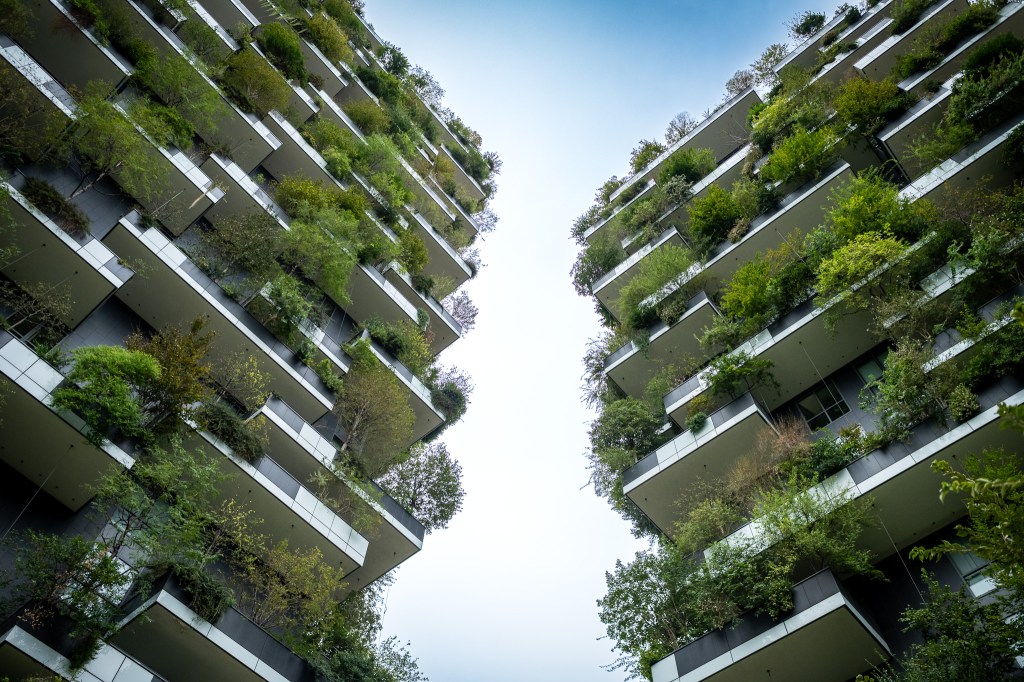
Our first hop-off was in the Garibaldi area, specifically to see the famed Bosco Verticale, or Vertical Forest. Nestled in the heart of Porta Nuova, Milan’s bustling modern district, these twin towers stand at 80 and 112 metres high. But these aren’t your average skyscrapers.
Designed by architect Stefano Boeri and completed in 2014, the Bosco Verticale is an innovative residential building project that integrates over 900 trees and more than 2,000 plants into its façade. As we stood at the base of these towering gardens, the morning light filtered through the leaves, casting dappled shadows on the pavement. The buildings seemed almost alive, breathing and swaying gently with the breeze.
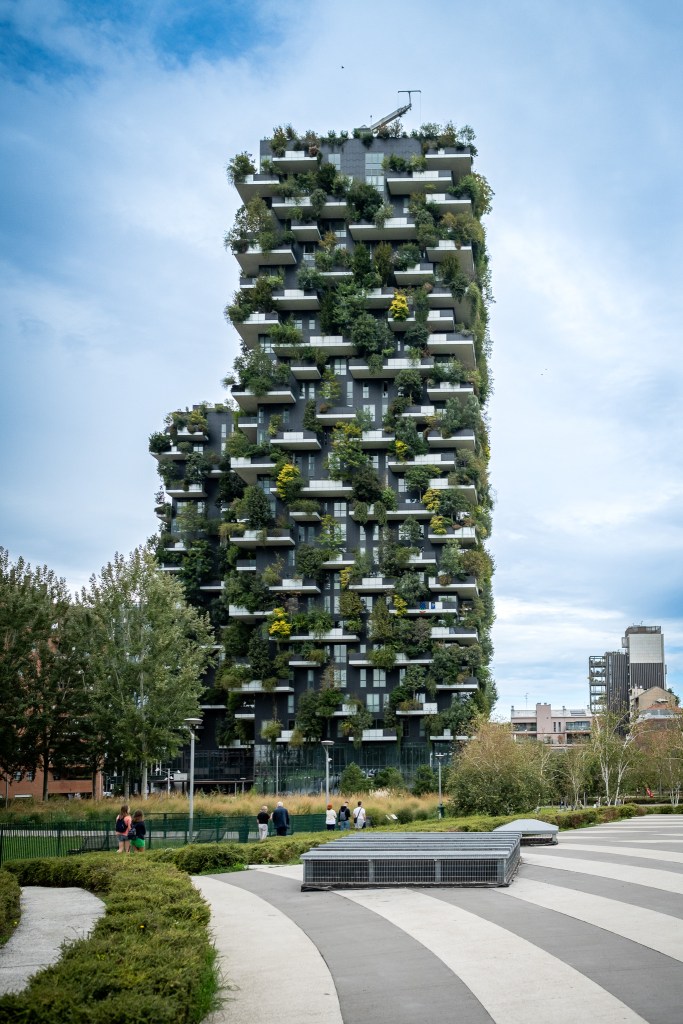
The concept behind the Bosco Verticale is as functional as it is aesthetic. The vegetation helps absorb CO2 and dust particles, produces oxygen, and provides a habitat for birds and insects, all this while regulating temperatures within the apartments. It’s an ecological masterpiece that challenges the conventional notions of urban living.

We spent time wandering the surrounding area, marvelling at how seamlessly modern architecture could blend with nature. It’s a photographer’s dream, and I couldn’t resist snapping countless photos from every angle. The juxtaposition of glass and greenery against the backdrop of Milan’s skyline was nothing short of breathtaking.
Street Art: Milan’s Colourful Canvas
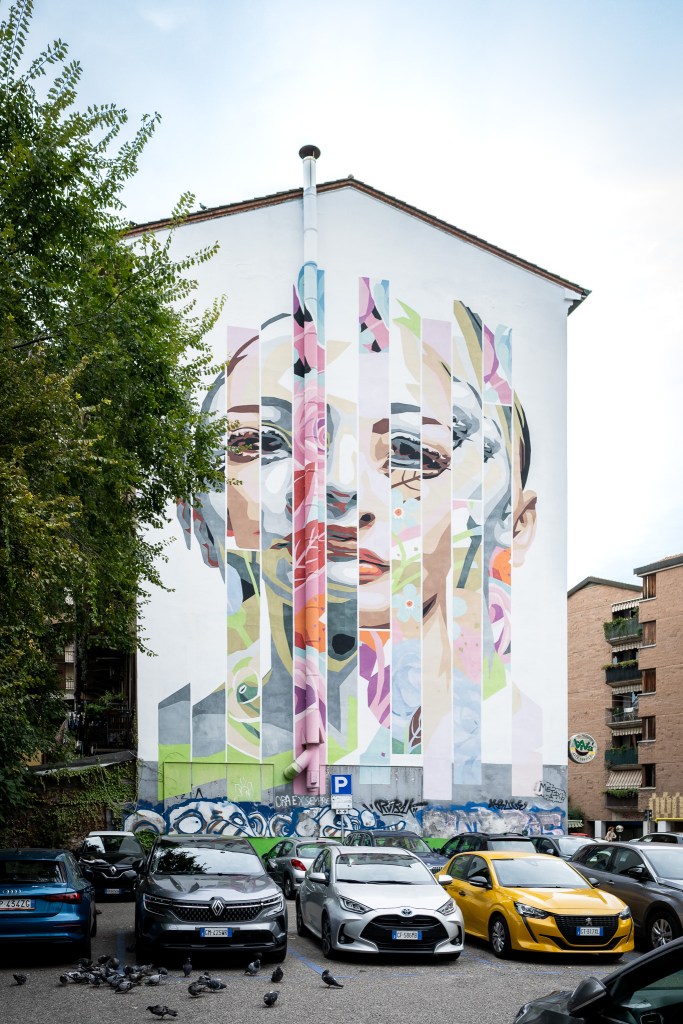
Leaving the Vertical Forest, we wandered into the Isola district, known for its vibrant street art scene. Milan, while famed for its high-end fashion and classic art galleries, also boasts an underground world of murals, stencils, and graffiti that add a splash of colour to its urban landscape.
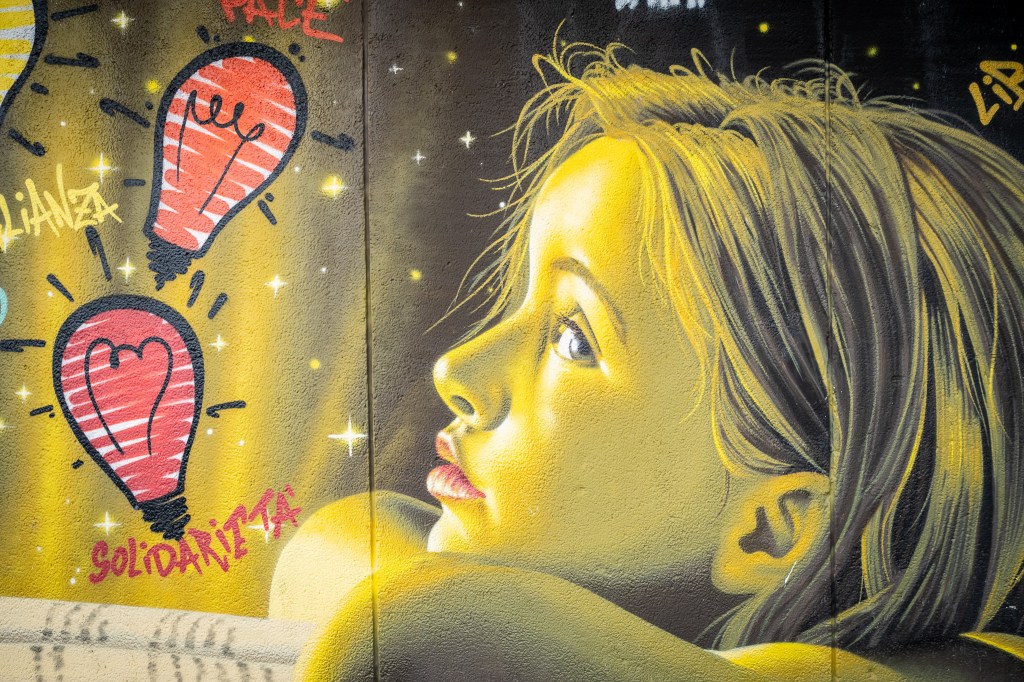
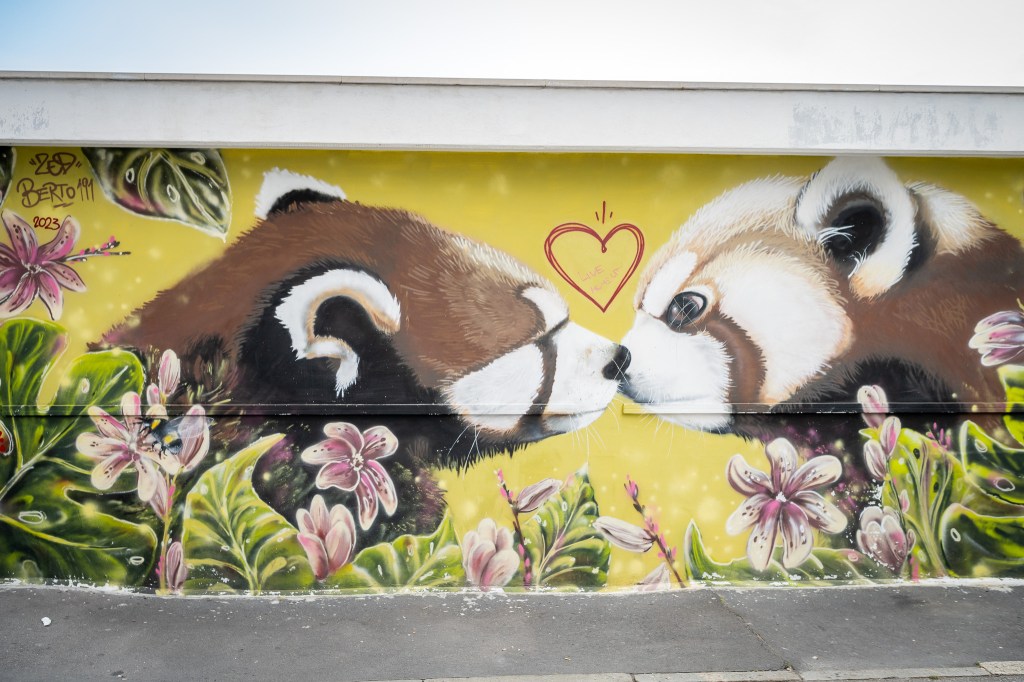
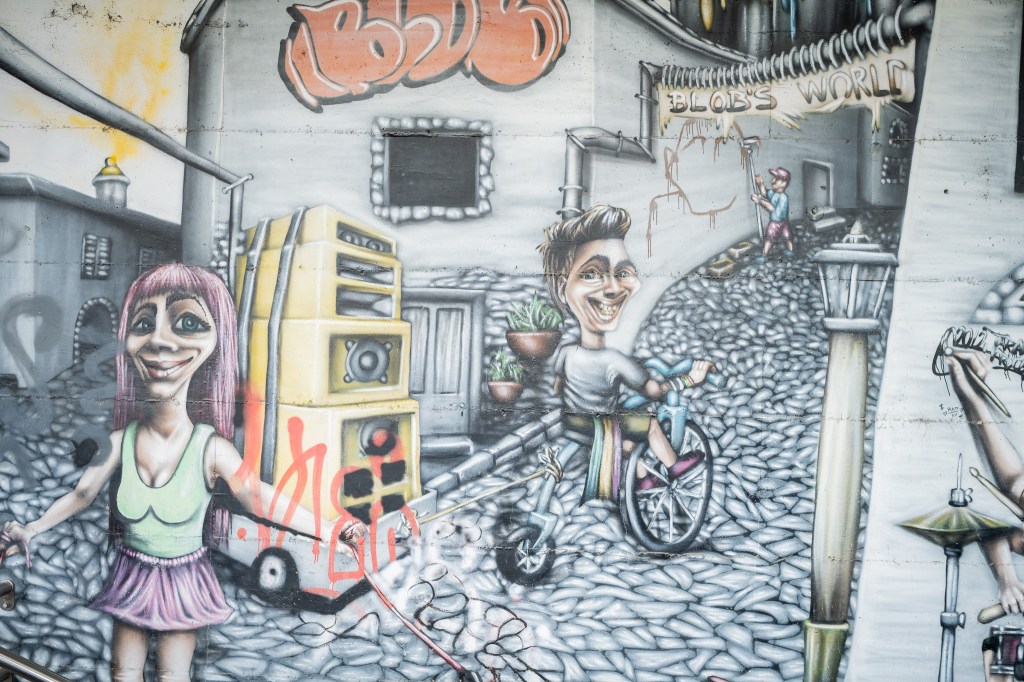
Walls that would otherwise be unremarkable are transformed into thought-provoking pieces that reflect social issues, political statements, or simply the artist’s inner world. We stumbled upon a mural depicting a whimsical scene of fantastical creatures dancing under a starry sky. Nearby, a more serious piece commented on environmental degradation, with a striking image of a melting cityscape.
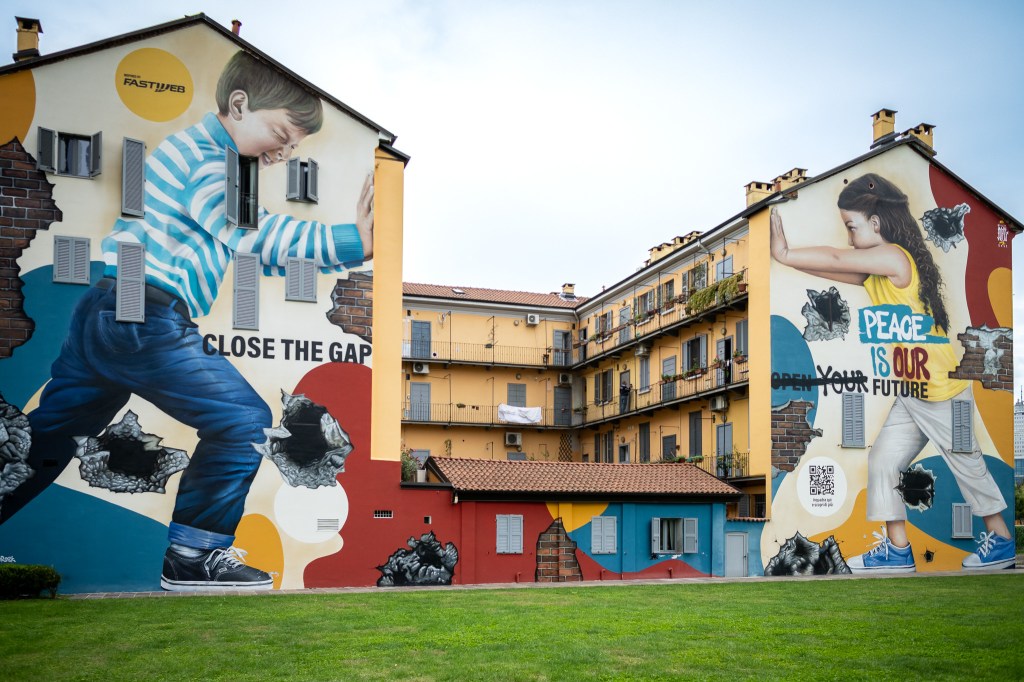
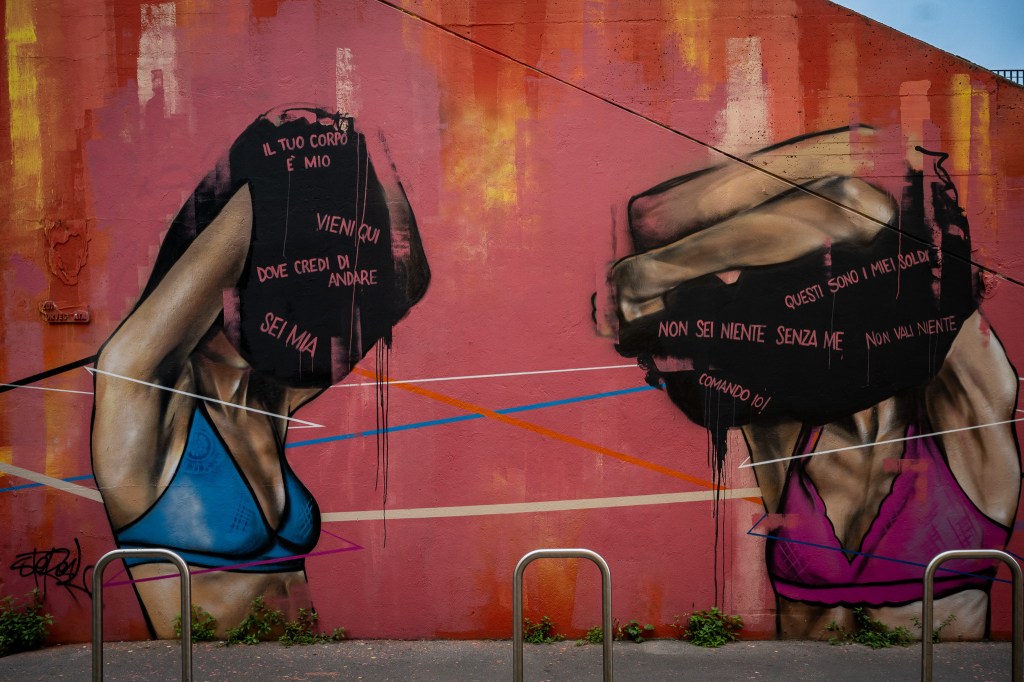
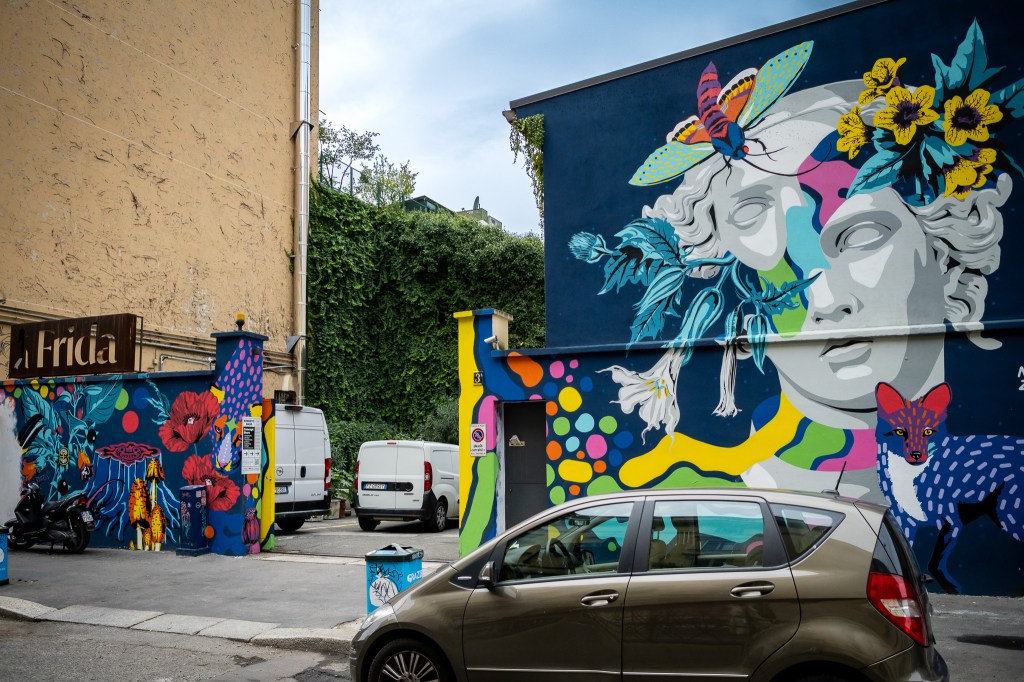
The street art here isn’t just decoration; it’s a dialogue between the artists and the city, a living, evolving gallery that offers new surprises at every turn. For anyone interested in exploring this aspect of Milan, there are guided street art tours that delve into the history and meaning behind these works. The interaction between Milan’s street art and its world-renowned fashion scene is particularly notable, as the influence of design can often be seen in the bold colours and innovative styles of the artwork.
Milano Centrale: A Grand Welcome
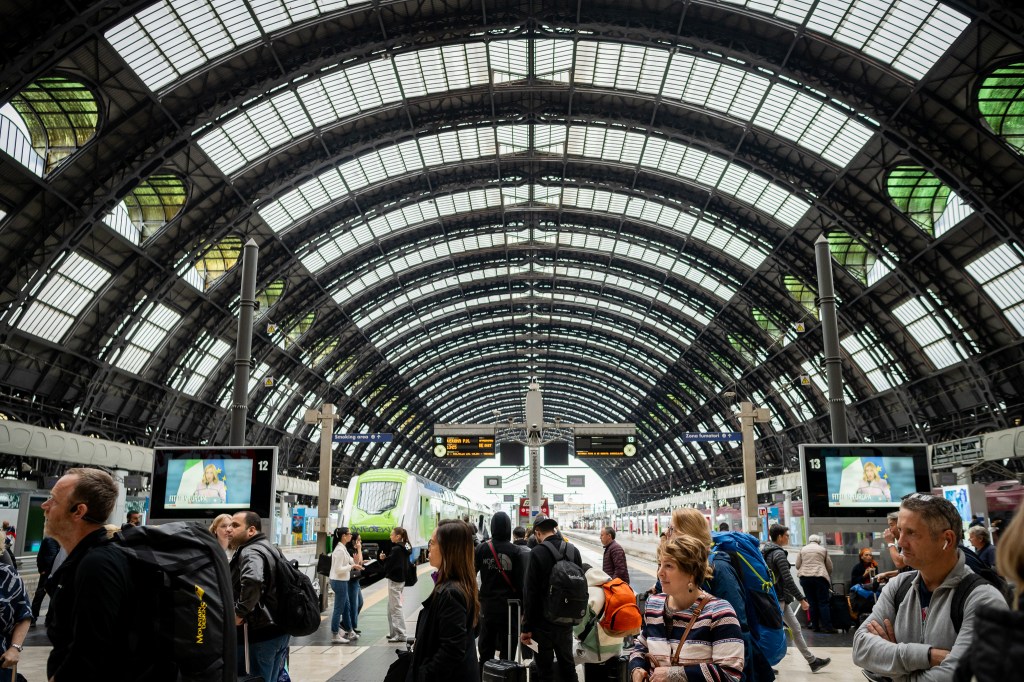
Our train journey continued to Milano Centrale, the main railway station and an architectural marvel in its own right. Opened in 1931, the station is a grandiose blend of Art Deco and Fascist-era architecture, reflecting Italy’s complex history during that period. It’s the second busiest railway station in Italy, serving over 120 million passengers a year.

As we stepped into the station, the sheer scale was awe-inspiring. High ceilings adorned with intricate carvings, grand staircases, and expansive halls made us feel like we were in a palace rather than a transportation hub. Navigating through Milano Centrale is surprisingly straightforward despite its size. Signage is clear, and everything is organised logically, which is a blessing for sleep-deprived travellers like us.
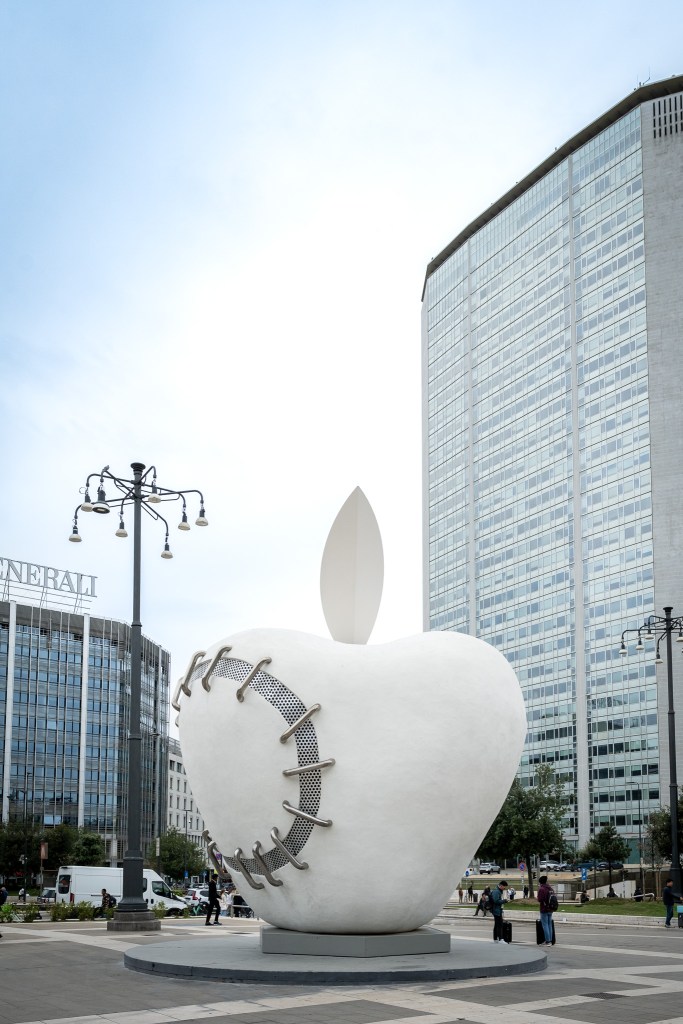
Outside the station, we were greeted by Michelangelo Pistoletto’s imposing sculpture, donated to the city in honour of Expo 2015, which had the theme of food and nourishment. The 8×8 metre artwork, weighing 11 tons, is a captivating piece made of steel, powdered marble, and clay plaster. The stitching of the sculpture, made with stainless steel bars, symbolises unity and interconnectedness, a fitting message for a city that serves as a crossroads of culture and commerce.
All Aboard the Tram: A Journey Through Time
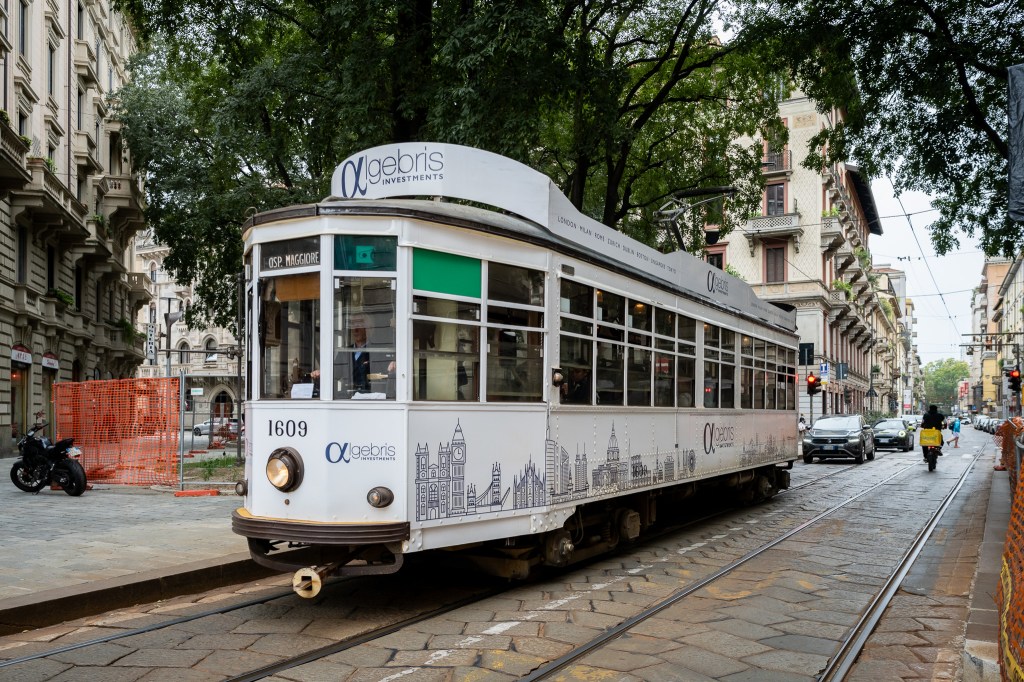
Eager to experience the city like locals, we decided to traverse Milan using its iconic tram system. Milan’s trams are more than just a mode of transportation; they’re moving pieces of history. The network dates back to the late 19th century, and some of the trams still in operation are from the 1920s and 1930s.
You may purchase tickets from a nearby tabacchi (tobacco shop), and you can also buy them at metro stations or pay on board with a card or phone, as we have done. Some routes require you to tap in and out due to zone-based fares, so it’s worth noting to avoid any unexpected charges.
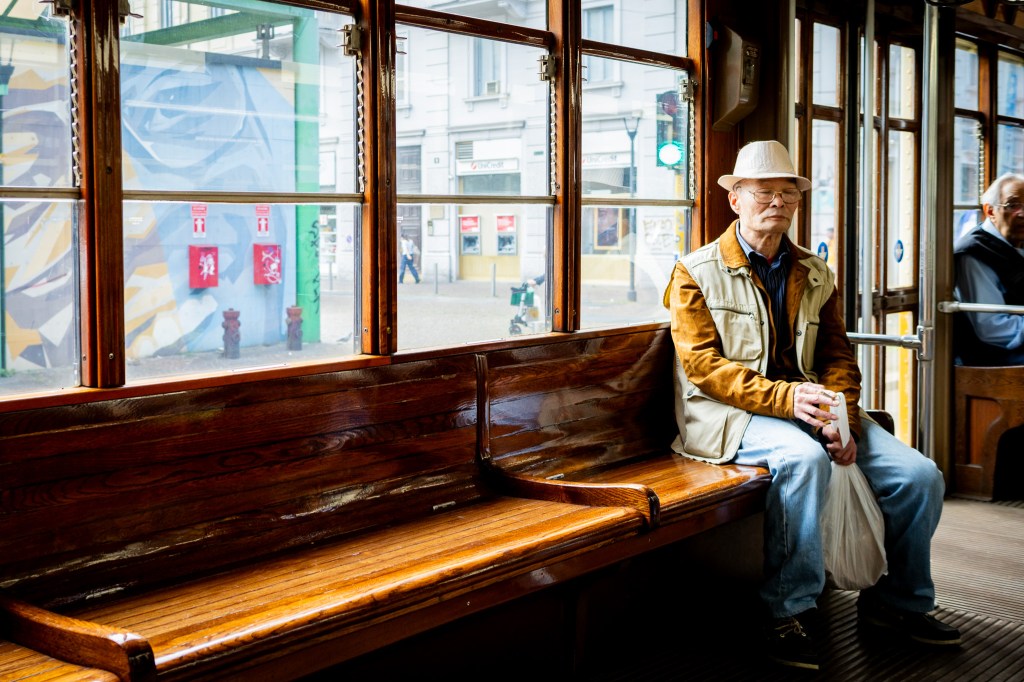
We boarded one of the vintage trams, its wooden interior and brass fittings evoking a bygone era. The seats were comfortably worn, and the windows offered an ever-changing tableau of Milanese life. The tram rattled and clattered along the tracks, passing historic buildings, bustling markets, and quiet residential areas.
The best route to choose is the #10, which runs from Porta Ticinese to Viale Lunigiana, near the Central Station. The journey is a delightful mix of sightseeing and people-watching. Locals hopped on and off, greeting each other with warm familiarity, while tourists like us gazed wide-eyed at the passing scenery.
We believe that discovering the city by tram offers an added and unique charm to your visit. It’s a chance to see Milan from a different perspective, one that’s less hurried and more immersive.
The Duomo: Heart and Soul of Milan
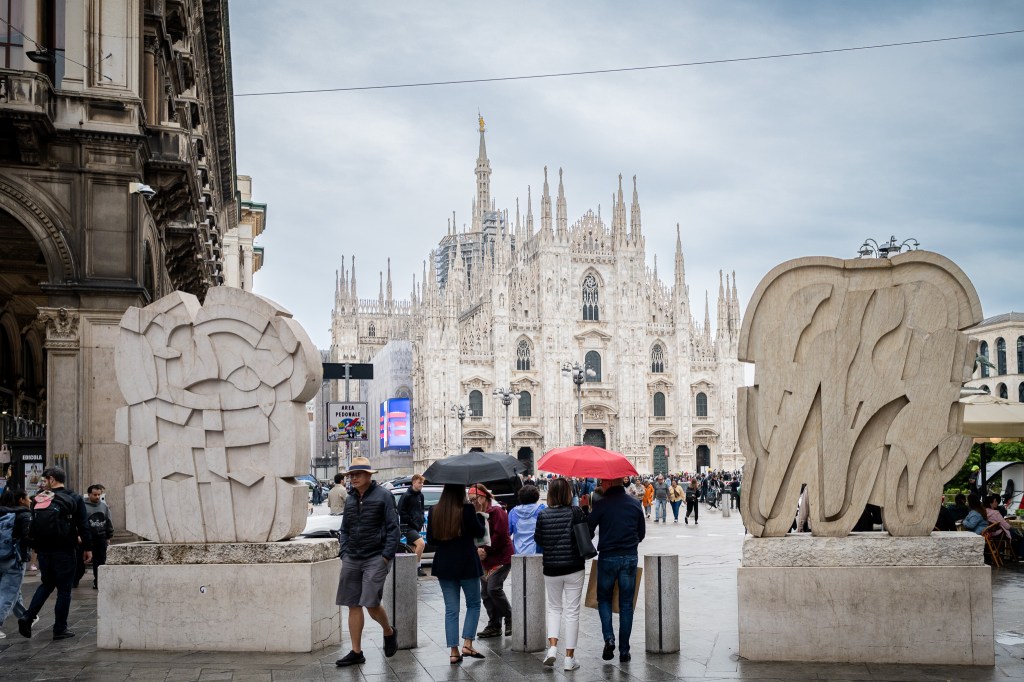
No visit to Milan would be complete without paying homage to the Duomo di Milano, the city’s iconic cathedral. As we approached, the sheer magnitude of the structure took our breath away. Standing in Piazza del Duomo, the cathedral’s intricate façade dominates the skyline, a masterpiece of Gothic architecture that has stood for over six centuries.
Construction began in 1368, and the cathedral wasn’t officially completed until 1965. It is a testament to the dedication of countless artisans over generations. The Duomo boasts 135 spires and over 3,400 statues, including the gilded Madonnina atop the tallest spire, which glimmers in the sunlight as a symbol of the city’s devotion.
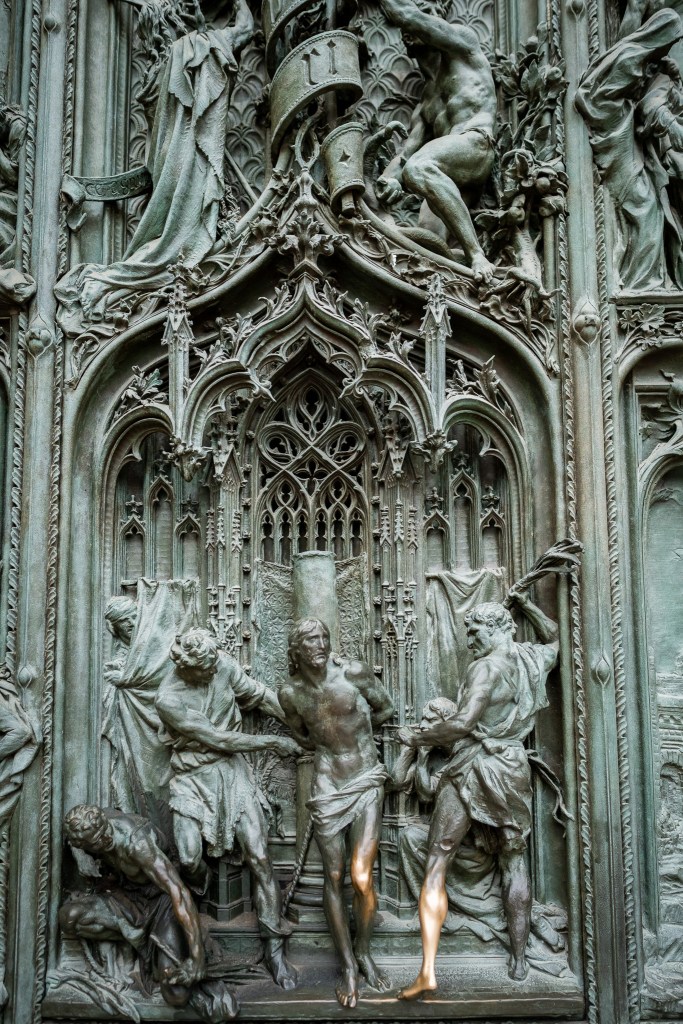
You can explore both the interior and the rooftop terrace. Inside, the cathedral is vast and serene, with soaring ceilings supported by massive pillars. Sunlight filtered through stained-glass windows, casting colourful patterns on the marble floors. Artworks and sarcophagi of notable Milanese figures lined the aisles, each with its own story.
To book tickets I would suggest to do it in advance online. You can do it through Booking.com. They gave us extra £10 to spend on attraction ticket, when we booked the stay with them. As accommodation in Milan can be steep, we decided to splash out a bit and booked an apartment IMHOME – Porta Vittoria. Best. Decision. Ever. Spacious, clean, with a comfy bed and a kitchen that we barely used except for making tea. After our sleepless night and a full day of exploring, that bed was the definition of heaven. But, before you choose any place to stay, look them up on Tripadvisor to avoid disappointment.
You can also try Tiqets site, who has brought millions of people to museums and attractions around the world with their instant and intuitive mobile booking technology.
Galleria Vittorio Emanuele II: A Shopper’s Paradise
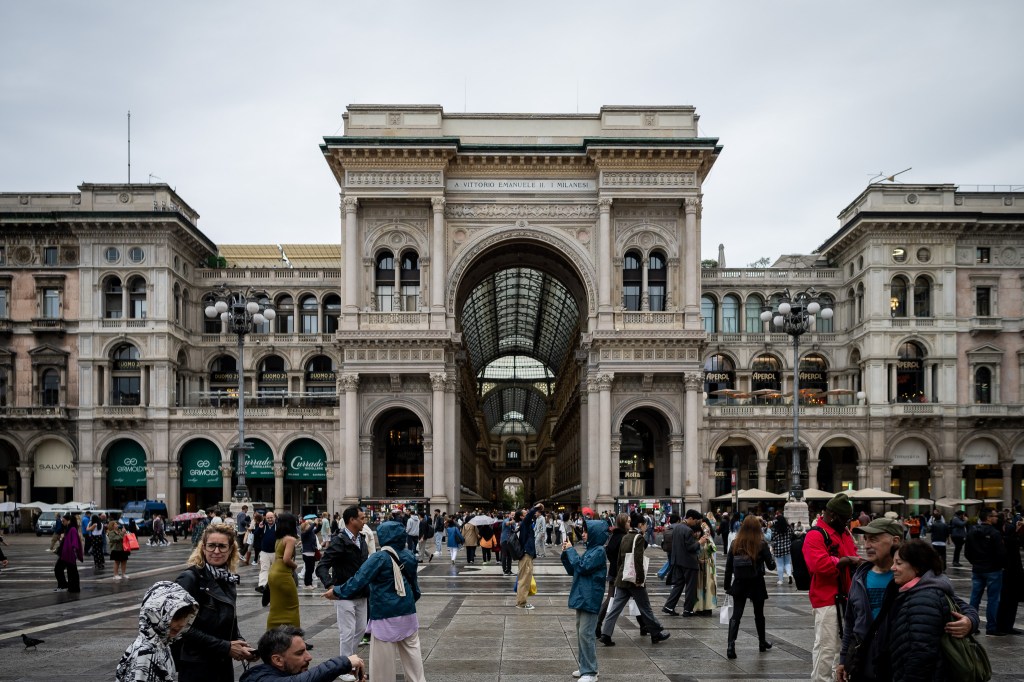
Adjacent to the Duomo is the Galleria Vittorio Emanuele II, an opulent shopping arcade that is as much a work of art as it is a commercial centre. Built between 1865 and 1877, it’s named after the first king of the Kingdom of Italy. The Galleria is a magnificent example of 19th-century iron and glass architecture, featuring a soaring central dome, intricate mosaics, and ornate ironwork.
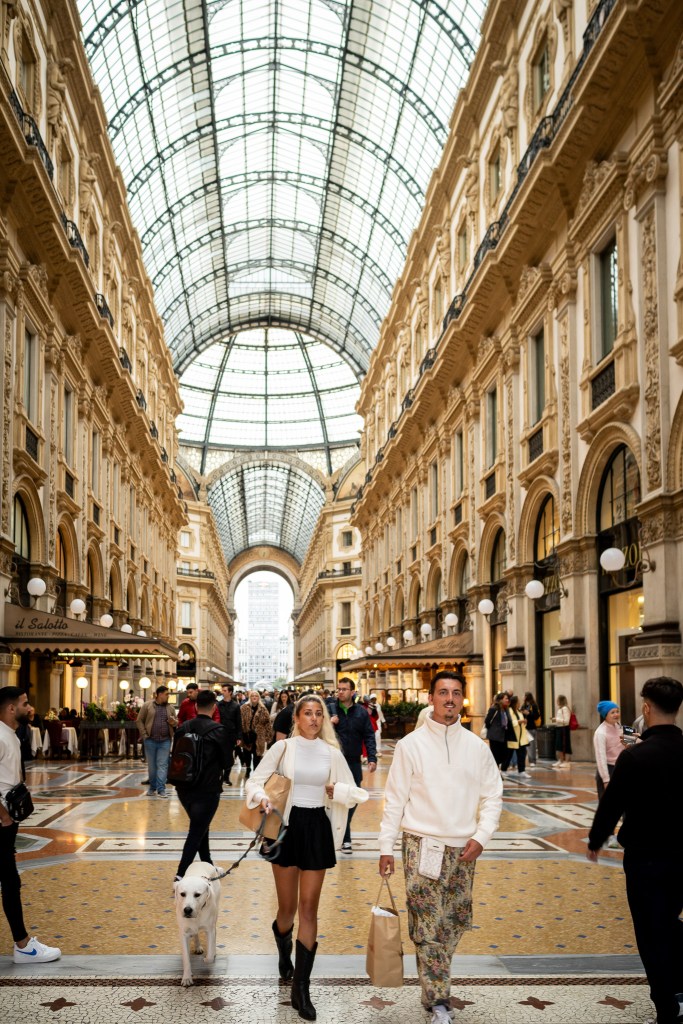
Even if you’re not inclined to shop at high-end boutiques like Prada, Gucci, or Louis Vuitton, the Galleria is worth a visit for its architectural splendour. The central octagonal space beneath the dome is particularly impressive, with mosaics representing the coat of arms of Italy’s major cities: Milan, Turin, Florence, and Rome.
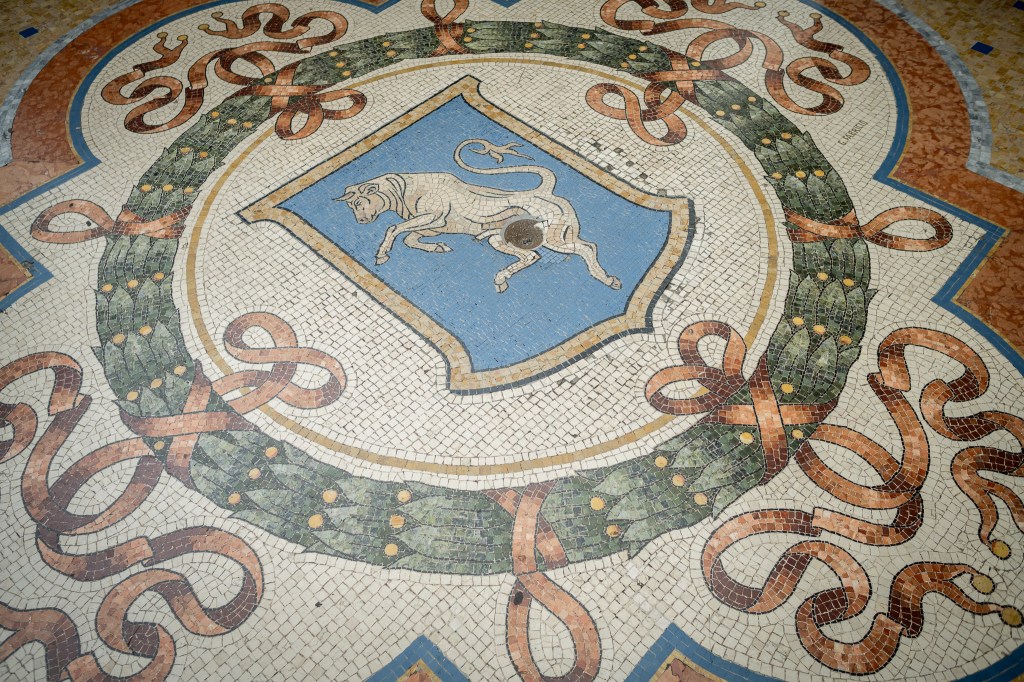
There’s a tradition associated with the mosaic of the bull, representing Turin. Legend has it that spinning three times on the bull’s testicles brings good luck. We couldn’t resist joining the line of tourists eager to perform this quirky ritual, although I couldn’t help but feel a bit sorry for the worn spot on the floor.
Feeling peckish, we stopped at Motta Milano 1928, a historic coffee shop that’s been serving customers since the Galleria opened. We indulged in cappuccinos and pastries, savouring the rich flavours while people-watching from our elegantly appointed table. The atmosphere was a blend of old-world charm and modern luxury, a quintessential Milanese experience.
Sforza Castle: Guardians of Art and History
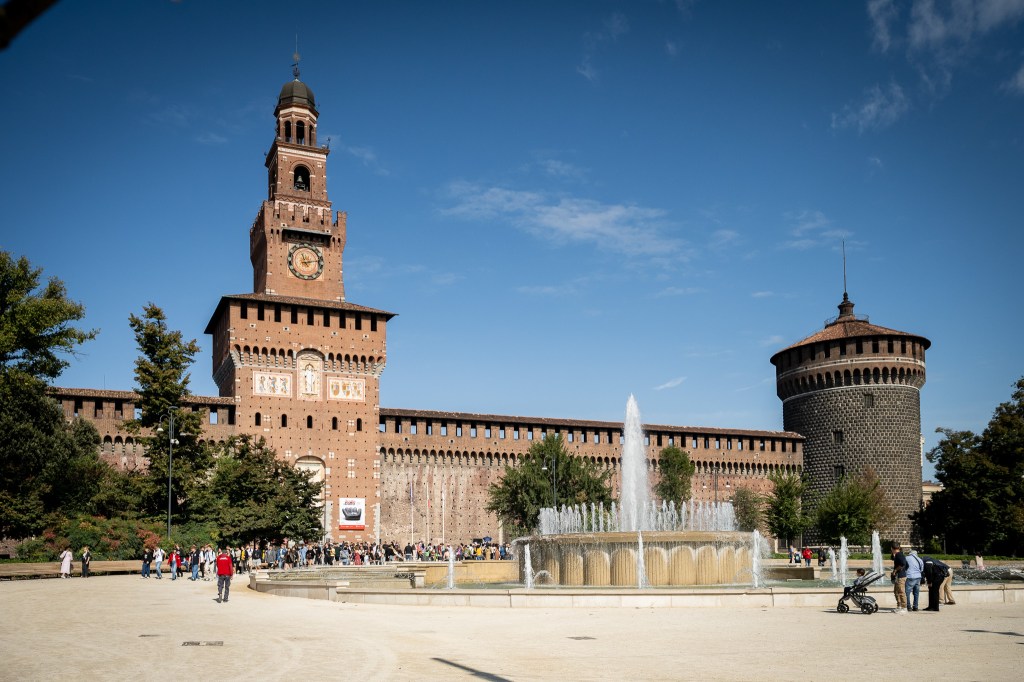
Our next destination was the Castello Sforzesco, a formidable fortress that once served as the seat of the Duchy of Milan. Built in the 15th century by Francesco Sforza, the castle is a testament to Renaissance military architecture, complete with towers, moats, and drawbridges.
Today, the castle houses several museums and art collections, including works by Michelangelo and Leonardo da Vinci. It is particularly interested in seeing the Rondanini Pietà, Michelangelo’s last and unfinished sculpture. Carved from a single block of marble, the sculpture depicts the Virgin Mary mourning over the body of Christ. It’s a haunting piece, its rough edges and incomplete forms adding to its emotional impact.
In the Sala delle Asse, you will admired Leonardo da Vinci’s fresco of intertwined mulberry trees, commissioned by Ludovico Sforza.
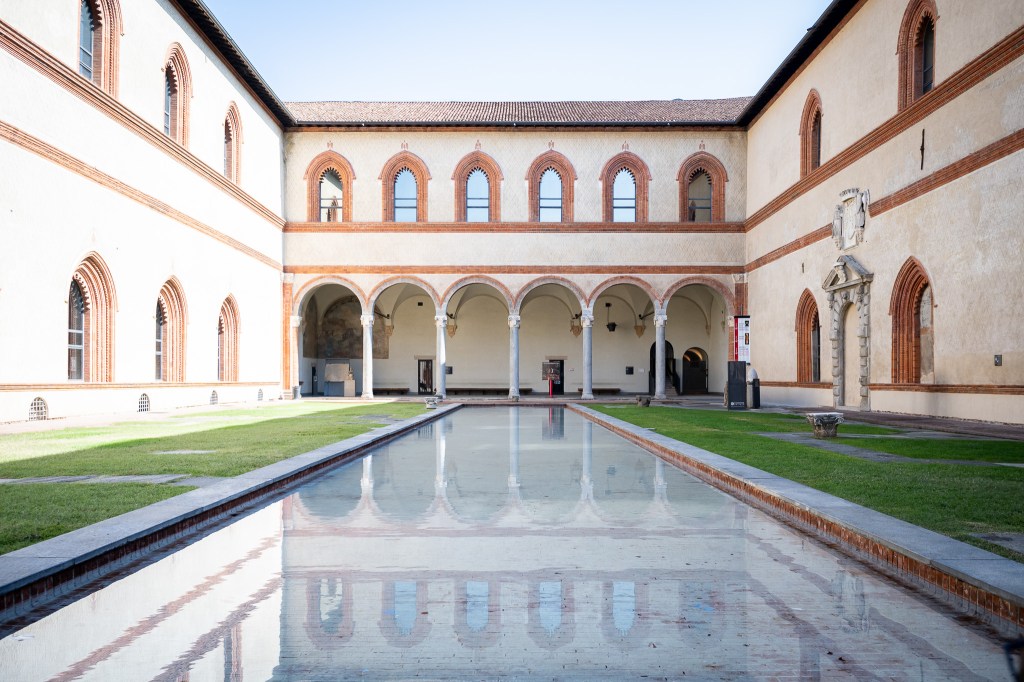
Exploring the castle’s courtyards and battlements, we imagined the lives of those who once walked these grounds: dukes, duchesses, soldiers, and artists. Those whose stories are woven into the fabric of Milan’s history. The castle’s gardens, adorned with sculptures and fountains, offered a peaceful respite from the bustling city.
Navigli District: Where History Meets Hipster
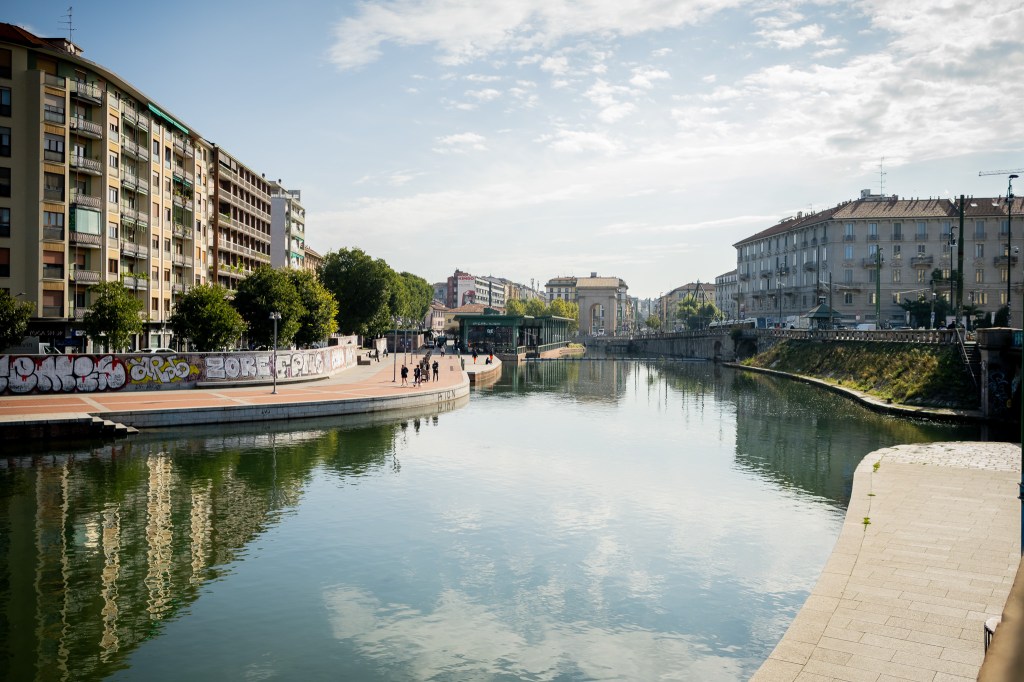
As the morning sun began to wane, we made our way to the Navigli district, a vibrant neighbourhood built around a network of canals. The Navigli canals date back to the 12th century and were instrumental in transporting goods, including the marble used to build the Duomo. Many of the canals were designed or improved by Leonardo da Vinci, whose genius extended beyond art to engineering and urban planning.
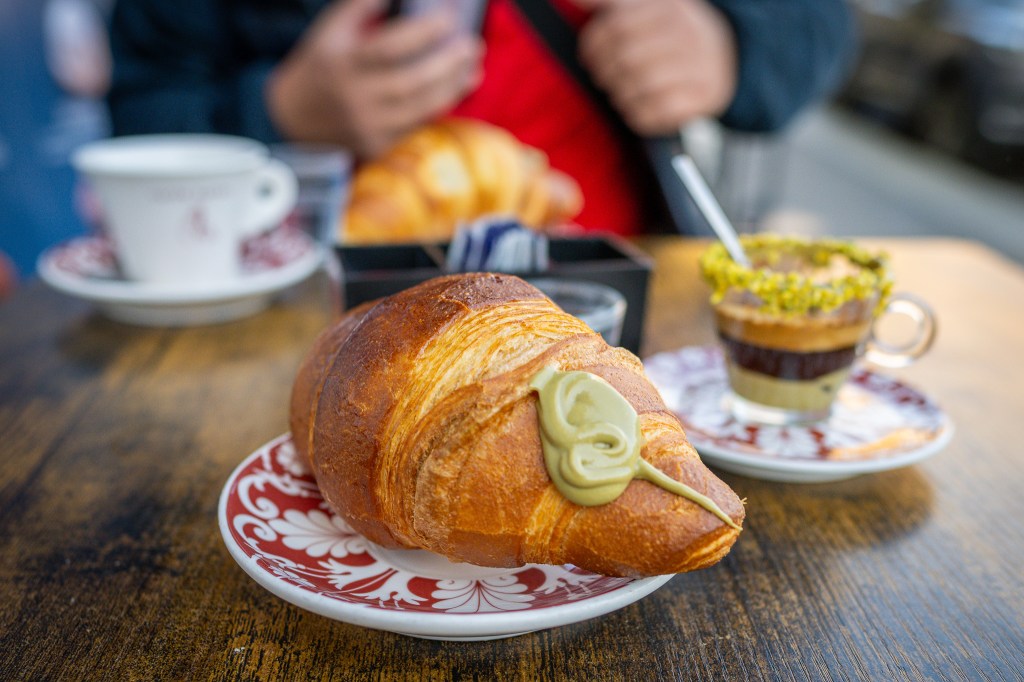
We started our visit at a charming caffetteria, where the aroma of freshly brewed coffee mingled with the scent of baked pastries. The barista greeted us with a warm smile, and we enjoyed an espresso that seemed to encapsulate the very essence of Italian coffee culture.
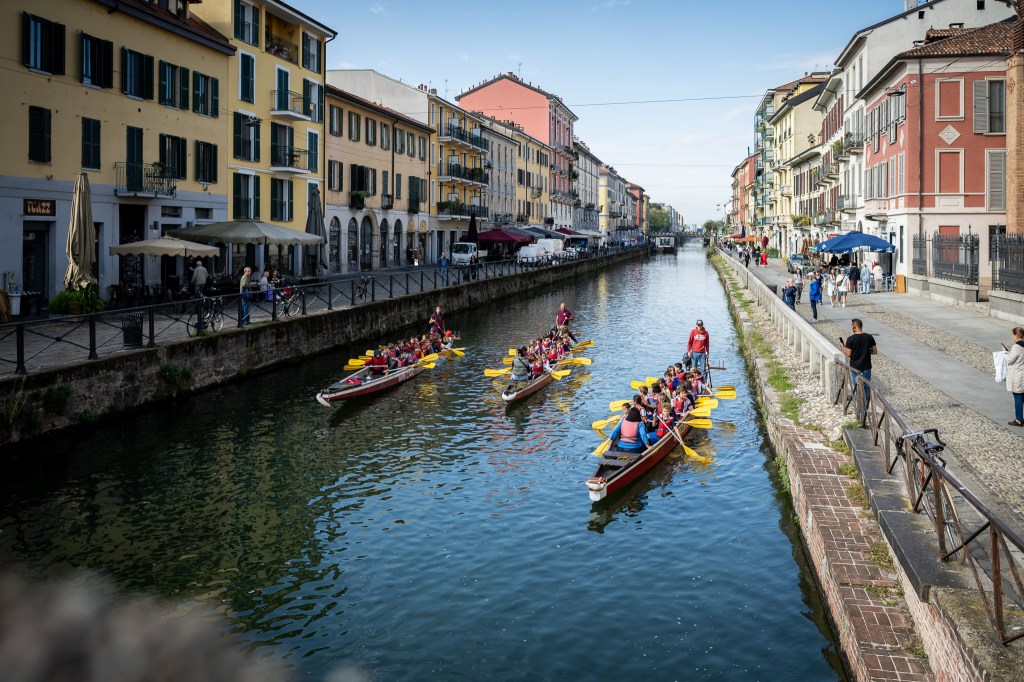
The Navigli is a place where old-world charm meets modern vibrancy. Along the canals, we strolled past artisan workshops, vintage shops, and galleries. Street musicians played lively tunes, and the atmosphere was festive yet relaxed.
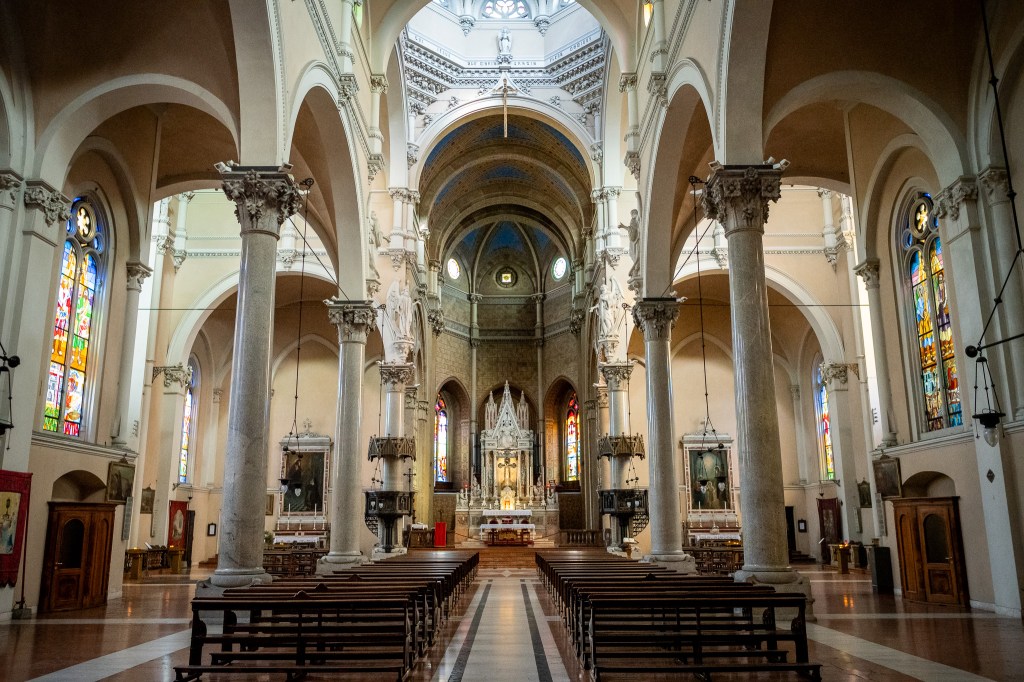
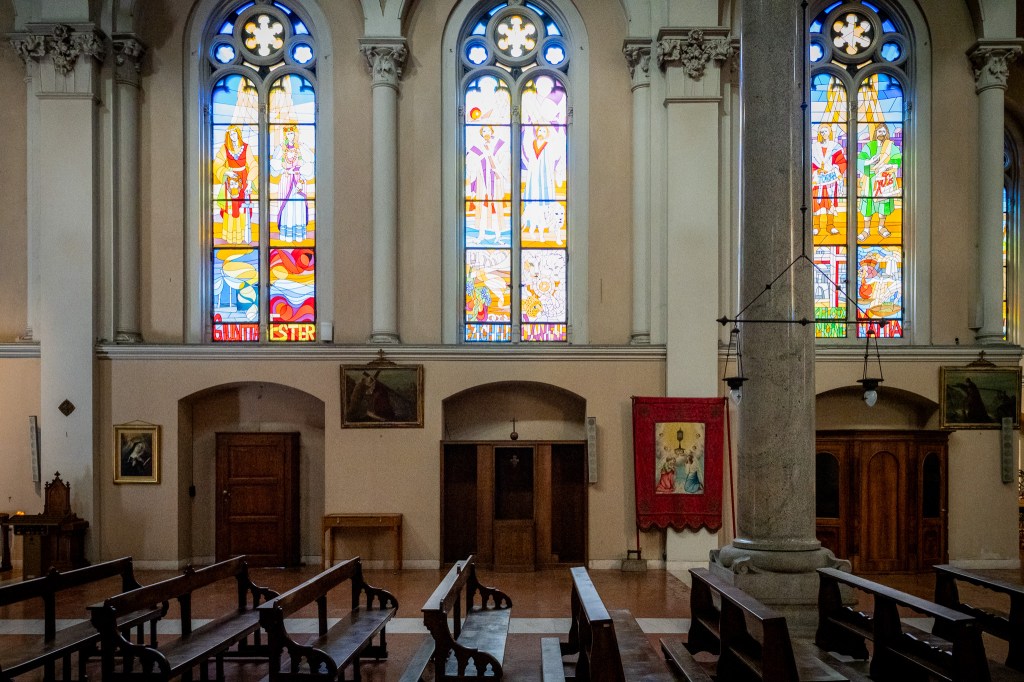
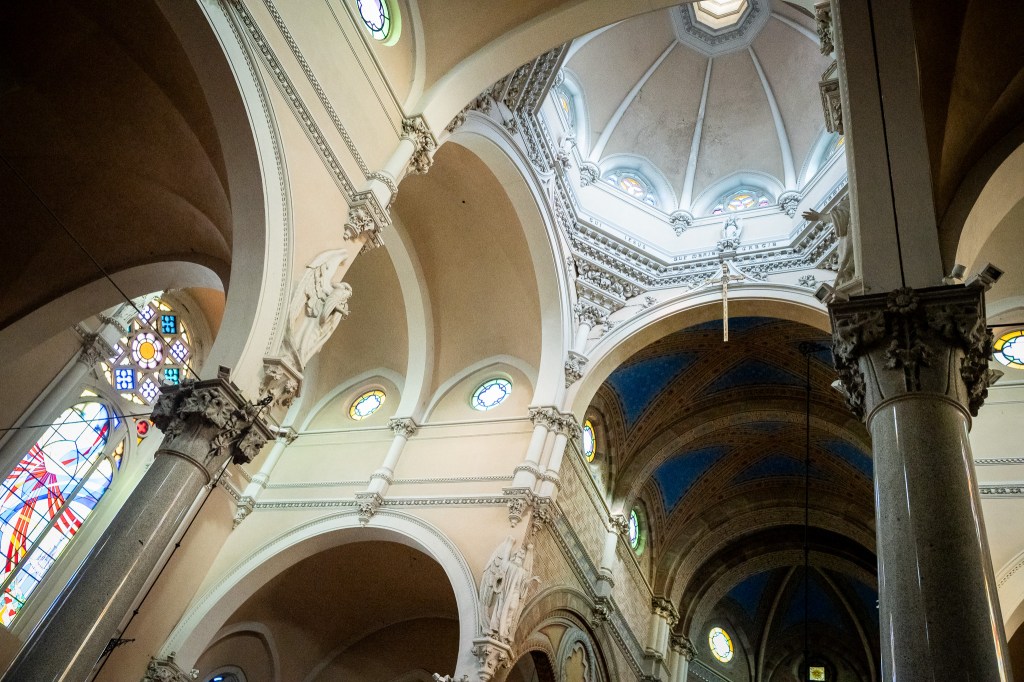
One highlight was visiting the Church of Santa Maria delle Grazie al Naviglio, a neo-Gothic gem with an interior adorned with frescoes and stained glass. The church’s unfinished façade adds to its character, a reminder that beauty can be found in imperfection. Inside, the intricate artwork and serene ambiance provided a moment of reflection amidst our busy day.
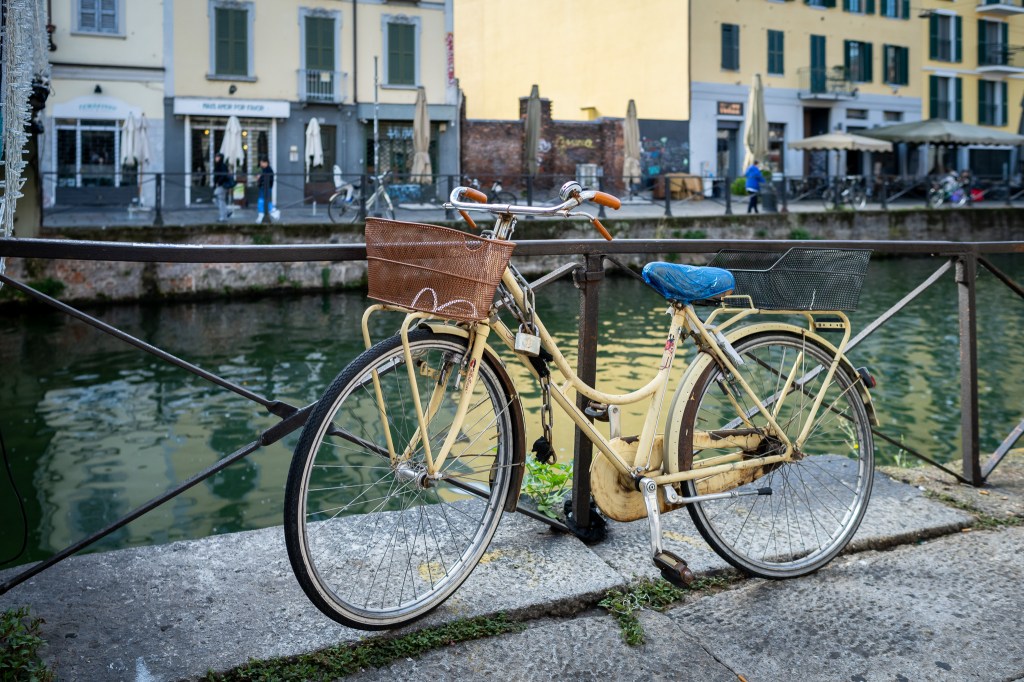
On the first Sunday of every month, the Naviglio Grande Antique Market transforms the area into a treasure trove of antiques and collectibles. Though we missed it this time, it’s a must-visit for anyone interested in history and unique finds.
As evening approached, the district transforms into one of Milan’s liveliest nightlife spots. Bars and restaurants spilled out onto the pavements, strings of lights reflected in the canal waters, and the air was filled with laughter and conversation.
Hidden Treasures: Monuments and Memories
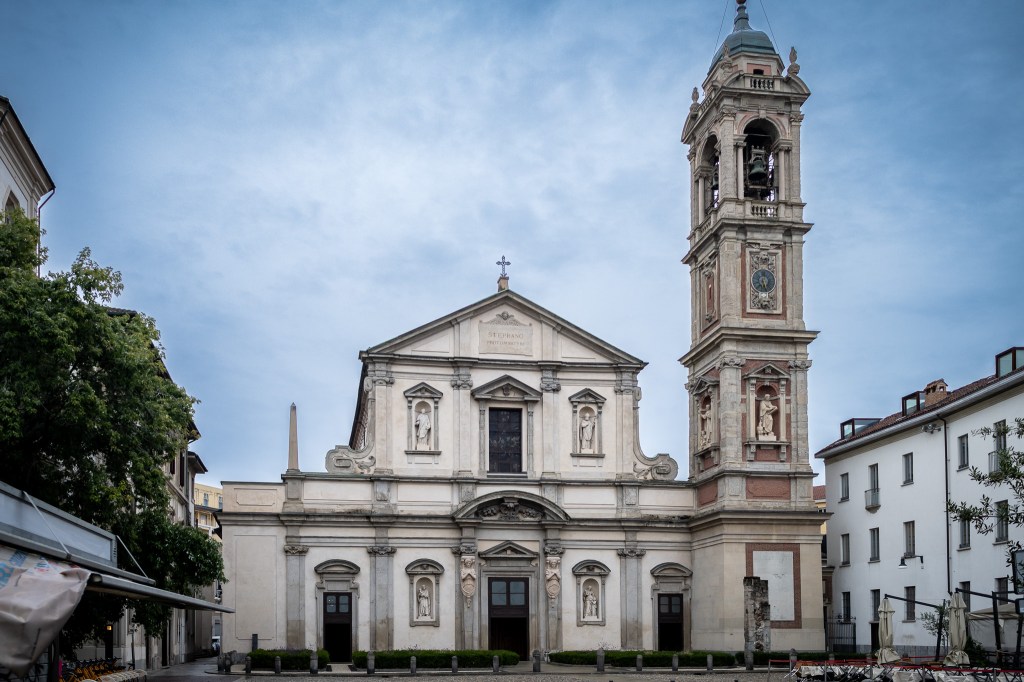
Continuing our exploration, we sought out some of Milan’s lesser-known sites. Near the Basilica di Santo Stefano Maggiore, one of the city’s oldest churches dating back to the 5th century, we discovered a monument to Pencho Slaveykov, a Bulgarian poet who spent his final days in Italy. The statue stands in a tranquil park near the Sormani Library, a testament to the cultural connections that transcend borders.

Slaveykov was a significant figure in Bulgarian literature, and his presence in Milan underscores the city’s role as a hub for artists and thinkers from around the world. The monument is expected to serve as a venue for cultural events, further enriching Milan’s diverse artistic landscape.
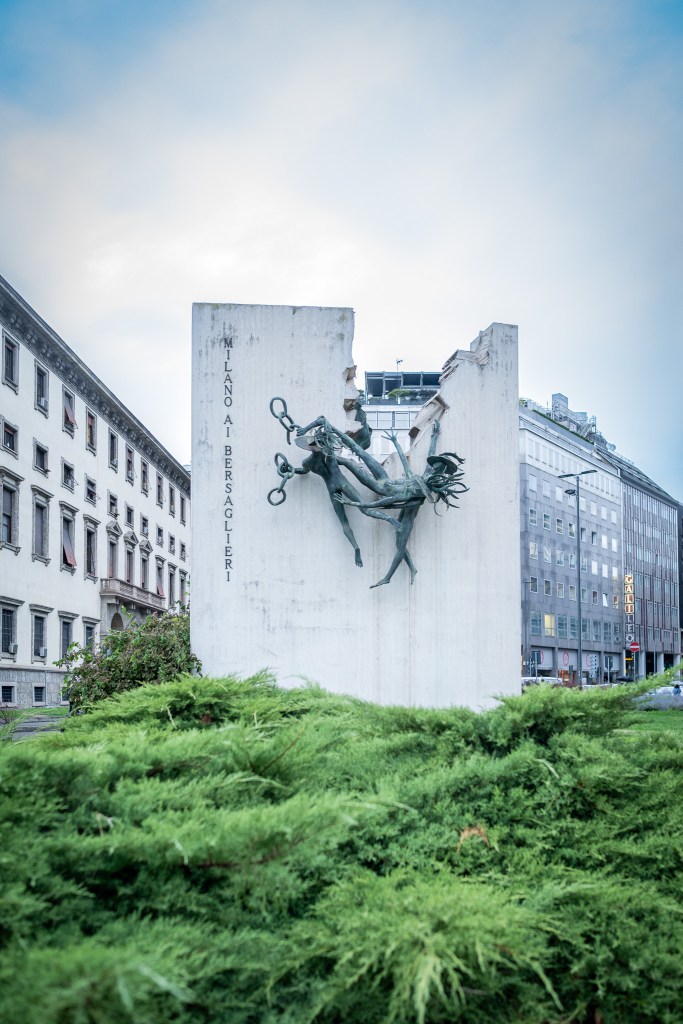
Not far away, we encountered the Monumento Ai Bersaglieri, honouring the marksmen troops of the Italian Army. The bronze statue depicts a bersagliere in mid-stride, rifle in one hand and trumpet in the other, symbolising speed and readiness. The Bersaglieri are known for their distinctive wide-brimmed hats adorned with black capercaillie feathers, a detail captured in the sculpture.
These unexpected finds added depth to our understanding of Milan. Incredible city that honours not just its own history but also the contributions of others.
Parco Sempione and Torre Branca: Reaching New Heights
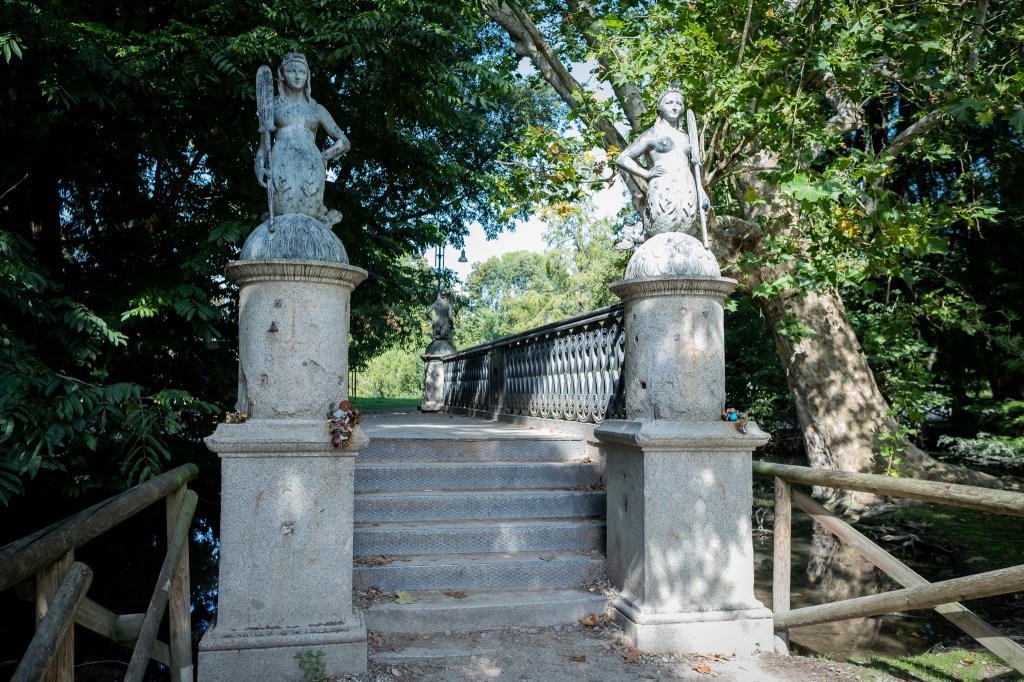
Our feet were beginning to protest, but we couldn’t resist a visit to Parco Sempione, Milan’s sprawling city park. Amidst lush greenery, tranquil ponds, and winding paths, the park offers a peaceful respite from the urban hustle.
Rising above the treetops is the Torre Branca, a 108-metre-high tower designed by Gio Ponti in 1933. There is an option to take the elevator to the observation deck, where you will be greeted with sweeping views of the city and beyond. During the late afternoon light bath the rooftops in a golden glow, and you could see landmarks visited earlier, like the Duomo and Sforza Castle, from a new perspective.
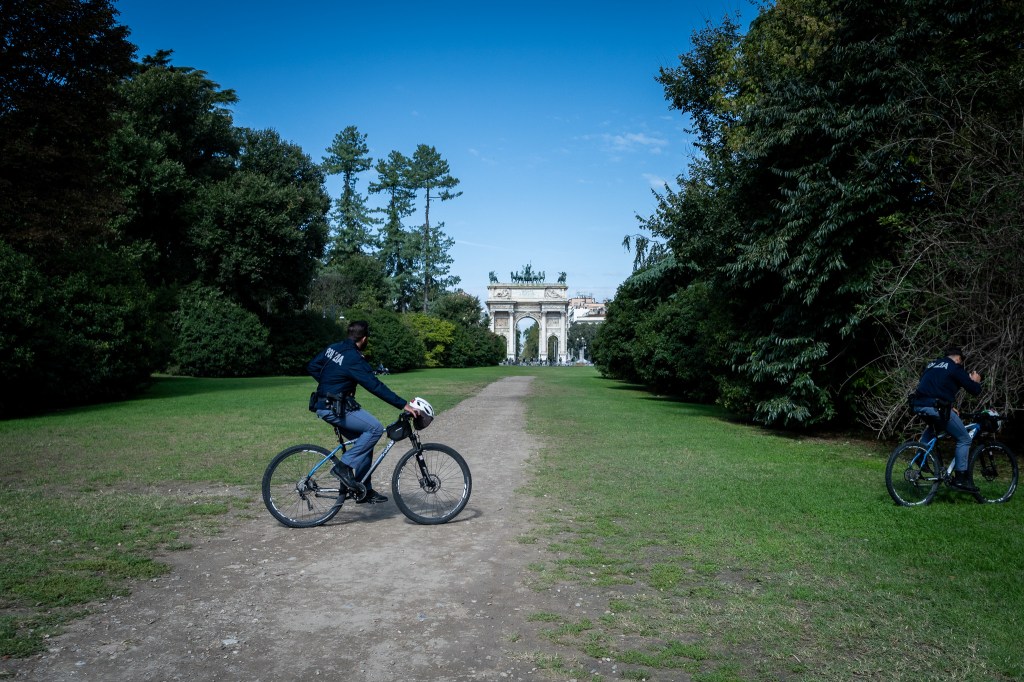
As we descended, we made our way to the Arco della Pace, or Arch of Peace, located at the park’s edge. This Neoclassical triumphal arch was commissioned by Napoleon but reoriented by the Austrians after his defeat. The horses atop the arch were turned to face Milan instead of Paris, a subtle yet satisfying twist of fate.
The arch is adorned with Corinthian columns, bas-reliefs depicting historical events, and statues symbolising peace and victory. It’s a popular gathering spot, and we joined locals relaxing on the steps, enjoying gelato from a nearby vendor.
San Gottardo in Corte: A Hidden Sanctuary
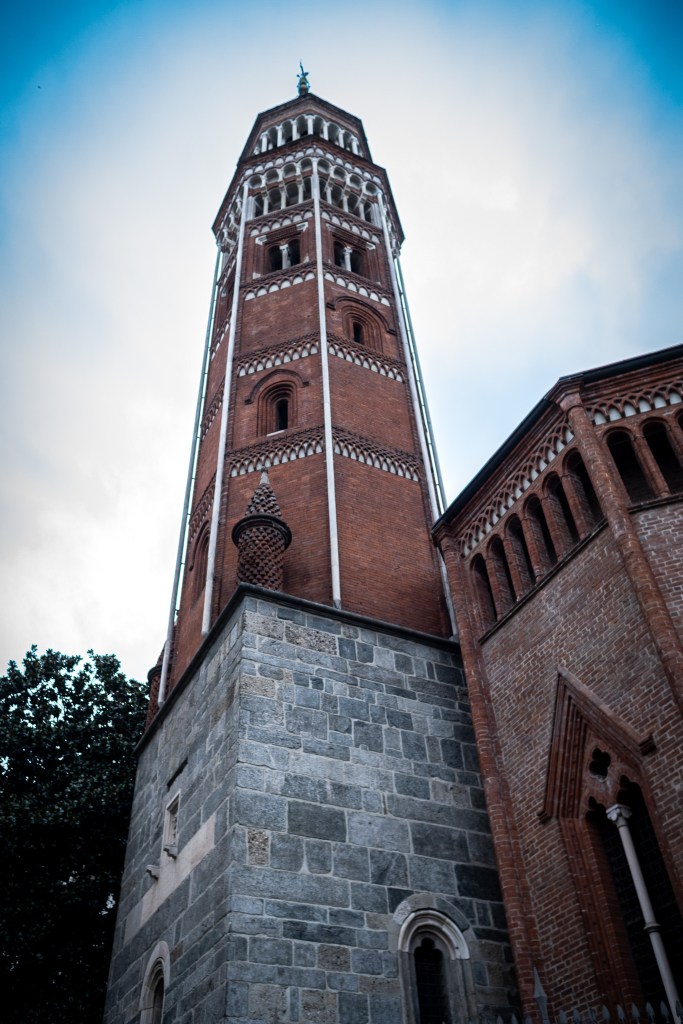
In our quest to uncover Milan’s hidden gems, we visited San Gottardo in Corte, a church built as a ducal chapel by Azzone Visconti in 1330. Located near the Royal Palace, it’s an often-overlooked treasure that offers insight into Milan’s medieval past. The church is notable for its octagonal bell tower, one of the earliest examples of Gothic architecture in Milan. Inside, the chapel houses significant artworks from the 14th century, including frescoes and sculptures that reflect the religious and artistic sentiments of the time. The peaceful ambiance provided a stark contrast to the bustling streets outside. We sat for a moment, appreciating the sense of continuity that such historic places offer, a thread connecting past and present.
Fashion Week: Style in the Streets
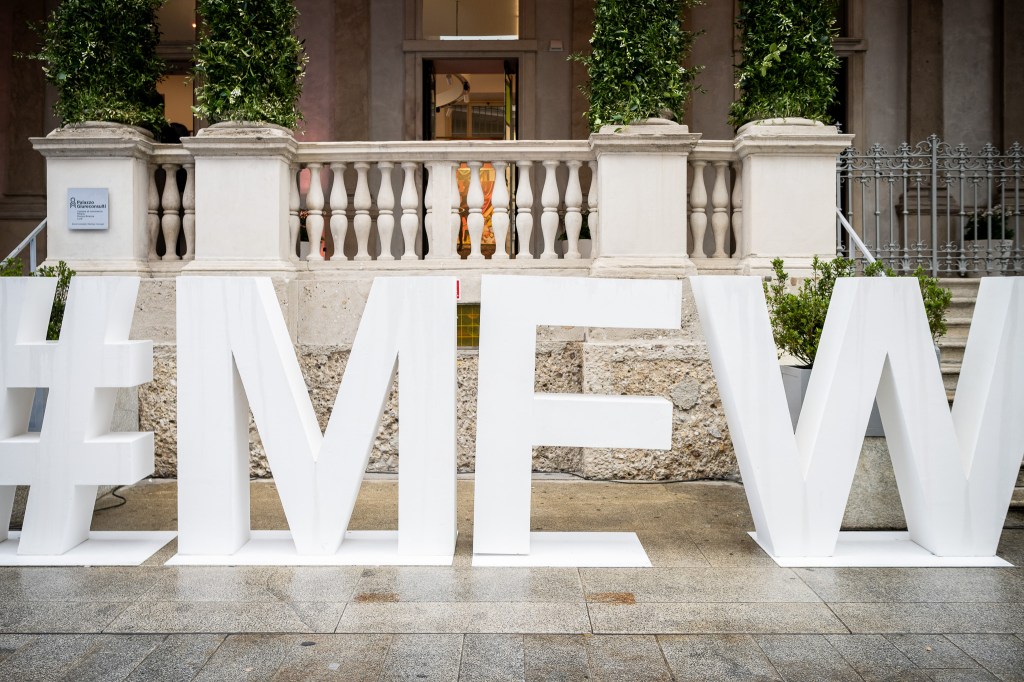
By sheer luck, our visit coincided with Milan Fashion Week, one of the most important events in the fashion calendar. The city was abuzz with energy, and the streets became a runway of eclectic styles. Fashion enthusiasts, bloggers, and industry insiders mingled with everyday folks, creating a tapestry of trends and expressions.
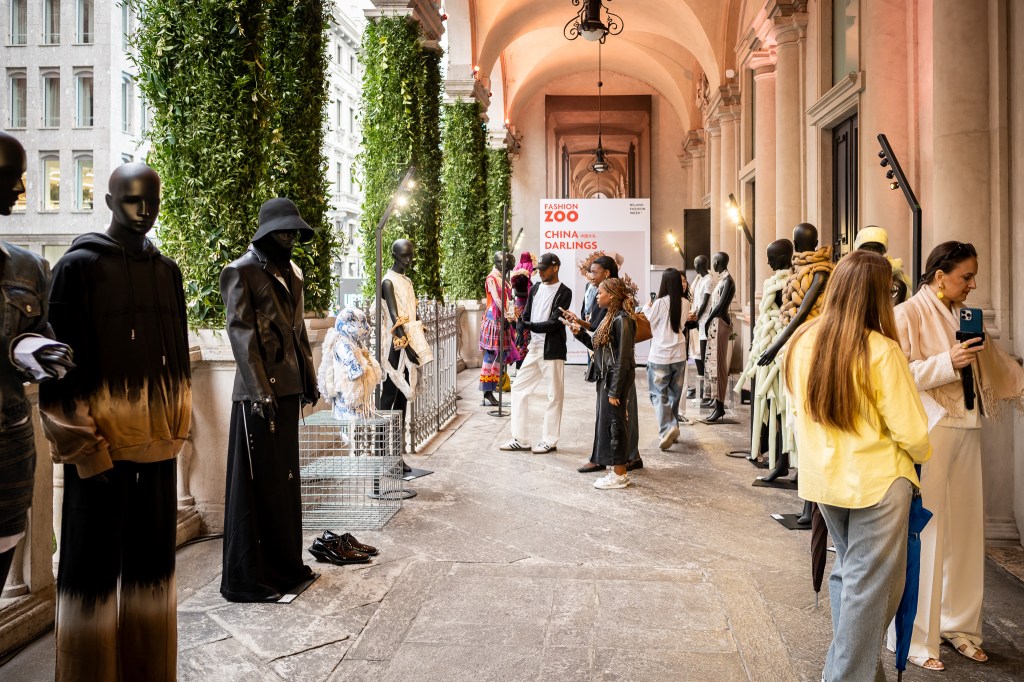
The street style during Fashion Week is a spectacle in itself. We saw outfits ranging from avant-garde ensembles to chic minimalist looks, all worn with an air of effortless confidence. Bright colours, bold patterns, and innovative accessories were on full display.
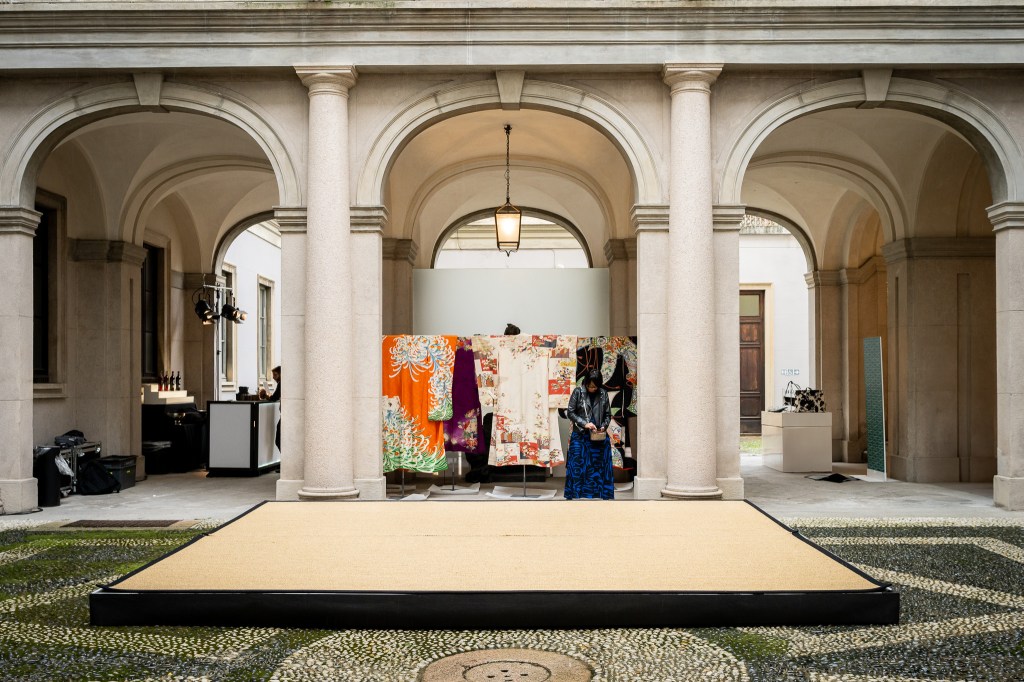
While most of the shows and events are invitation-only, the spirit of Fashion Week spills into public spaces. Pop-up shops, exhibitions, and street performances are open to all, making it an inclusive celebration of creativity. We found ourselves inspired by the bold colours, innovative designs, and sheer confidence of the people around us. It was a reminder that fashion is not just about clothing but about identity and self-expression.
Culinary Adventures: A Love Letter to Italian Cuisine
After a day of exploring, our appetites were ravenous. Italy is synonymous with culinary excellence, and Milan offers a rich tapestry of flavours to savour.
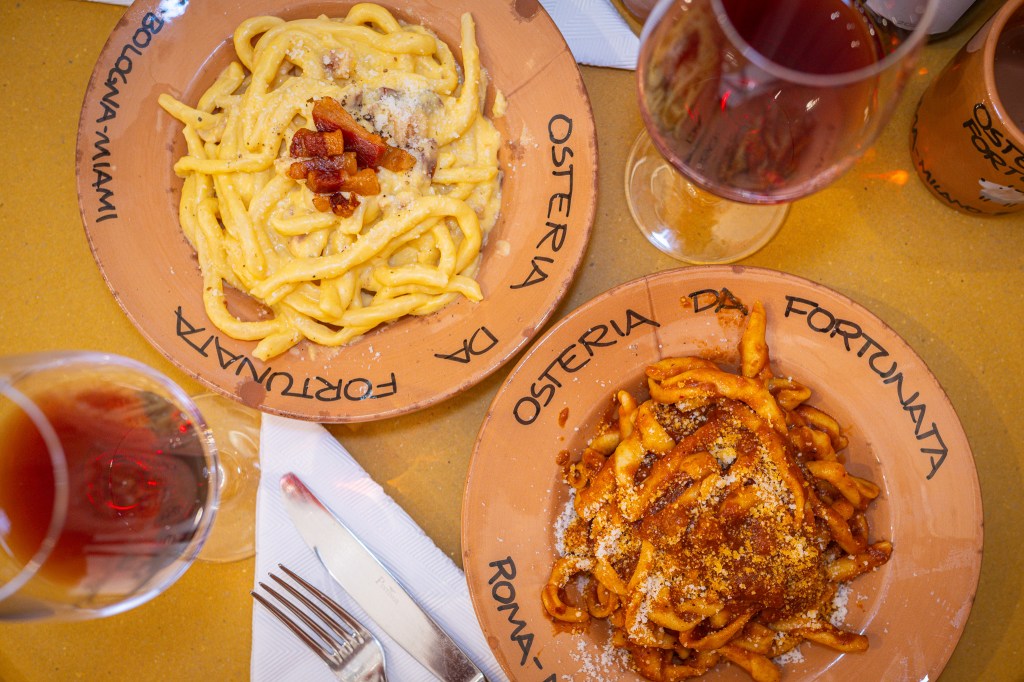
Our main gastronomic stop was Osteria da Fortunata, renowned for its fresh pasta made on-site. As we queued outside, we watched through the window as skilled artisans kneaded and rolled dough, transforming simple ingredients into edible art. The wait moved quickly, and soon we were seated at a rustic table.
We ordered the carbonara, a dish so simple yet so often mishandled. When it arrived, we knew we were in for a treat. The pasta was perfectly al dente, coated in a silky sauce of eggs and pecorino cheese, with crispy guanciale adding a savoury kick. Each bite was a revelation, and we couldn’t help but declare it the best carbonara we’d ever tasted.
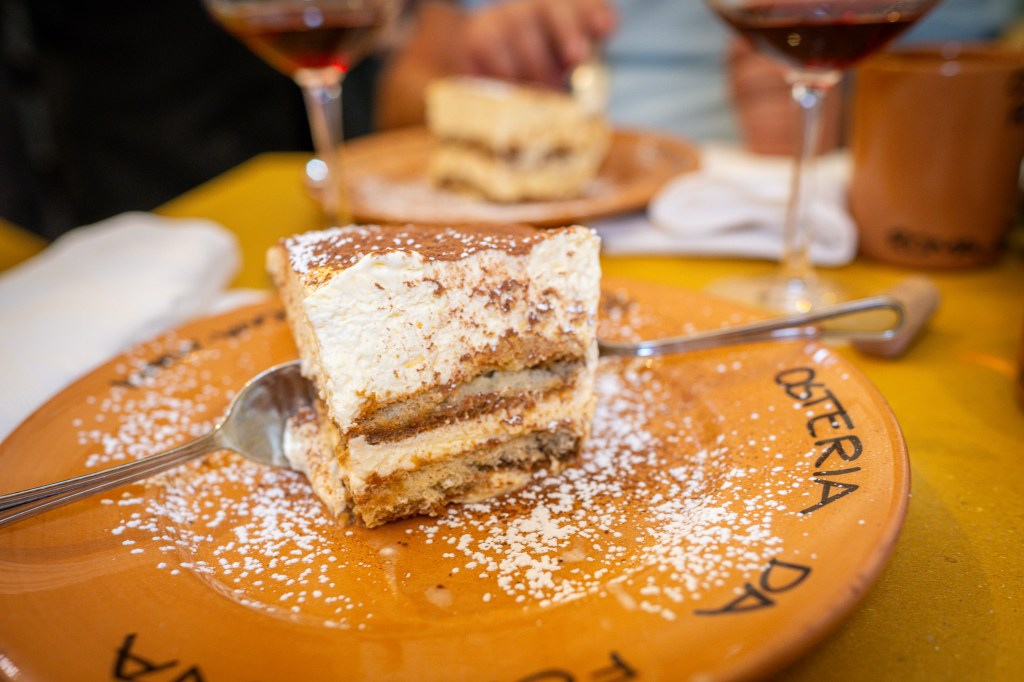
Despite our fullness, we couldn’t resist ordering the tiramisu for dessert. It arrived in a generous portion, layers of mascarpone cream and coffee-soaked ladyfingers dusted with cocoa. Rich yet light, it was the perfect sweet note to end the meal. Even if you’re too full, I’d recommend taking it to go. It’s that good.
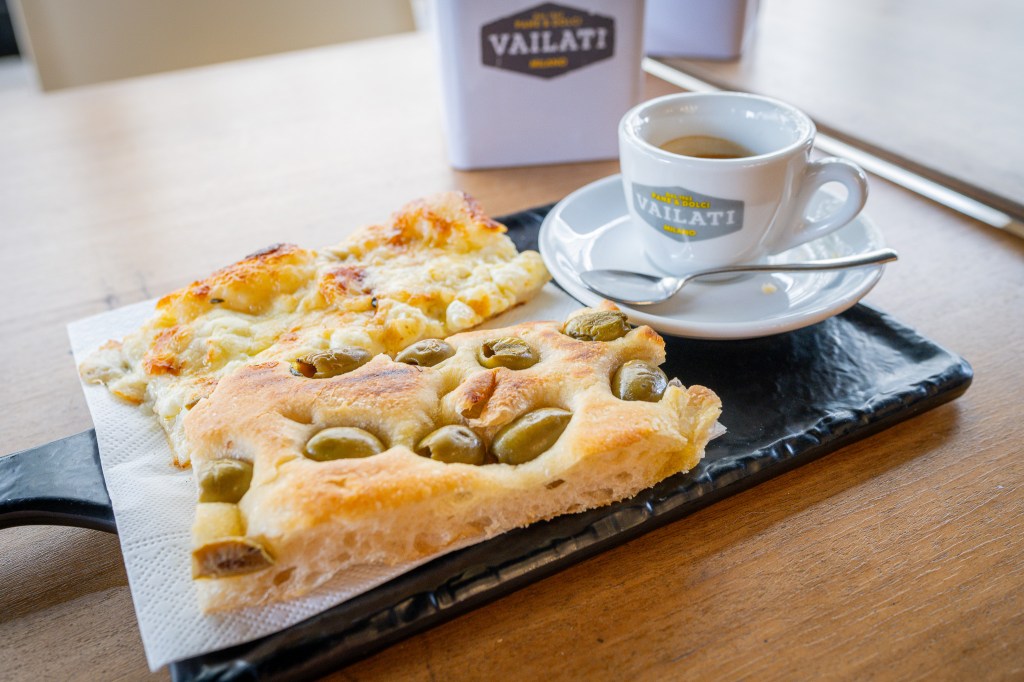
Between stops, we grabbed a quick snack at Vailati Restaurant, where we enjoyed delicious focaccia and a revitalising espresso. The staff were friendly, and the atmosphere was relaxed. Must say, it is a great spot for a midday pause.
As our 24 hours in Milan drew to a close, we realised we hadn’t yet indulged in pizza. We headed to Savô Pizzeria Gourmet, known for its inventive toppings and quality ingredients. Time was not on our side, as we had a flight to catch, but the staff kindly accommodated our request for takeaway.
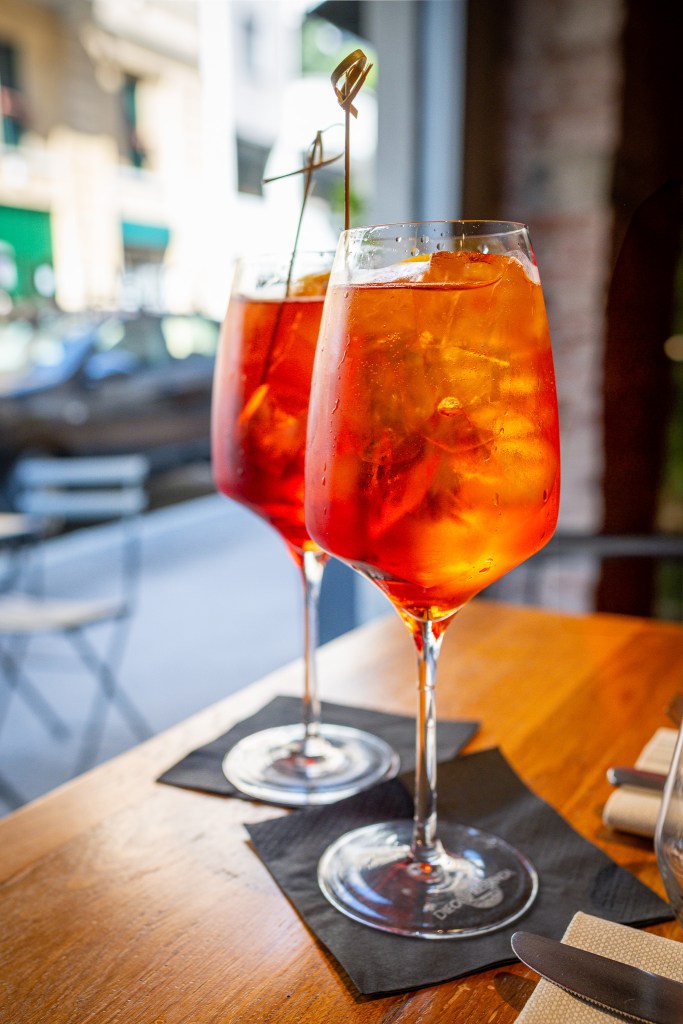
We ordered two pizzas: one classic Margherita and one of their speciality creations. While waiting, we quickly sipped on Aperol Spritzes, savouring the refreshing blend of bitter and sweet. With pizzas in hand, we dashed to the train station, laughing at the absurdity of our race against time.
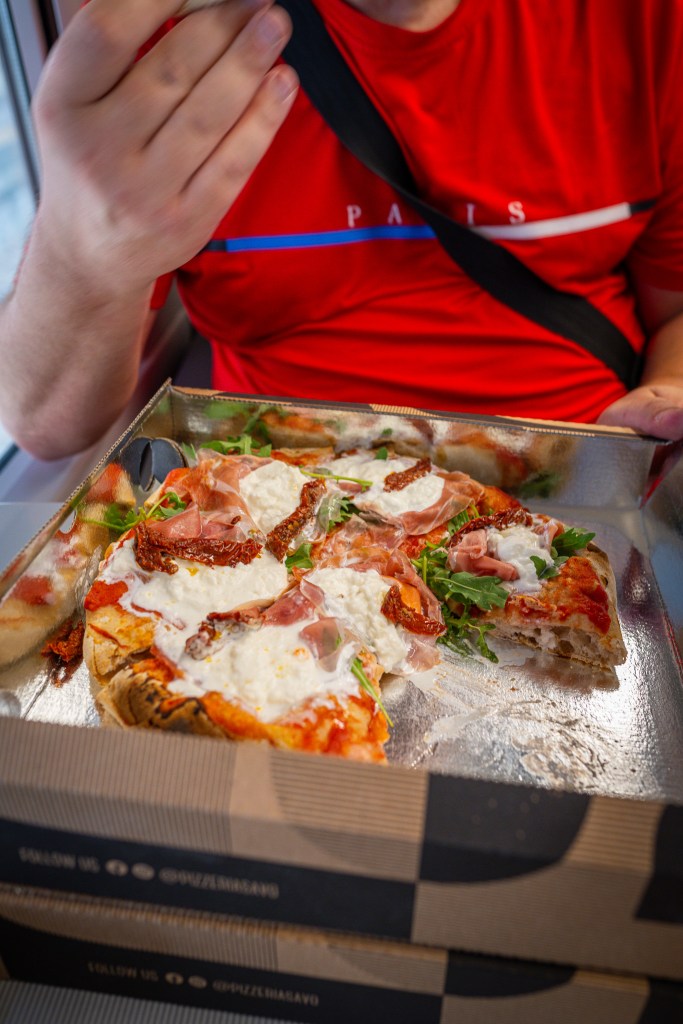
On the train to the airport, we couldn’t resist opening the pizza boxes. The aroma was intoxicating, and the flavours did not disappoint. The crust was thin and crispy, the toppings fresh and flavourful. It was a fitting final taste of Milan.
Reflections and Farewells
As we boarded our flight back to the UK, sleep-deprived but exhilarated, we reflected on our whirlwind adventure. In just 24 hours, we’d traversed centuries of history, indulged in world-class cuisine, and immersed ourselves in the vibrant culture of Milan.
There were, of course, places we didn’t have time to visi, but we will be back to do so.
If you have a little bit more time during your visit think about travel outside of Milan. I can highly recommend the charming city of Bergamo, and the serene beauty of Lake Iseo (Lago d’Iseo).

I visited Bergamo last year, It was my first stop during the “7 countries in 7 days” challenge and I felt in love. Bergamo, with its medieval walls and hilltop old town, offers a different pace and perspective.
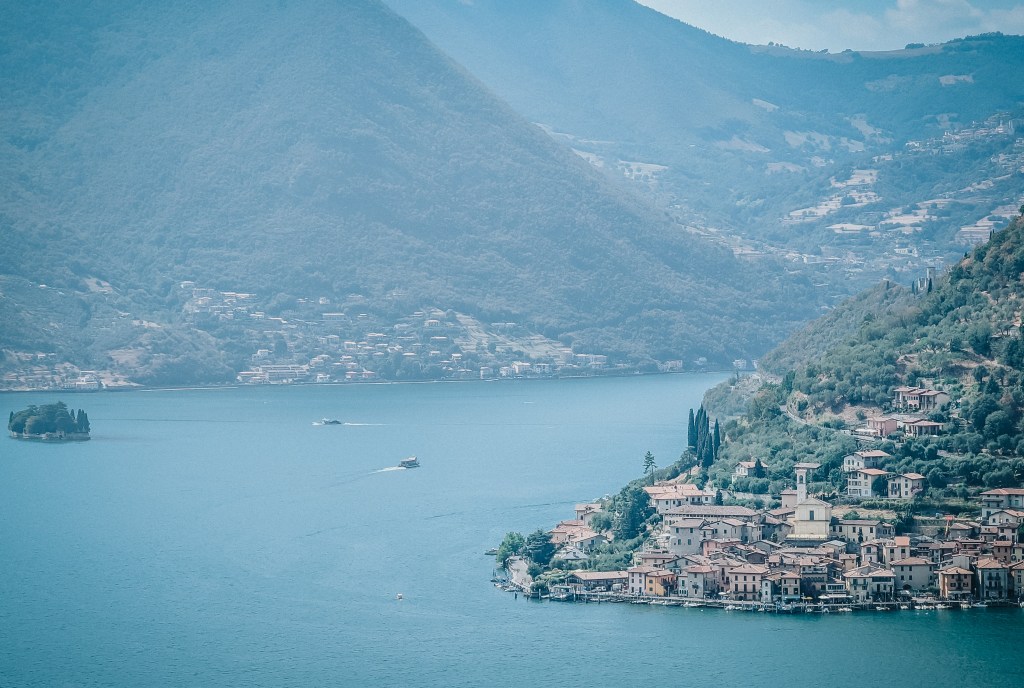
We visited Lake Iseo, during our family holiday two years ago when we travelled across Italy, and our son said it was one of the best places we ever visited. The lake is visited less frequented than its more famous neighbours Como and Garda, promises tranquillity and natural beauty.
Stay tuned for our upcoming blogs where we’ll delve into these enchanting locales. Trust me, there’s always more to discover.
Practical Tips for Future Travellers
- Transportation: If you’re using the train from the airport, consider buying a return ticket if you’re coming back the same day. It’s more economical. Purchasing tickets online can save you time and avoid long queues.
- Accommodation: We opted for an apartment stay, which offered more space and comfort than a standard hotel room. It was clean, spacious, and had a kitchenette. Perfect option even if you only use it to make tea. Try different options by checking Booking.com, Hostelworld, or Agoda.
- Tickets and Reservations: Popular attractions like the Duomo and Sforza Castle can have long lines. Booking tickets in advance online can save you time and stress.
- Be surprised: GetYourGuide is a booking platform that helps travellers find incredible travel experiences wherever they’re headed. These experiences include skip-the-line tickets to the world’s most iconic attractions, walking tours by top local experts, immersive food and beverage tours, cooking and craft classes, bucket list experiences, and niche offerings you won’t find anywhere else. Travelers can also choose GetYourGuide Originals. These specialized tours are the ultimate way to explore the world.
- Getting Around: Trams are a convenient and charming way to navigate the city. Remember to validate your ticket to avoid fines. The tram network also offers a historical experience, especially when riding the vintage models.
- Dining: Be prepared for queues at popular restaurants. They often move quickly, and the food is usually worth the wait. Don’t hesitate to ask for recommendations from locals, they know the best spots, unfortunately, not always are happy to share them with strangers.
- Cultural Etiquette: Embrace local customs, like greeting shopkeepers with a friendly “Buongiorno” and enjoying a leisurely pace at meals. Italians value quality time over rushed experiences.
- Fashion Week: If visiting during Fashion Week, be aware that hotels and restaurants may be busier. It’s an exciting time but plan accordingly.
Until We Meet Again, Milan
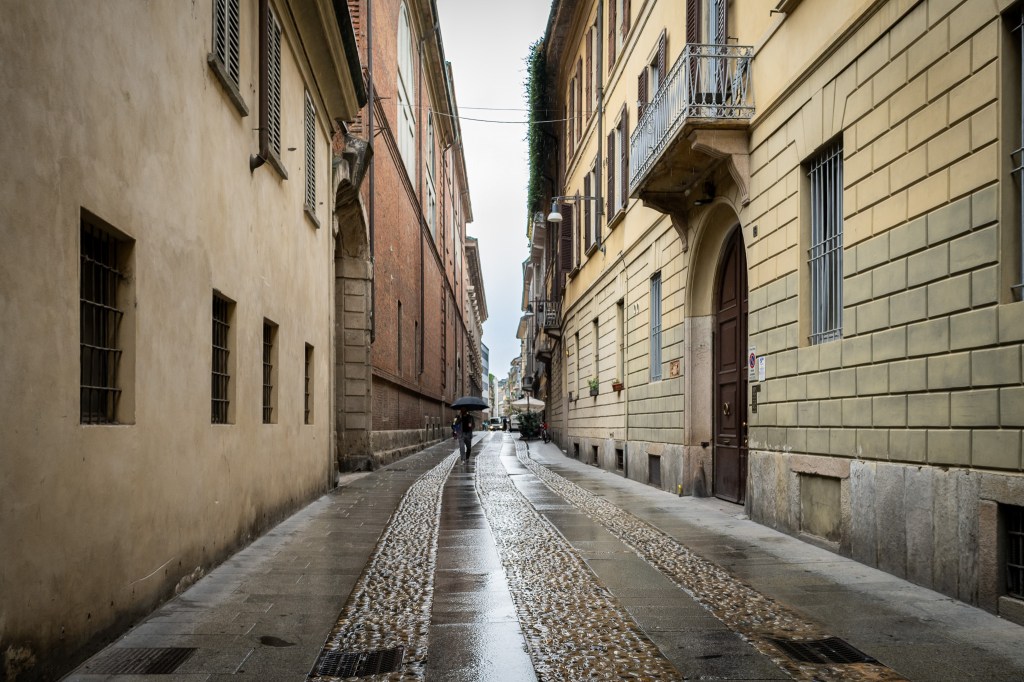
As we touched down back in the UK, we were tired, but our hearts were full. Milan had offered us a kaleidoscope of experiences in just 24 hours.
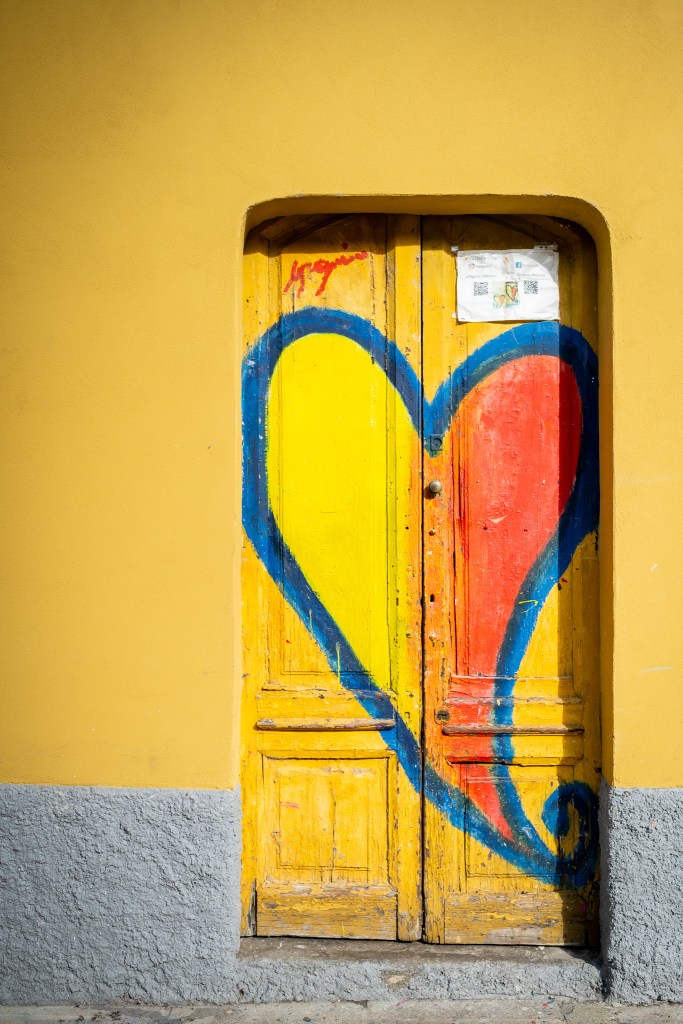
We may have arrived as sleep-deprived travellers racing against time, but we left with memories that will last a lifetime. And perhaps, next time, we’ll plan for a longer stay, allowing ourselves to linger in the cafes, stroll leisurely through the parks, and fully immerse in all that Milan has to offer.
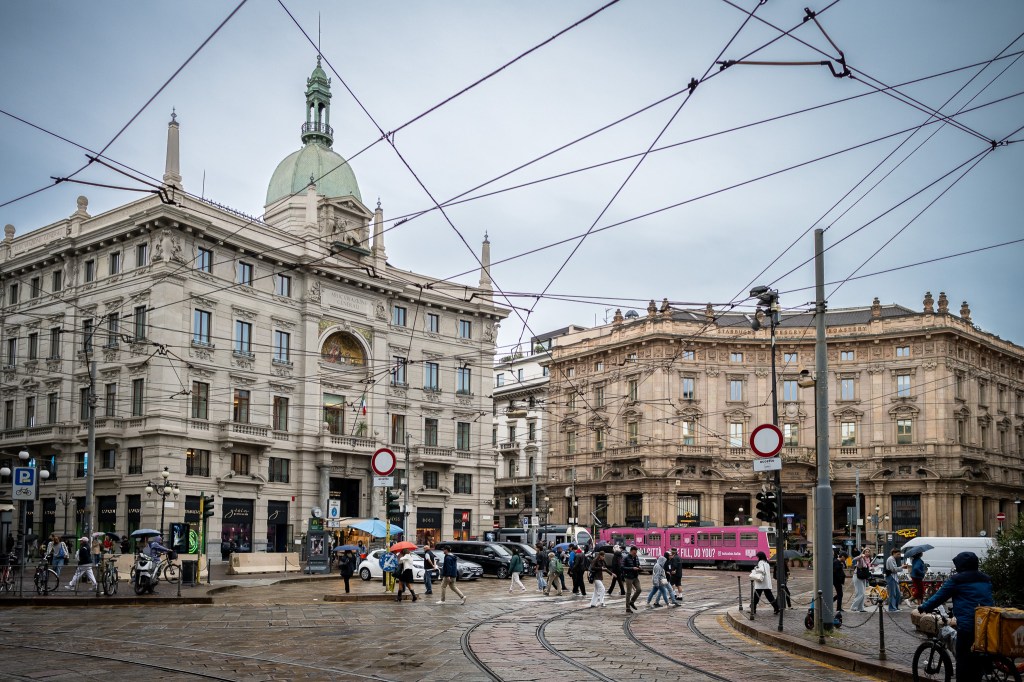
So here’s to Milan!!! A city that doesn’t just live up to expectations but surpasses them in the most delightful ways. Until next time, arrivederci!

 MKS Photography Travel
Leave a reply to galemcchristion83 Cancel reply