Our real, unfiltered week based in Mottola, Puglia: Cave churches nobody queues for, a mystery-menu Masseria, and the parking situation that beat us twice before we beat it back. Here’s what actually happened – not the polished version.
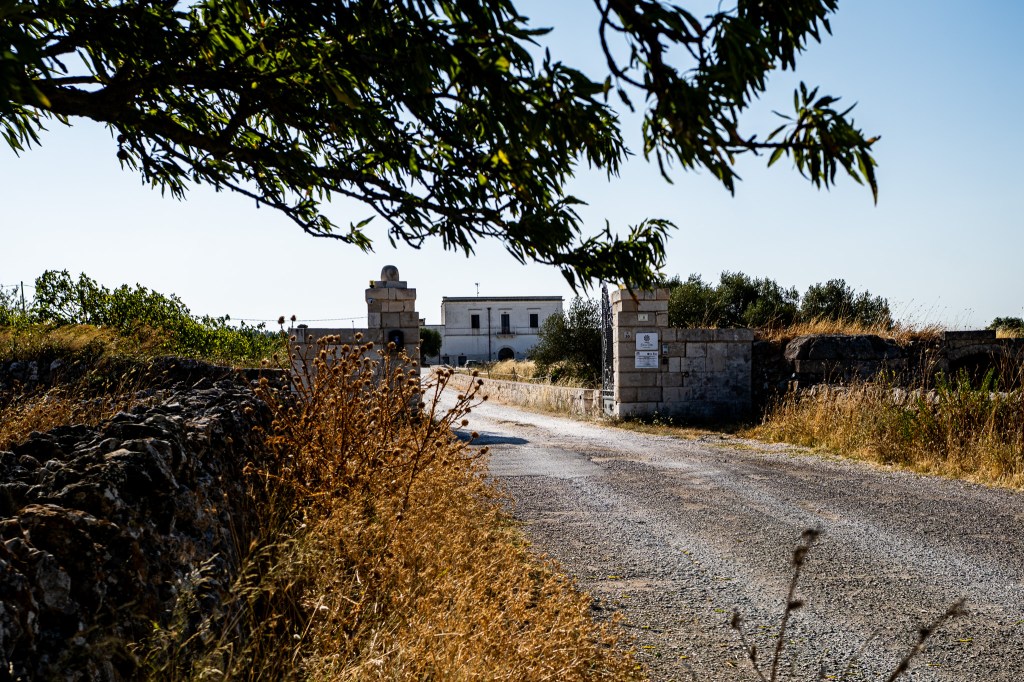
We landed in Bari at 18:50, hired a car, and after an hour’s drive we arrived at the Puglia Masseria well after dark. What we hadn’t clocked, buried in our Hotels.com confirmation, was a request to contact the property 48 hours ahead with our arrival time. We missed it and rolled up at 9:30 pm to an empty, unlit building, no lights on, no cars outside beyond the ones parked for the night, the kind of silence that makes you start second-guessing whether you’ve got the right address. Lucky for us, two builders were still finishing up work outside; one spoke a little English and had the owner’s mobile number saved. A phone call later, we learned the owner had expected us hours earlier, but instead of leaving us stranded, he’d left our room key outside, then drove back over two hours after the call just to check we’d settled in. A genuinely kind save for what could have been a miserable start.
A quick note for anyone who cares about the photography side, since it’ll come up throughout: five days in a place like Mottola is a genuine gift for anyone who shoots for a living. Hilltop towns, cave churches, and gravine (the deep limestone ravines this whole area is carved from) all reward early light and late light equally, and almost nothing here rewards the middle of the day, both for the quality of the light and for your own sanity in the heat.
Our Base: A 19th-Century Masseria Run by a Retired Doctor
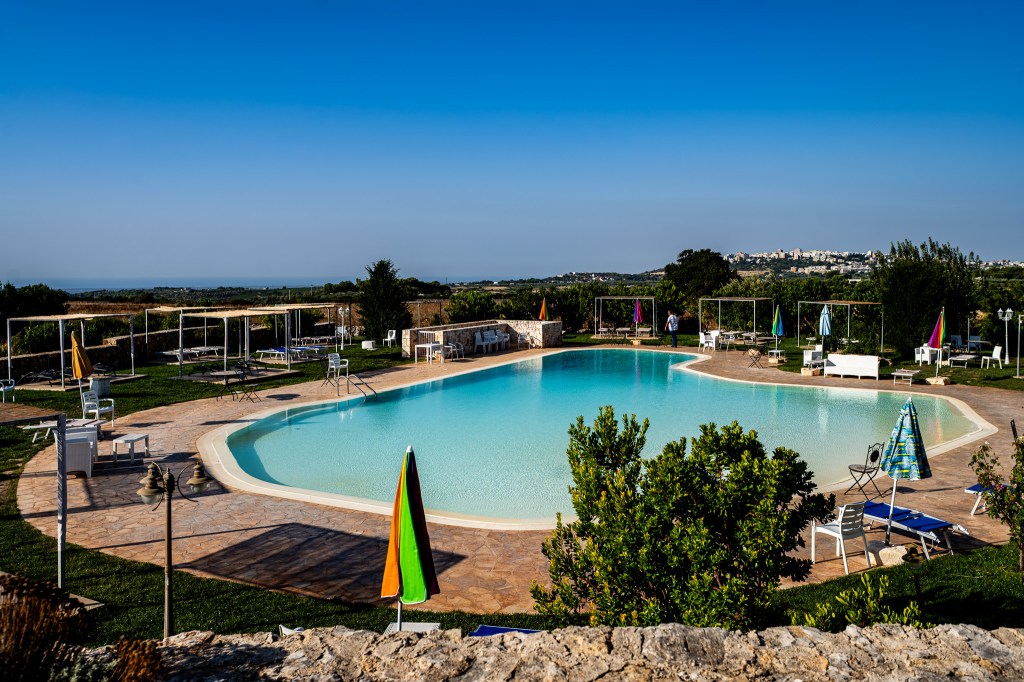
We stayed at Masseria La Sterpina, also listed online and on Google Maps as Tenuta Donna Teresa, tucked into Contrada Sterpina just outside Mottola, a genuinely beautiful 19th-century Pugliese farmhouse, thick stone walls and all, that started life as a working agricultural estate before being lovingly restored into what it is now: pool, gardens, restaurant, the works. The owner turned out to be a retired pulmonologist, which we discovered when we clocked the retirement tribute painting still hanging on the wall, colleagues’ in-jokes collaged around his portrait, complete with a stethoscope and the word “CAPO” stitched onto his lab coat. He speaks enough English to charm you and not quite enough to explain what’s on your plate, which becomes relevant later.
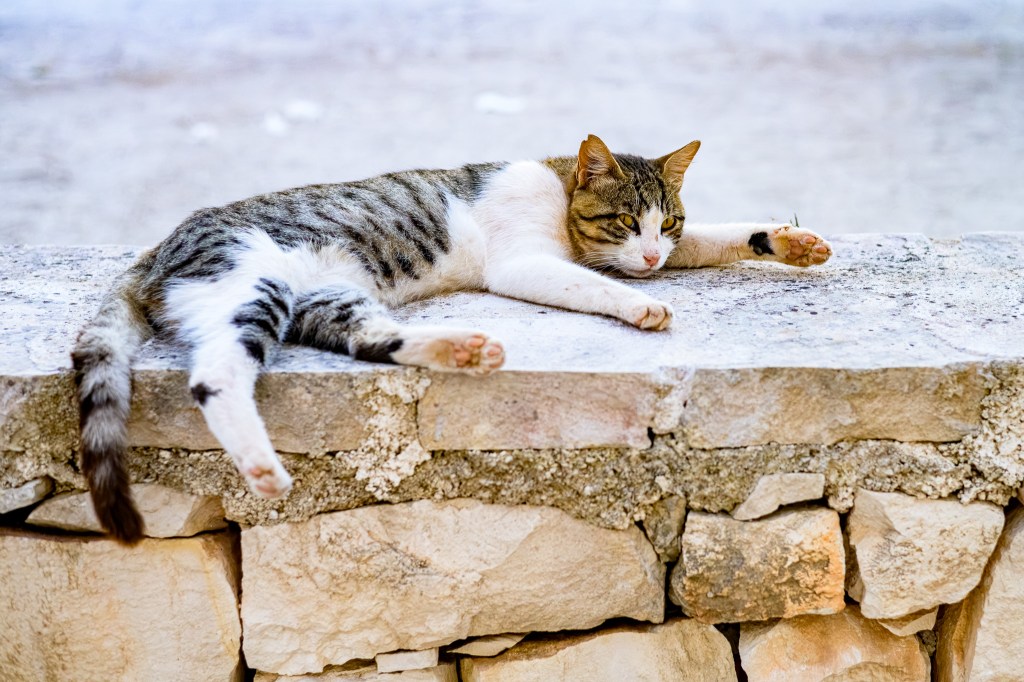
One practical thing worth knowing: there’s no 24-hour reception here. It’s a small, family-run operation; if the owner’s out shopping or running errands, there’s genuinely nobody around to check you in.
Mottola’s Old Town: Three Attempts, One Victory
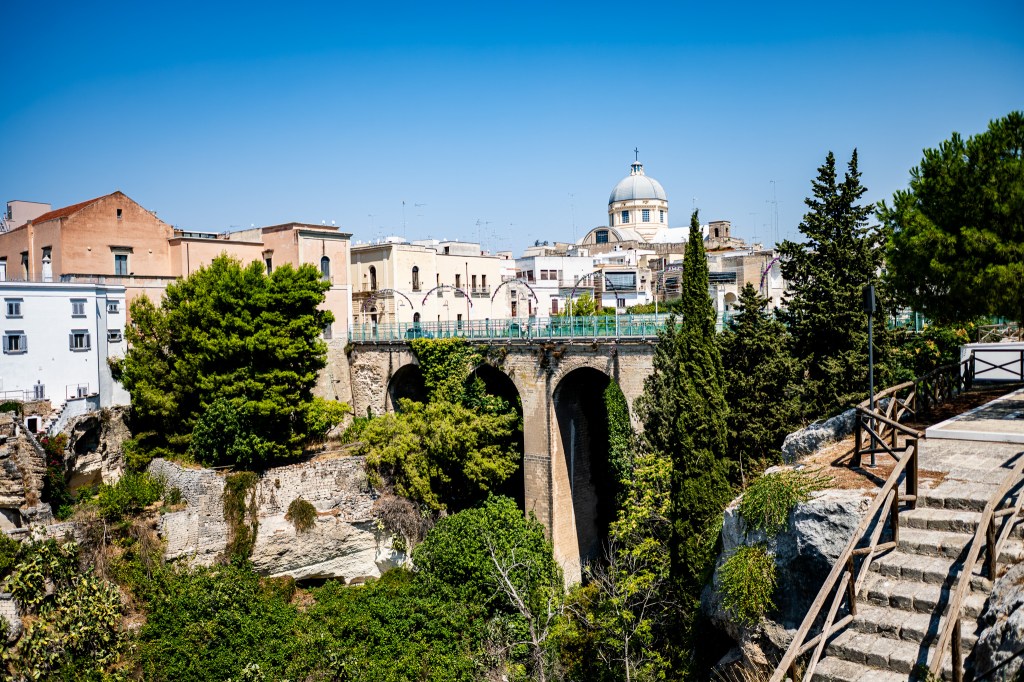
Here’s the truth nobody tells you about Mottola’s Centro historico in August: parking is genuinely, comically difficult. We tried twice during the day and struck out both times- nothing at all, or a one-hour zone that turns sightseeing into a sprint against a parking meter rather than a relaxed wander. Defeated on attempt two, we pivoted to nearby Massafra instead. A town built into its own dramatic ravine and known historically for its rupestrian (cave-dwelling) civilisation. The same tradition that carved out Mottola’s own hidden churches. We wandered its narrow streets, had cappuccino and pastries at Valentino Cafe, ducked into a few churches, and admired the view from the bridge over the Gravina. A genuinely vertigo-inducing drop straight down into the ravine below. All of that while the car thermometer reads a genuinely alarming 46°C (mostly the tarmac talking, but still).
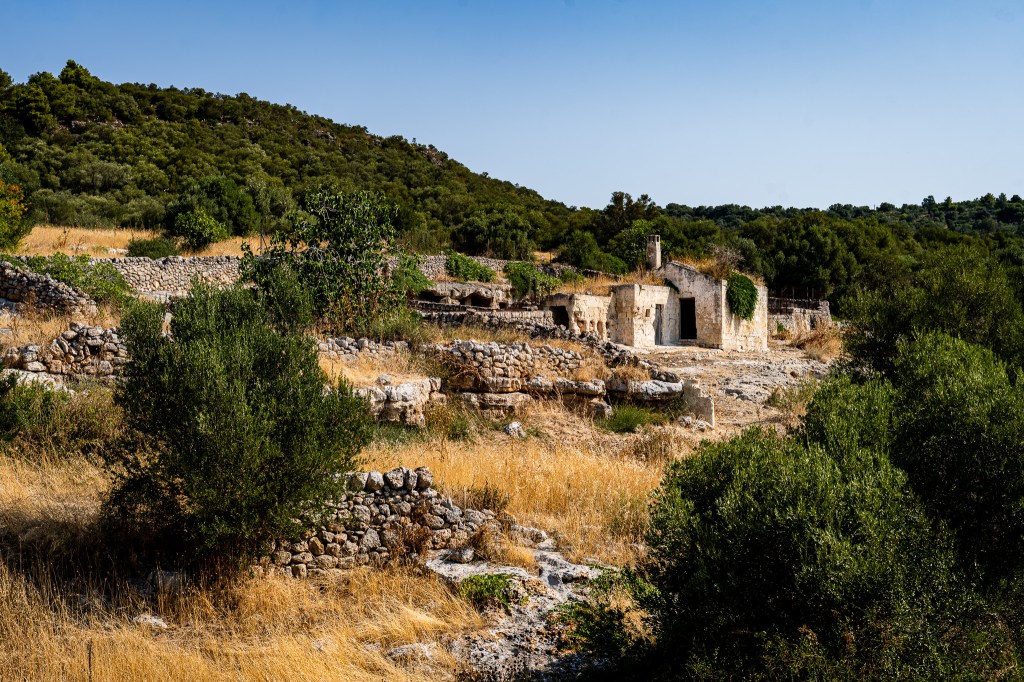
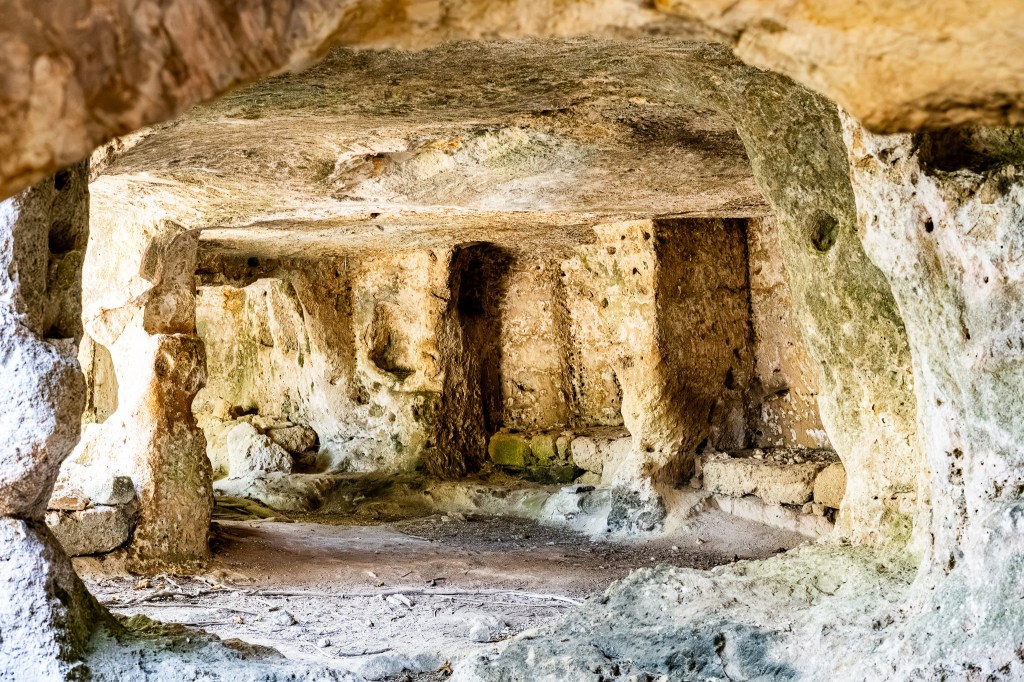
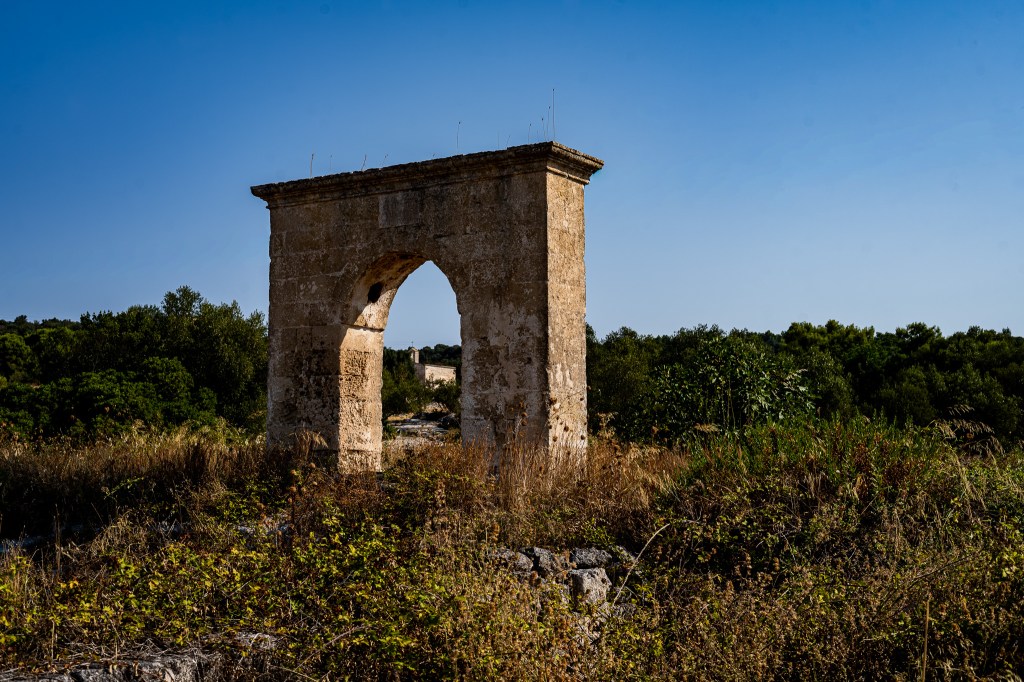
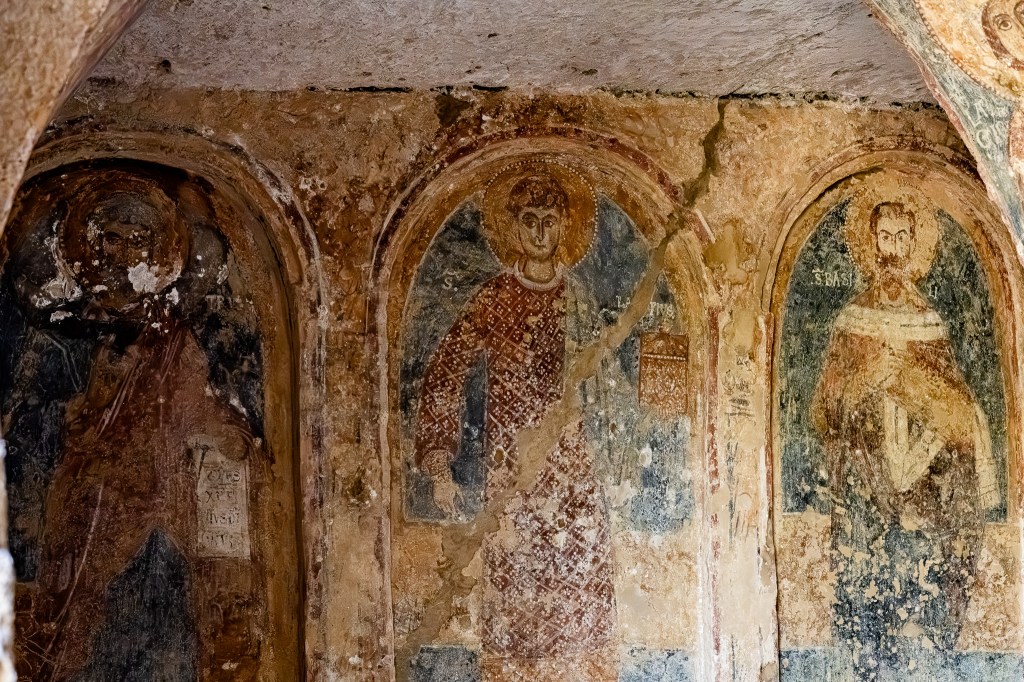
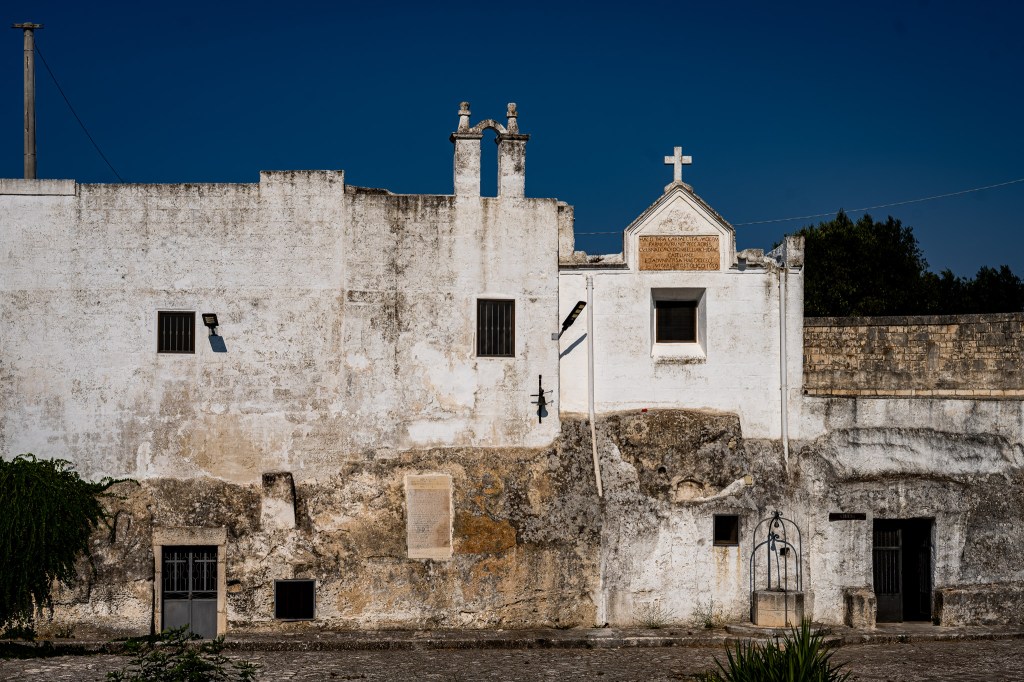
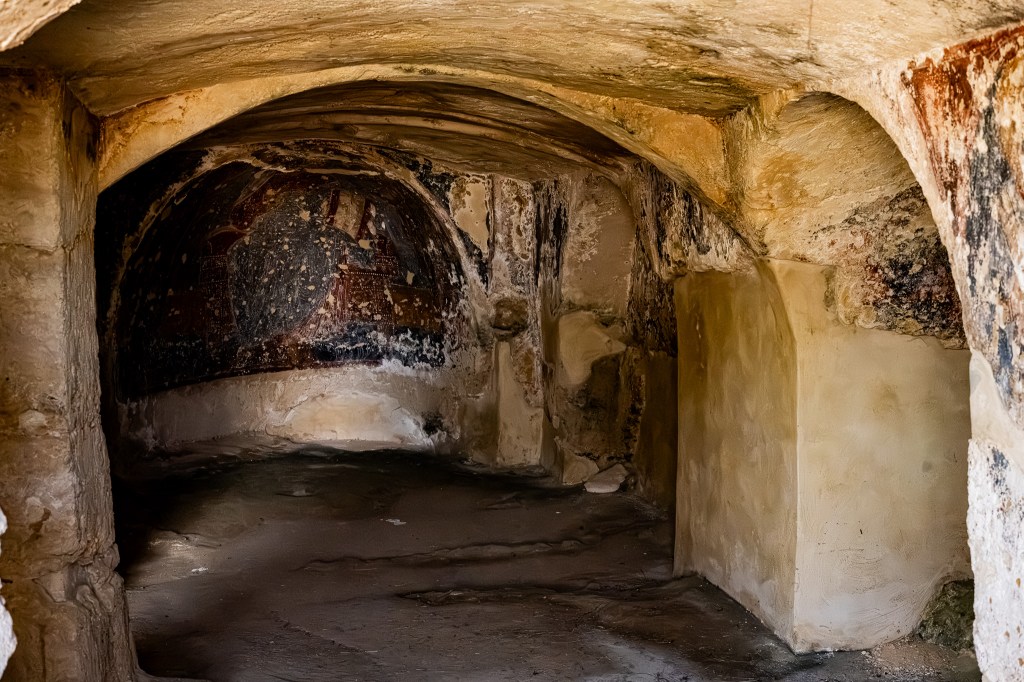
Attempt three was the winner: a 6 am start, just the two of us, boys still asleep. Empty streets, three churches, a basilica, and the best cornetto-and-cappuccino combo of the trip, all before the town properly woke up, and the day-trippers arrived. We followed it with a proper cave-church crawl: Santuario Madonna del Carmine, Chiesa Rupestre di San Cesario, Cripta di Sant’Apollonia, and the Chiesa Rupestre di Sant’Angelo. Before finishing at the undisputed star of the group, Chiesa Rupestre di San Nicola, whose interior alone justified the entire 6 am wake-up call. Mottola’s rupestrian churches are part of a wider network of Byzantine-era cave sanctuaries carved into the Murgia’s ravines, dating back roughly a thousand years. San Nicola’s frescoes are exactly the kind of thing you don’t expect to find at the end of an unassuming farm track; no queue, no ticket booth, just a door in a hillside that opens onto centuries of painted saints. Moral of the story: if a small Puglia town’s old Centre has bad parking, get up early. It works every time; it just costs you a lie-in.
Metaponto: Swimming in Water Warmer Than Soup
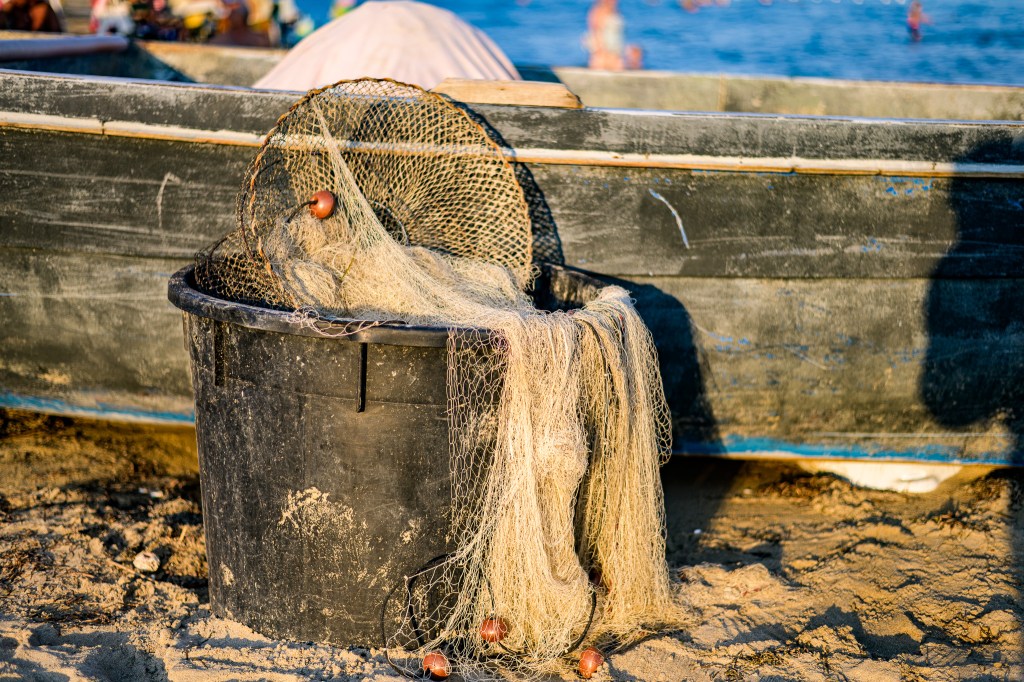
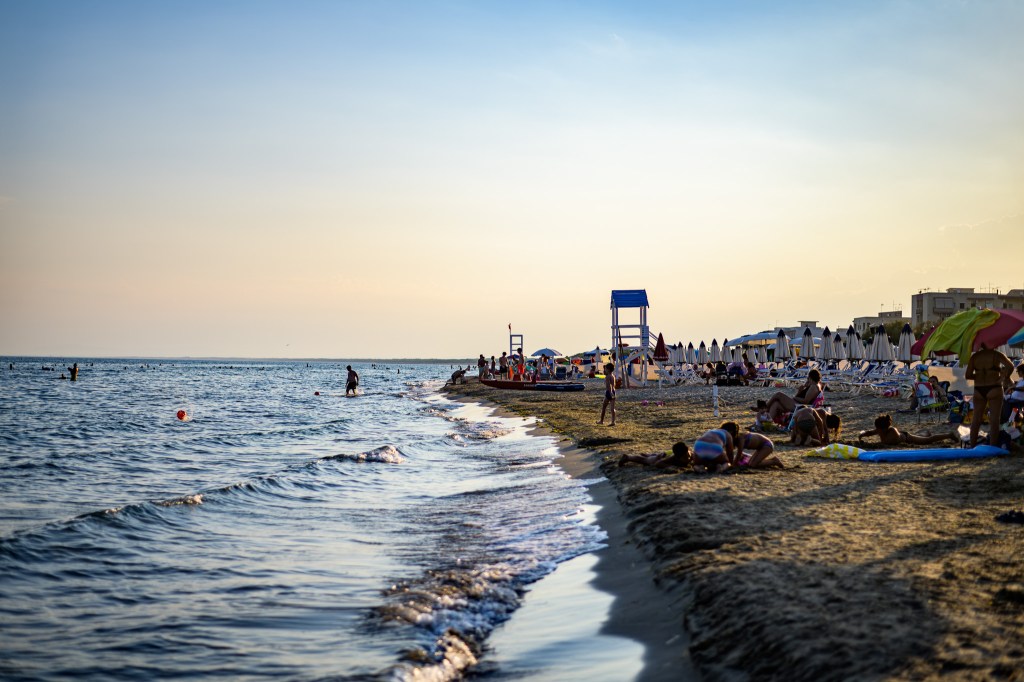
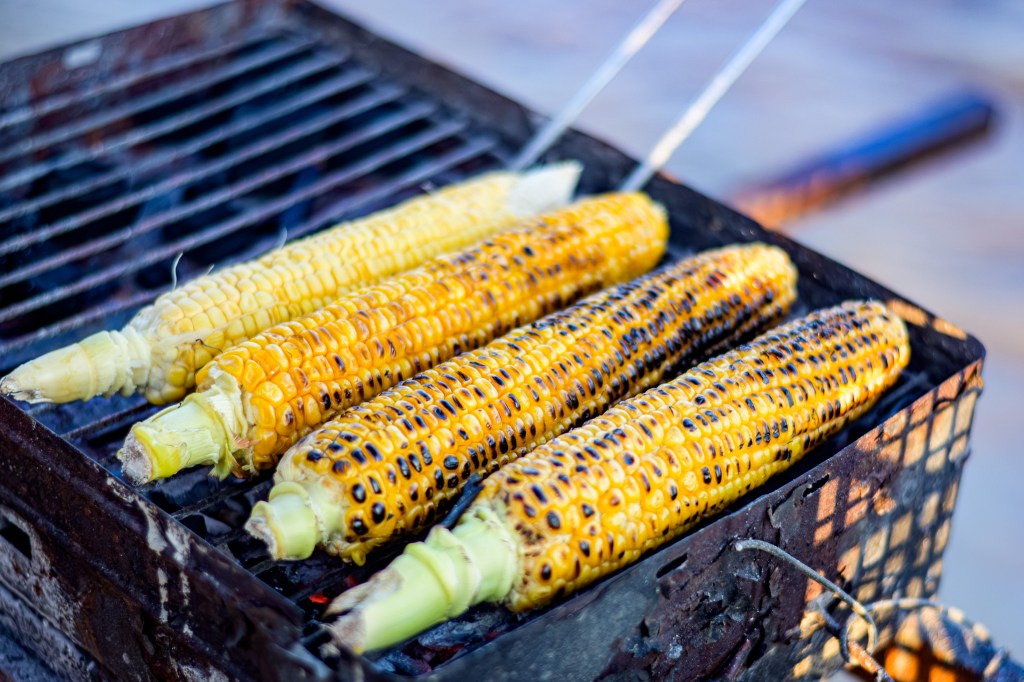
One afternoon we escaped the pool for Metaponto Lido, on the Ionian coast. A genuinely ancient stretch of coastline, once part of Magna Graecia and, according to legend, connected to Pythagoras himself, who is said to have founded a school in the area over two and a half thousand years ago. None of that history mattered much once we were in the water, which was, no exaggeration, warmer than soup. The Ionian side shallows out a long way from shore here, which is exactly why it heats up so fast in August compared to somewhere with deeper water close in. Shallow, warm, gentle, lovely dip for a lazy afternoon with no ambition beyond floating, less so if you’re after an actual cooling swim.
Taranto: Sirens, a Cathedral, and a Castle We Never Got Into
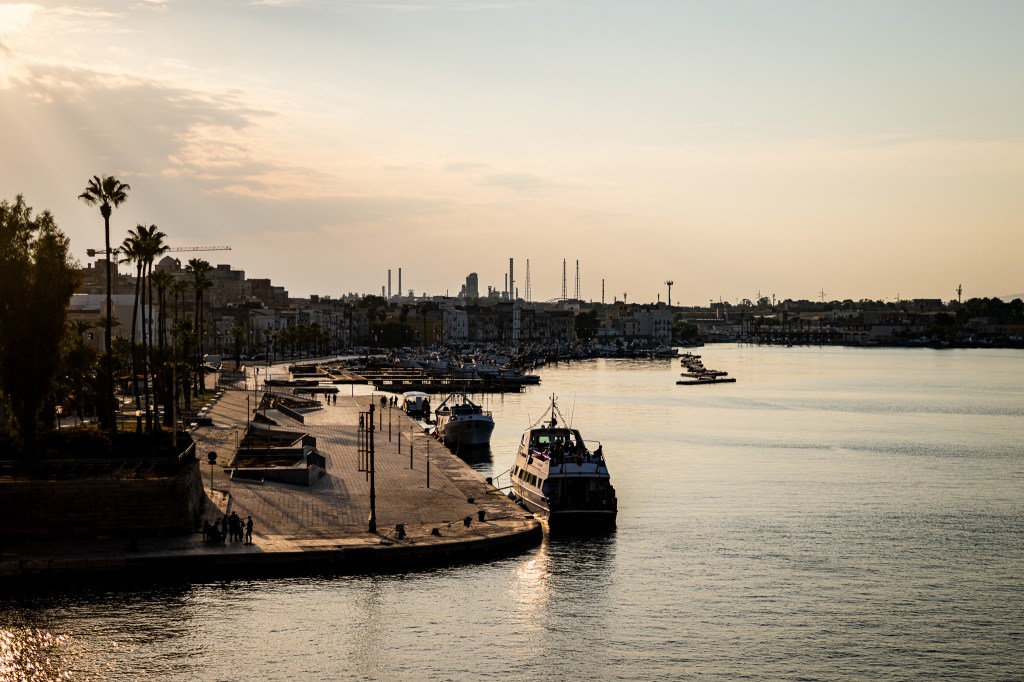
Our evening trip to Taranto was one of the week’s highlights. We parked at Autorimessa Roma for a total of €1 (genuinely, write that down), crossed the bridge into the old town, and hit our second language-barrier saga of the week: the Castello Aragonese only takes bookings by phone, in Italian. Precisely as impossible as it sounds if you’re not a native speaker, and a good reminder that not every closed door in Italy is closed; sometimes it’s just gatekept by a phone system you can’t use. Shrugging it off, we wandered instead. Narrow lanes, a handful of churches, and the Cathedral of San Cataldo, where we stumbled into the Cappellone di San Cataldo, a Baroque chapel so ornate it stopped us in our tracks: gilded surfaces, dramatic sculptural detail, the kind of interior built to make you feel small the second you walk in, dedicated to the city’s own patron saint.
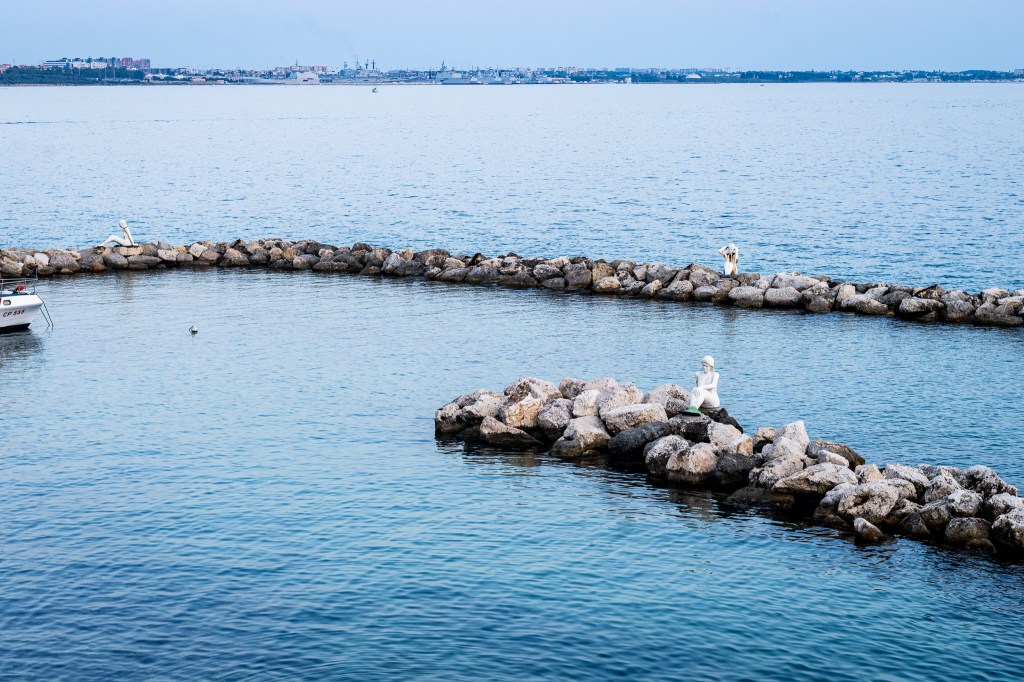
Down by the water, we found Taranto’s famous three sirens. Sculptures by local artist Francesco Trani, cast in marine cement so they can survive the salt and the waves. Tied to a local legend about a woman named Skuma who becomes queen of a siren’s castle after her husband throws her into the sea. Even the sirens themselves needed a full restoration after around twenty years of salt exposure before they went back on the rocks, a small, fitting echo of the old town around them, which is beautiful but visibly under-invested, crumbling façades sitting right next to genuine treasures. Somehow that combination makes it feel more real, a place that hasn’t been polished up for visitors yet, still living its own life underneath the beauty.
The Farewell Dinner: Ten Spoonfuls and a Checkout Surprise
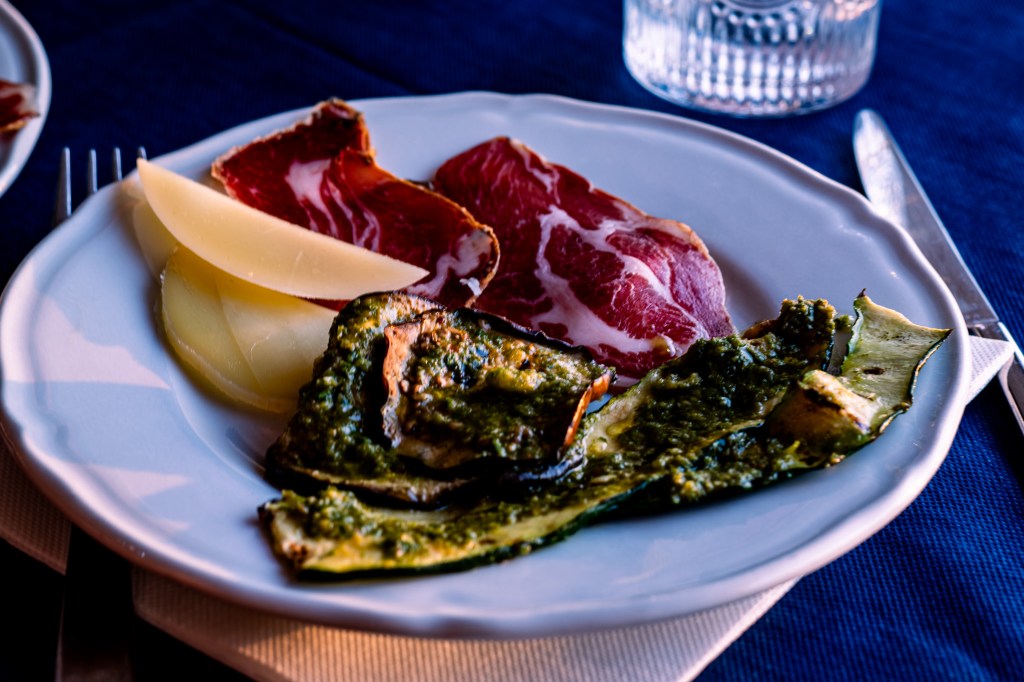
Our last night, the owner cooked us a regional tasting menu, around ten courses, each roughly the size of a teaspoon, a mystery menu neither he nor we could fully translate. Beautiful concept, slightly cruel execution for a hungry 25- and 17-year-old, who both quietly ordered pasta to fill the gap. Somewhere between course six and the pasta rescue, we started calling him Dr Ramsey, a retired doctor turned mystery-menu chef who felt like it needed a nickname. The house wine, from the family’s own Azienda Agricola Mazza Patrizio vineyard near Martina Franca, was genuinely excellent. Total bill for four of us: €80, fair value, if not quite the meal our boys were dreaming of.
The next morning brought a less charming surprise: despite our Hotels.com confirmation stating a noon checkout, we were asked to leave by 10 am, and told we’d need to pay €5 each to keep using the pool since we were “no longer guests.” Not the warmest send-off after five otherwise lovely days, and a good reminder to always screenshot your booking confirmation.
Where to Eat — Mottola Edition
| Stop | What we had | Verdict |
| Massafra | Cappuccino and pastries at Valentino Cafe | A proper consolation-prize breakfast after two failed parking attempts |
| Mottola old town | Cornetto and cappuccino at dawn | The best coffee stop of the whole week, purely for the empty streets around it |
| Masseria La Sterpina | Ten-course regional tasting menu from the owner’s own vineyard | Beautiful concept, small portions — bring a backup pasta plan for hungry teenagers |
| Taranto | Wandering food along the lungomare | Nothing formal needed — the old town itself was the main course |
Quick Tips If You’re Planning Your Own Mottola Trip
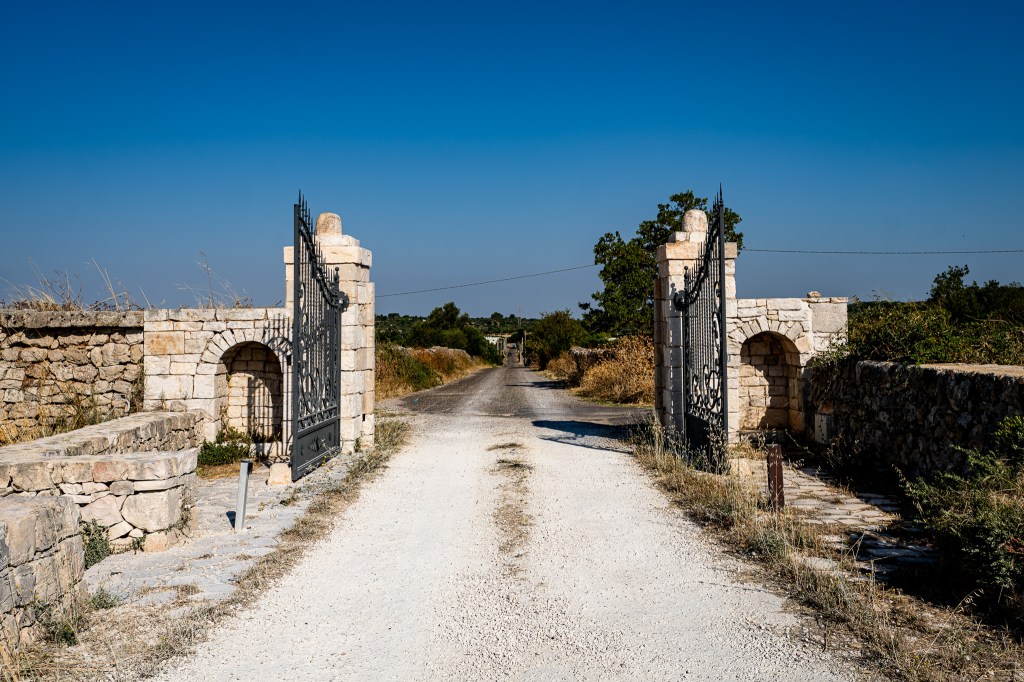
A few things we learned the hard way, so you don’t have to:
- Read your booking confirmation properly; ours asked us to contact the property 48 hours ahead with our arrival time, which we missed. Small, family-run Masseria’s often lack 24-hour reception, so this genuinely determines whether anyone’s there to let you in.
- Parking in Mottola’s old town: don’t bother after 8 am. Go at dawn or use the free car park on Via Silvio Pellico near the Carabinieri station; skip it on Fridays; that’s market day.
- Book skip-the-line where you can: the Castello Aragonese in Taranto is phone-booking only, in Italian. If your Italian isn’t fluent, ask your accommodation to call ahead for you.
- Go early for the cave churches: Mottola and Massafra both sit on the edge of dramatic gravine, and the rupestrian churches carved into them are stunning but genuinely hot by mid-morning in August.
- Metaponto is a good “do nothing” beach, not a dramatic one, lovely for a lazy afternoon, not for anyone chasing cold water.
Final Thoughts on Mottola
Was it perfect? No. The late-night arrival mix-up, the parking fights, and the world’s smallest tasting menu all happened, and none of it got smoothed over for the sake of a tidier story. But between the 6 am cave churches, €1 Taranto parking, warm Ionian swims, and a retired doctor who now makes wine instead of diagnoses, Mottola gave us a genuinely memorable week. It’s not a place that hands you on its best side on a plate. You earn Mottola’s version of Puglia by getting up early, accepting the parking chaos as part of the deal, and being willing to pivot to Massafra when planning a fall through. This wasn’t our first time in Puglia, either, but that’s a story for another day.
 MKS Photography Travel
Leave a comment